
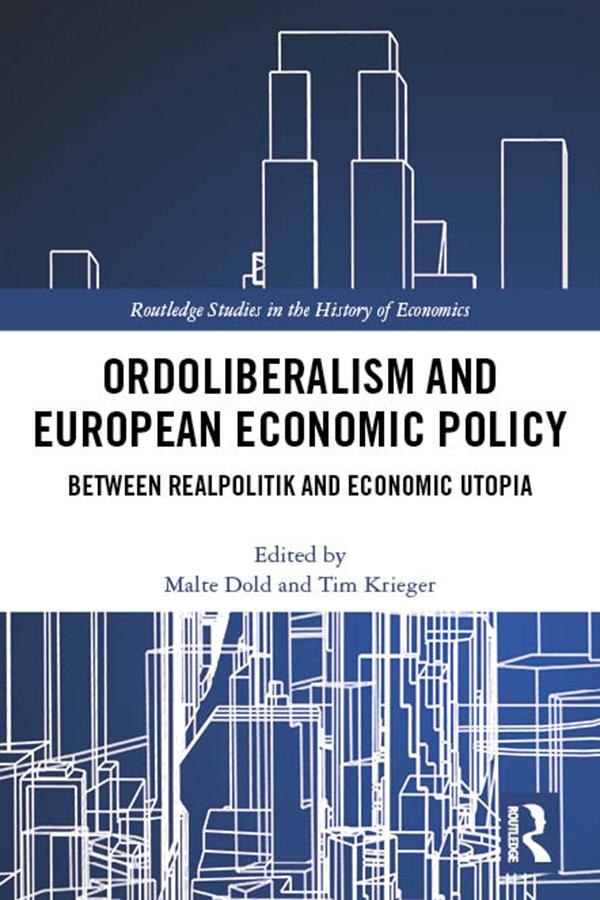
This volume takes a broad perspective on the recent debate on the role of German ordoliberalism in shaping European economic policy before and after the eurozone crisis. It shows how ordoliberal scholars explain the institutional origins of the eurozone crisis, and presents creative policy proposals for the future of the European economy.
Ordoliberal discourse both attempts to offer political solutions to socioeconomic challenges, and to find an ideal market order that fosters individual freedom and social cohesion. This tension between realpolitik and economic utopia reflects the wider debate on how far economic theory shapes, and is shaped by, historical contingencies and institutions.
The volume will be of interest to policymakers as well as research scholars, and graduate students from various disciplines ranging from economics to political science, history, and philosophy.
Pay easily by card, Klarna, Apple Pay or Google Pay. Not happy? You always have a 14-day money-back guarantee. Read more in our terms. If you have any questions, email us at hello@memmo.org.
Memmo makes studying easier – wherever you are in the world. We bring your course books and smart study tools together in one place: summaries, quizzes, podcasts and flashcards. Plus Ted, your study buddy who answers anything you wonder. Over 50,000 students already study here – built to help you learn faster and stress less.