
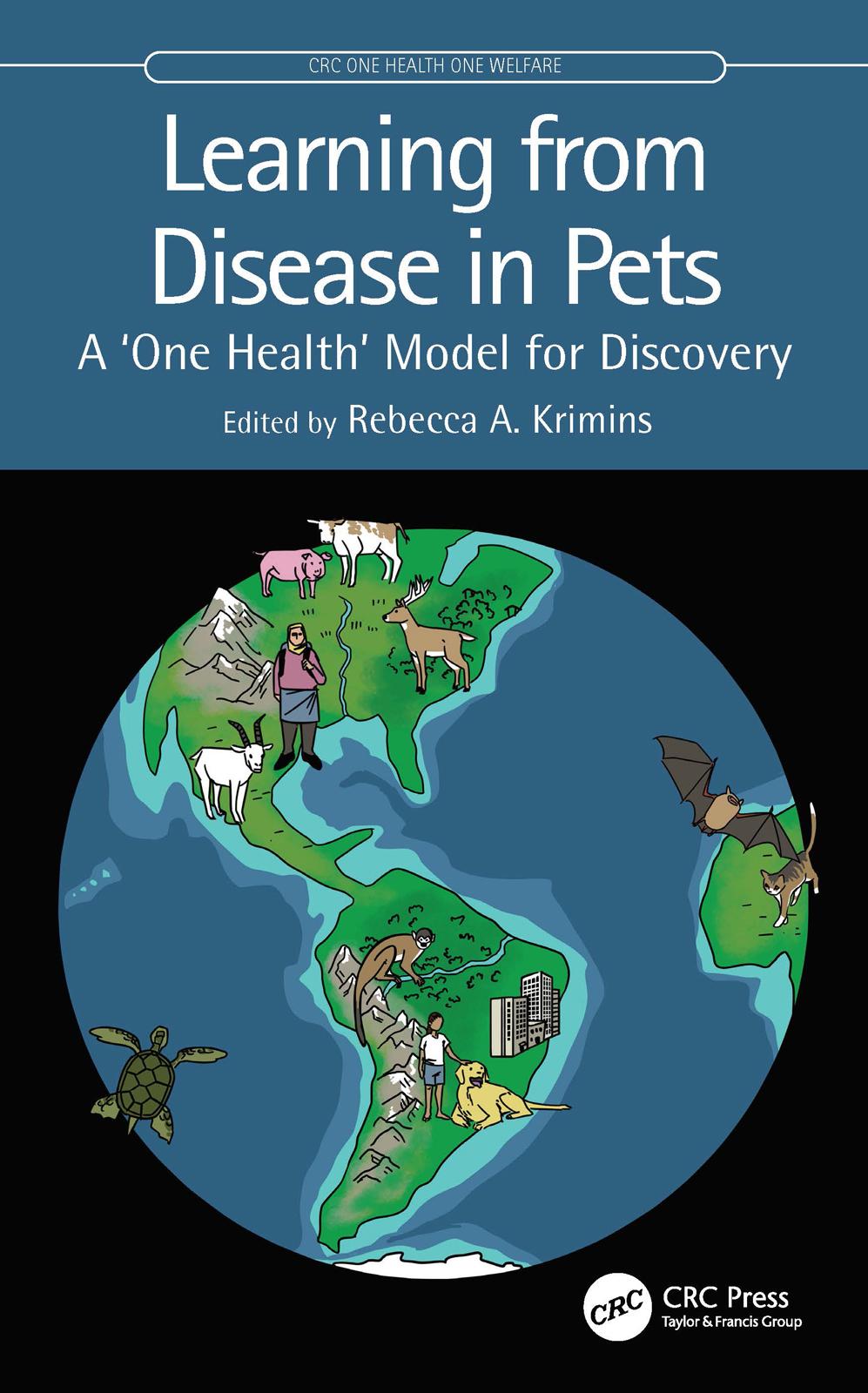
Learning from Disease in Pets: A ‘One Health’ Model for Discovery is the first encompassing reference guide for veterinarians, researchers and physicians on conducting studies using spontaneous models of disease in animals. The study of naturally occurring disease in (pet) animals can help model our understanding of the biology, prevention and therapy of human and animal diseases. Studies of pet dogs, for instance, can aid treatment of complex medical problems such as cancer, orthopedic, cardiopulmonary, and neuro-inflammatory diseases, and zoonotic infections. Each chapter within this novel cross-species approach is contributed by a leader, or leaders, in their field of research.
Using clinical trials to learn how pets with real diseases respond to therapy can lead to breakthroughs in human medicine, as well as benefiting pets suffering from otherwise debilitating illness. Despite similarities of diseases across species, there are very few spontaneous models of disease used in research compared with models where disease is induced in healthy laboratory animals. Many medical researchers and veterinarians have a multitude of questions regarding how to use naturally occurring diseases in pets for the discovery of treatments and diagnostics: this book will demonstrate how to safely make this happen.
This book encourages veterinarians to build on and disseminate existing findings for the wider benefit of pets and humans. Many pets suffering from incurable illnesses may benefit from clinical trials; the book includes a section on the imperative communication styles necessary within the research environment and with clients, a compelling discussion on the ethics of using pets in veterinary clinical research, comprehensive tables of diseases that spontaneously occur in animals and humans, the regulatory requirements necessary to move therapy from benchside research to patient bedside, as well as intricate details on how to design a robust clinical study.
Pay easily by card, Klarna, Apple Pay or Google Pay. Not happy? You always have a 14-day money-back guarantee. Read more in our terms. If you have any questions, email us at hello@memmo.org.
Memmo makes studying easier – wherever you are in the world. We bring your course books and smart study tools together in one place: summaries, quizzes, podcasts and flashcards. Plus Ted, your study buddy who answers anything you wonder. Over 50,000 students already study here – built to help you learn faster and stress less.