
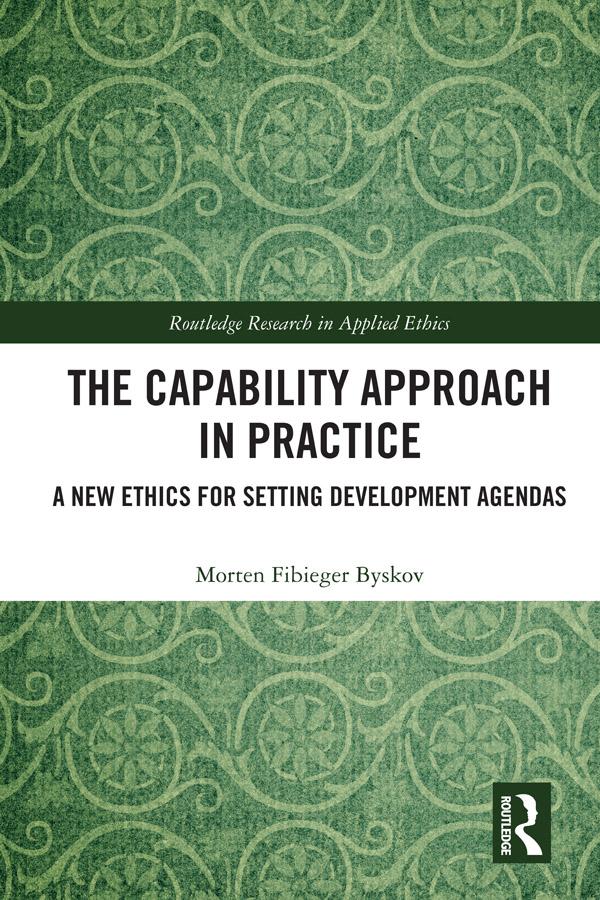
This book develops a philosophical framework for selecting goals for development purposes. This inclusive and democratic framework integrates a variety of resources including philosophical theory, empirical analysis, stakeholder deliberations, local knowledge, and advice from development experts. The author contends that we must provide good reasons and arguments in order to justify a particular development agenda. That is, we need to ask why we choose certain kinds of development goals over others, why we include certain agents in the selection process and not others, and why we select goals through one method rather than another.
In response to these questions, the author argues that development should aim at expanding people’s capabilities and functionings. Capabilities and functionings—capabilities that have been realized—tell us what people are actually able to do and be with their resources, goods, and formal freedoms. He advances the view that local stakeholders should have more authority in deciding what a development agenda looks like. This claim to local authority in development can be interpreted both as a claim to political authority and expert authority. Finally, the author argues that ad hoc, foundational, procedural, and mixed (multi-stage) methods need to be synthesized in order to select the best capabilities and functionings for development.
The Capability Approach in Practice provides a philosophical and systematic approach to setting development agendas. It is an important contribution to the literature on the capability approach and development ethics, which will appeal to a broad range of scholars within philosophy and development studies.
Pay easily by card, Klarna, Apple Pay or Google Pay. Not happy? You always have a 14-day money-back guarantee. Read more in our terms. If you have any questions, email us at hello@memmo.org.
Memmo makes studying easier – wherever you are in the world. We bring your course books and smart study tools together in one place: summaries, quizzes, podcasts and flashcards. Plus Ted, your study buddy who answers anything you wonder. Over 50,000 students already study here – built to help you learn faster and stress less.