
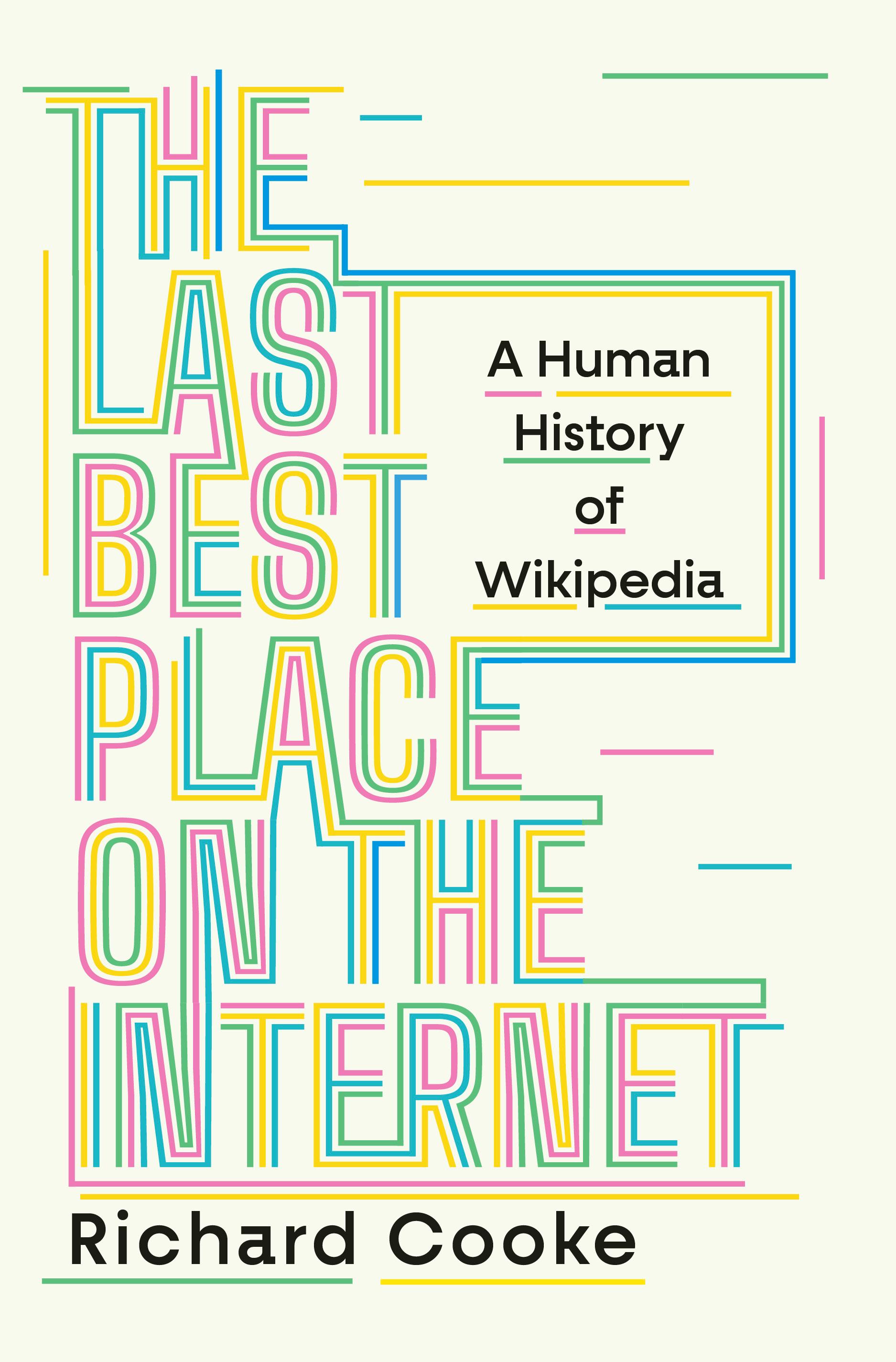
A playful and provocative exploration of mighty Wikipedia: how it was built, why it thrived, and what we lose as its ideals disintegrate.
One of the keystone inventions of the twenty-first century, Wikipedia is the largest repository of human knowledge ever made, with editions in 343 languages, read by millions of people every day. Yet, its rightful status as a “digital wonder of the world” is coupled with an odd complacency. We all use Wikipedia (often without realizing it) but seldom think about what it is and where it came from. In this entertaining book, Richard Cooke offers a fresh and definitive account of this era-defining phenomenon.
The Last Best Place on the Internet reveals the personality clashes, philosophical disputes, private obsessions, pioneering innovations, and unexpected ideas behind Wikipedia’s fabled creation, extraordinary growth, and unparalleled success. Cooke examines the profound effect of an “encyclopedia anyone can edit” on politics, business, literature, and society at large. He explores the site’s shifting role in establishing fact amid deep uncertainty about truth and authority, the often hilariously fierce debates between “Inclusionists” and “Deletionists” about what matters, and the great perils Wikipedia faces today from bots, political division, and artificial intelligence.
Meticulously researched and eye-opening, The Last Best Place on the Internet is a fascinating journey into the hidden world of one of the most vital—and most endangered—cultural achievements of our time.
Pay easily by card, Klarna, Apple Pay or Google Pay. Not happy? You always have a 14-day money-back guarantee. Read more in our terms. If you have any questions, email us at hello@memmo.org.
Memmo makes studying easier – wherever you are in the world. We bring your course books and smart study tools together in one place: summaries, quizzes, podcasts and flashcards. Plus Ted, your study buddy who answers anything you wonder. Over 50,000 students already study here – built to help you learn faster and stress less.