
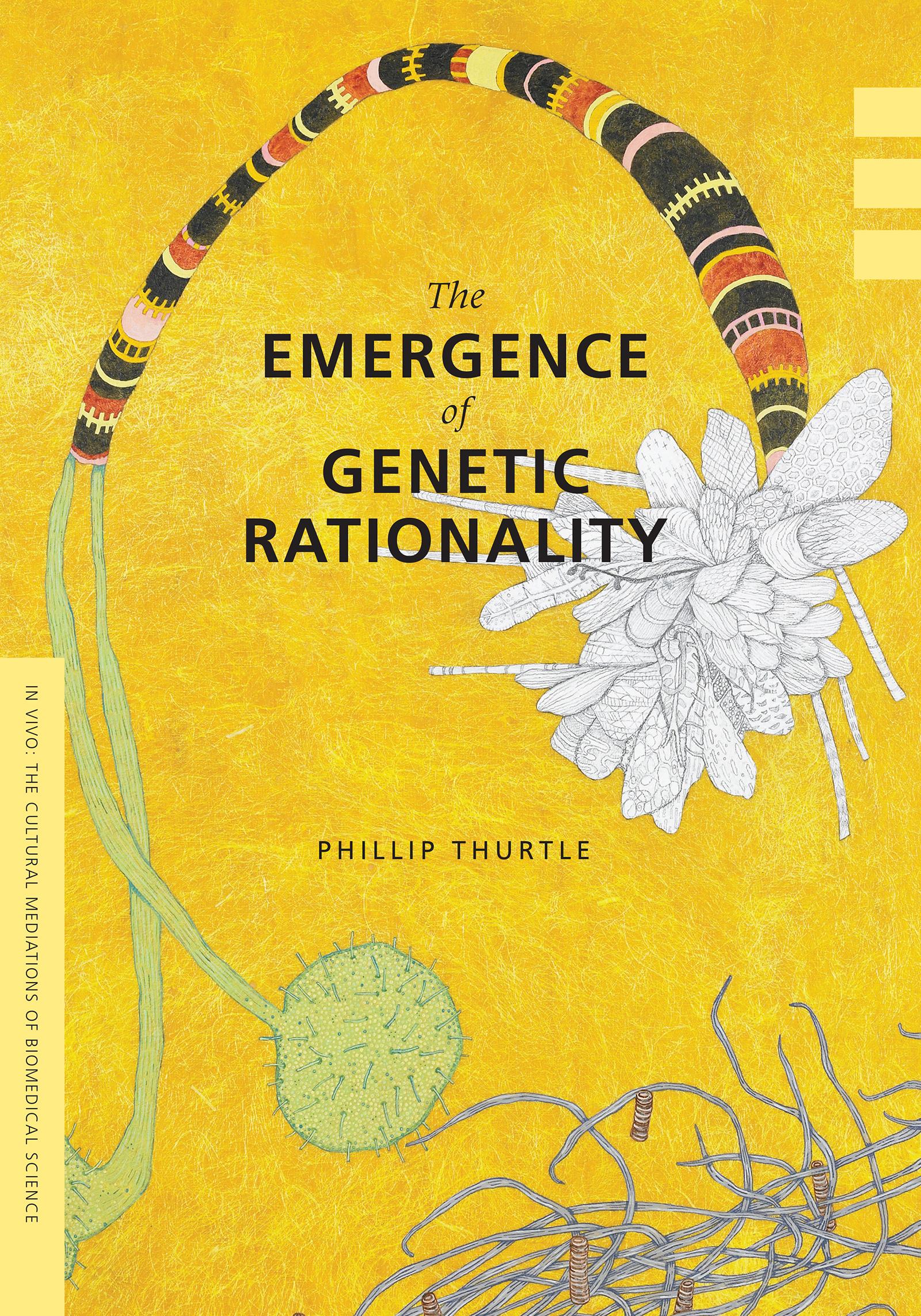
The emergence of genetic science has profoundly shaped how we think about biology. Indeed, it is difficult now to consider nearly any facet of human experience without first considering the gene. But this mode of understanding life is not, of course, transhistorical. Phillip Thurtle takes us back to the moment just before the emergence of genetic rationality at the turn of the twentieth century to explicate the technological, economic, cultural, and even narrative transformations necessary to make genetic thinking possible.
The rise of managerial capitalism brought with it an array of homologous practices, all of which transformed the social fabric. With transformations in political economy and new technologies came new conceptions of biology, and it is in the relationships of social class to breeding practices, of middle managers to biological information processing, and of transportation to experiences of space and time, that we can begin to locate the conditions that made genetic thinking possible, desirable, and seemingly natural.
In describing this historical moment, The Emergence of Genetic Rationality is panoramic in scope, addressing primary texts that range from horse breeding manuals to eugenics treatises, natural history tables to railway surveys, and novels to personal diaries. It draws on the work of figures as diverse as Thorstein Veblen, Jack London, Edith Wharton, William James, and Luther Burbank. The central figure, David Starr Jordan - naturalist, poet, eugenicist, educator - provides the book with a touchstone for deciphering the mode of rationality that genetics superseded.
Building on continental philosophy, media studies, systems theory, and theories of narrative, The Emergence of Genetic Rationality provides an inter-disciplinary contribution to intellectual and scientific history, science studies, and cultural studies. It offers a truly encyclopedic cultural history that challenges our own ways of organizing knowledge even as it explicates those of an earlier era. In a time in which genetic rationality has become our own common sense, this discussion of its emergence reminds us of the interdependence of the tools we use to process information and the conceptions of life they animate.
Pay easily by card, Klarna, Apple Pay or Google Pay. Not happy? You always have a 14-day money-back guarantee. Read more in our terms. If you have any questions, email us at hello@memmo.org.
Memmo makes studying easier – wherever you are in the world. We bring your course books and smart study tools together in one place: summaries, quizzes, podcasts and flashcards. Plus Ted, your study buddy who answers anything you wonder. Over 50,000 students already study here – built to help you learn faster and stress less.