
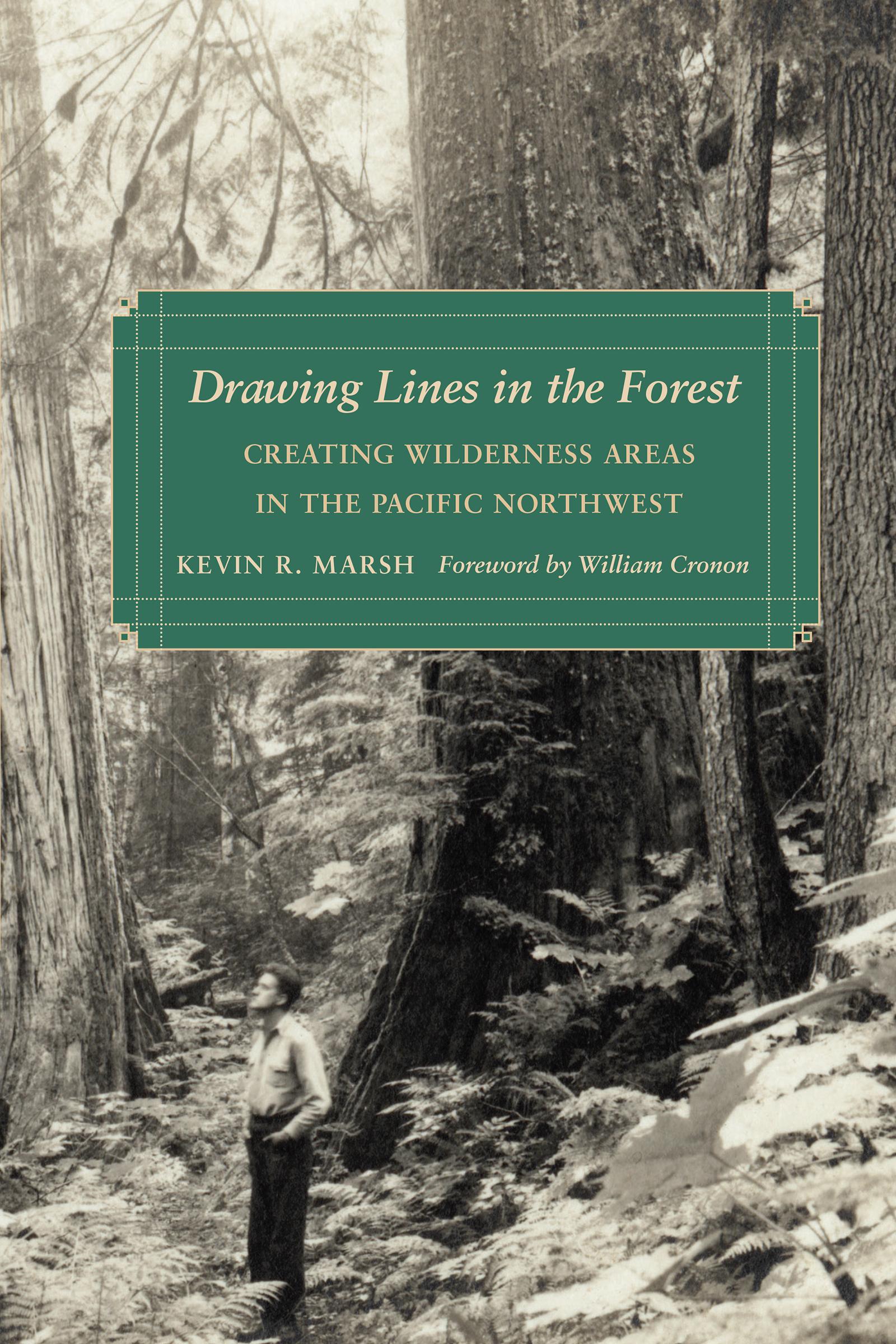
Drawing boundaries around wilderness areas often serves a double purpose: protection of the land within the boundary and release of the land outside the boundary to resource extraction and other development. In Drawing Lines in the Forest, Kevin R. Marsh discusses the roles played by various groups—the Forest Service, the timber industry, recreationists, and environmentalists—in arriving at these boundaries. He shows that pragmatic, rather than ideological, goals were often paramount, with all sides benefiting.
After World War II, representatives of both logging and recreation use sought to draw boundaries that would serve to guarantee access to specific areas of public lands. The logging industry wanted to secure a guaranteed supply of timber, as an era of stewardship of the nation's public forests gave way to an emphasis on rapid extraction of timber resources. This spawned a grassroots preservationist movement that ultimately challenged the managerial power of the Forest Service. The Wilderness Act of 1964 provided an opportunity for groups on all sides to participate openly and effectively in the political process of defining wilderness boundaries.
The often contentious debates over the creation of wilderness areas in the Cascade Mountains in Oregon and Washington represent the most significant stages in the national history of wilderness conservation since World War II: Three Sisters, North Cascades and Glacier Peak, Mount Jefferson, Alpine Lakes, French Pete, and the state-wide wilderness acts of 1984.
Pay easily by card, Klarna, Apple Pay or Google Pay. Not happy? You always have a 14-day money-back guarantee. Read more in our terms. If you have any questions, email us at hello@memmo.org.
Memmo makes studying easier – wherever you are in the world. We bring your course books and smart study tools together in one place: summaries, quizzes, podcasts and flashcards. Plus Ted, your study buddy who answers anything you wonder. Over 50,000 students already study here – built to help you learn faster and stress less.