
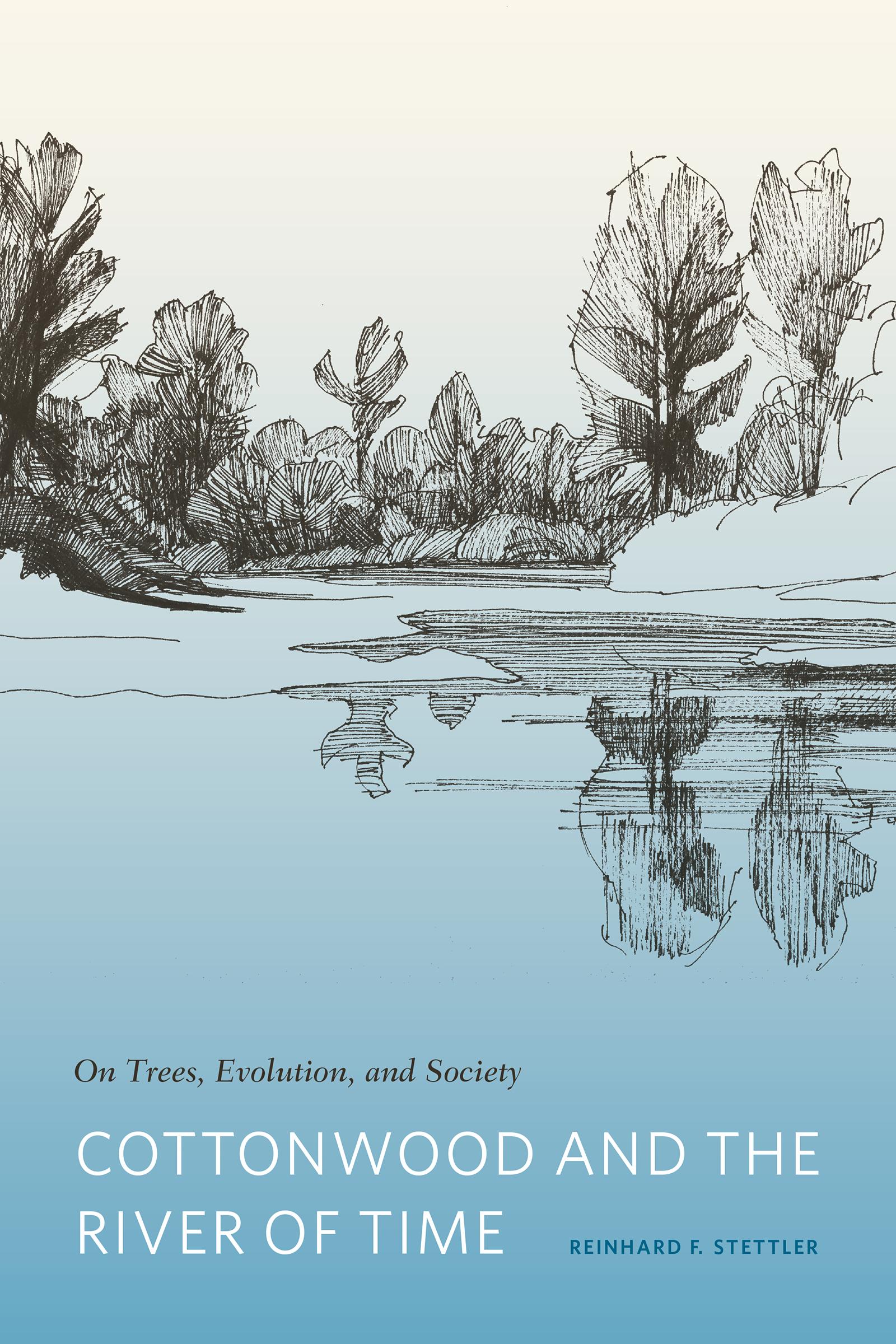
Cottonwood and the River of Time looks at some of the approaches scientists have used to unravel the puzzles of the natural world. With a lifetime of work in forestry and genetics to guide him, Reinhard Stettler celebrates both what has been learned and what still remains a mystery as he examines not only cottonwoods but also trees more generally, their evolution, and their relationship to society.
Cottonwoods flourish on the verge, near streams and rivers. Their life cycle is closely attuned to the river's natural dynamics. An ever-changing floodplain keeps generating new opportunities for these pioneers to settle and prepare the ground for new species. Perpetual change is the story of cottonwoods -- but in a broader sense, the story of all trees and all kinds of life. Through the long parade of generation after generation, as rivers meander and glaciers advance and retreat, trees have adapted and persisted, some for thousands of years. How do they do this? And more urgently, what lessons can we learn from the study of trees to preserve and manage our forests for an uncertain future?
In his search for answers, Stettler moves from the floodplain of a West Cascade river, where seedlings compete for a foothold, to mountain slopes, where aspens reveal their genetic differences in colorful displays; from the workshops of Renaissance artists who painted their masterpieces on poplar to labs where geneticists have recently succeeded in sequencing a cottonwood's genome; from the intensively cultivated tree plantations along the Columbia to old-growth forests challenged by global warming.
Natural selection and adaptation, the comparable advantages and disadvantages of sexual versus asexual reproduction, the history of plant domestication, and the purposes, risks, and potential benefits of genetic engineering are a few of the many chapters in this story. By offering lessons in how nature works, as well as how science can help us understand it, Cottonwood and the River of Time illuminates connections between the physical, biological, and social worlds.
Pay easily by card, Klarna, Apple Pay or Google Pay. Not happy? You always have a 14-day money-back guarantee. Read more in our terms. If you have any questions, email us at hello@memmo.org.
Memmo makes studying easier – wherever you are in the world. We bring your course books and smart study tools together in one place: summaries, quizzes, podcasts and flashcards. Plus Ted, your study buddy who answers anything you wonder. Over 50,000 students already study here – built to help you learn faster and stress less.