
Winner of the 24th Annual Susanne M. Glasscock Humanities Book Prize
Finalist for the 2023 Cundill History Prize
Gold Medal Recipient, Nautilus Book Awards, Sustainability
The dirty work essential to a clean energy transition
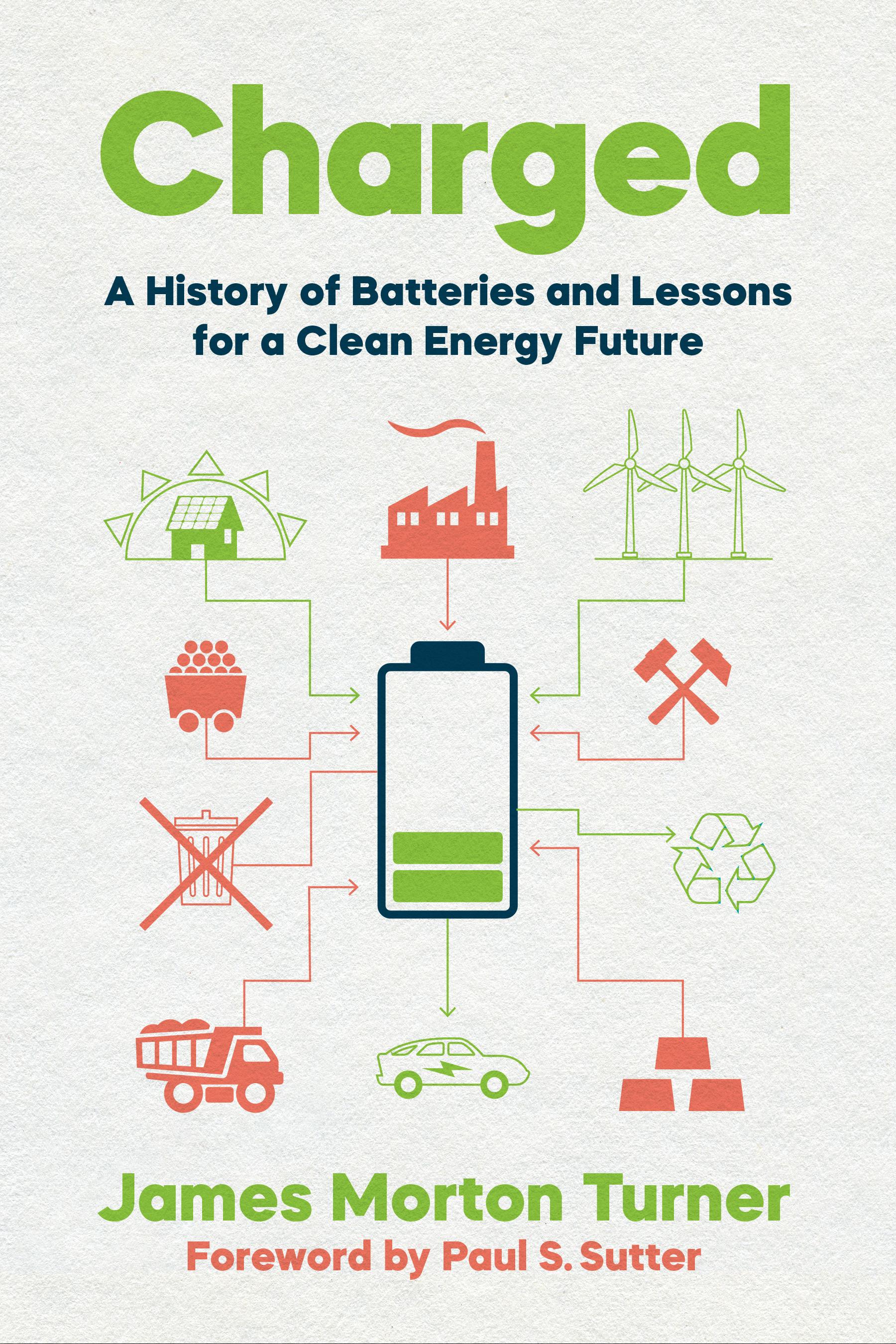
To achieve fossil fuel independence, few technologies are more important than batteries. Used for powering zero-emission vehicles, storing electricity from solar panels and wind turbines, and revitalizing the electric grid, batteries are essential to scaling up the renewable energy resources that help address global warming. But given the unique environmental impact of batteries—including mining, disposal, and more—does a clean energy transition risk trading one set of problems for another?
In Charged, James Morton Turner unpacks the history of batteries to explore why solving "the battery problem" is critical to a clean energy transition. As climate activists focus on what a clean energy future will create—sustainability, resiliency, and climate justice—the history of batteries offers a sharp reminder of what building that future will consume: lithium, graphite, nickel, and other specialized materials. With new insight on the consequences for people and communities on the front lines, Turner draws on the past for crucial lessons that will help us build a just and clean energy future, from the ground up.
Pay easily by card, Klarna, Apple Pay or Google Pay. Not happy? You always have a 14-day money-back guarantee. Read more in our terms. If you have any questions, email us at hello@memmo.org.
Memmo makes studying easier – wherever you are in the world. We bring your course books and smart study tools together in one place: summaries, quizzes, podcasts and flashcards. Plus Ted, your study buddy who answers anything you wonder. Over 50,000 students already study here – built to help you learn faster and stress less.