
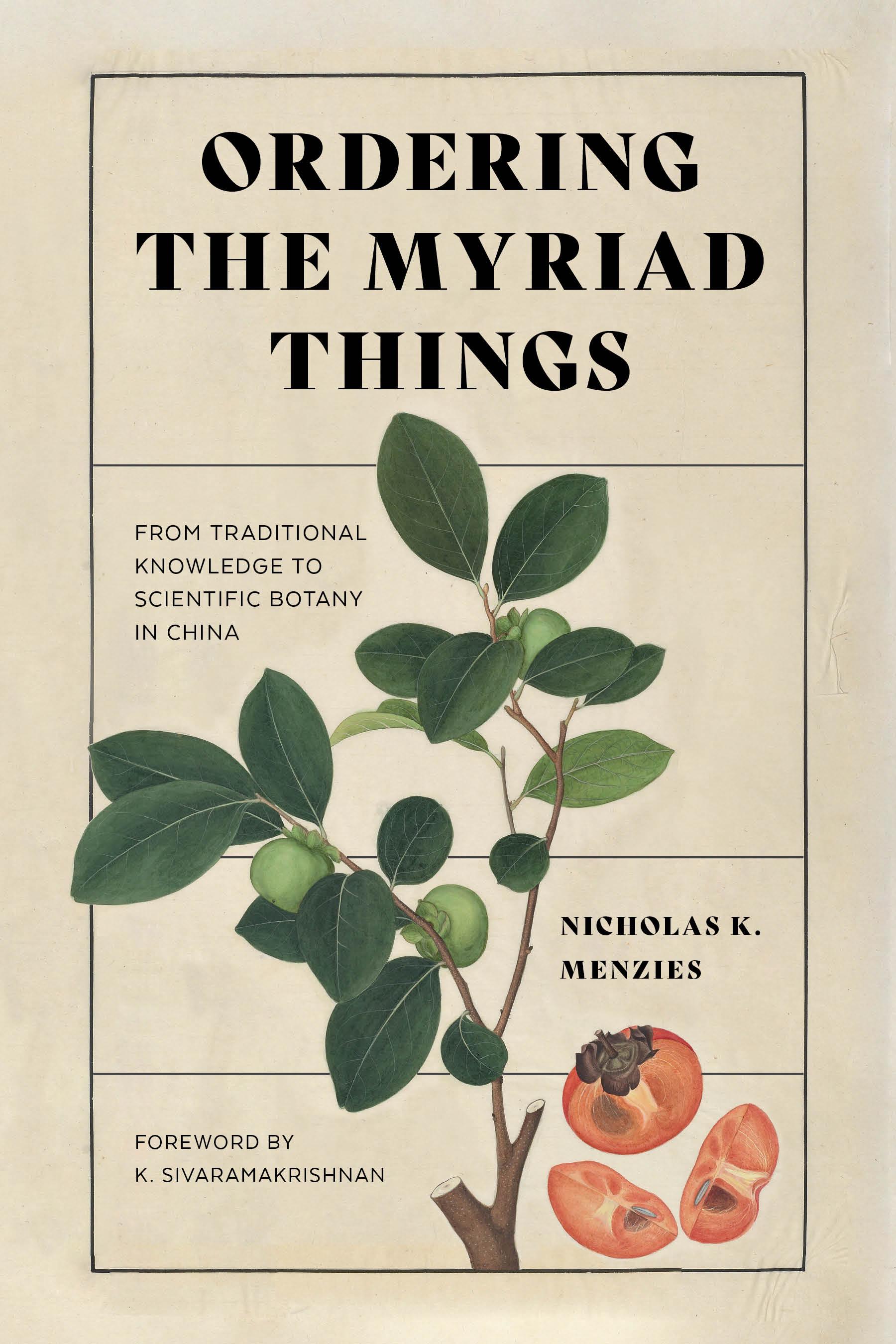
China’s vast and ancient body of documented knowledge about plants includes horticultural manuals and monographs, comprehensive encyclopedias, geographies, and specialized anthologies of verse and prose written by keen observers of nature. Until the late nineteenth century, however, standard practice did not include deploying a set of diagnostic tools using a common terminology and methodology to identify and describe new and unknown species or properties.
Ordering the Myriad Things relates how traditional knowledge of plants in China gave way to scientific botany between the mid-nineteenth and mid-twentieth centuries, when plants came to be understood in a hierarchy of taxonomic relationships to other plants and within a broader ecological context. This shift not only expanded the universe of plants beyond the familiar to encompass unknown species and geographies but fueled a new knowledge of China itself. Nicholas K. Menzies highlights the importance of botanical illustration as a tool for recording nature—contrasting how images of plants were used in the past to the conventions of scientific drawing and investigating the transition of “traditional” systems of organization, classification, observation, and description to “modern” ones.
Pay easily by card, Klarna, Apple Pay or Google Pay. Not happy? You always have a 14-day money-back guarantee. Read more in our terms. If you have any questions, email us at hello@memmo.org.
Memmo makes studying easier – wherever you are in the world. We bring your course books and smart study tools together in one place: summaries, quizzes, podcasts and flashcards. Plus Ted, your study buddy who answers anything you wonder. Over 50,000 students already study here – built to help you learn faster and stress less.