
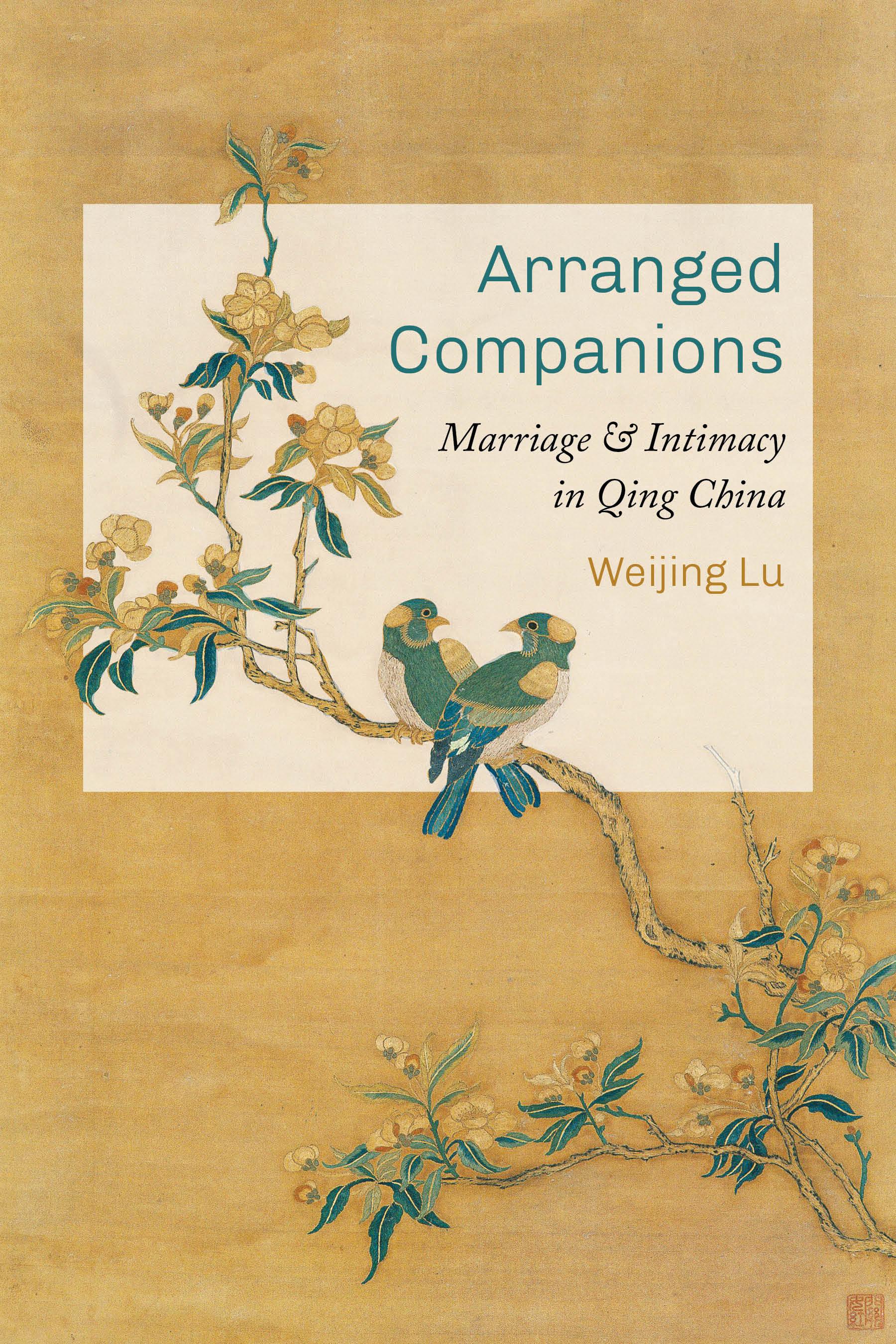
Questions conventional assumptions about premodern conjugal relationships
Although commonly associated with patriarchal oppression, arranged marriages have adapted over the centuries to changing cultural norms and the lived experiences of men and women. In Arranged Companions, historian Weijing Lu chronicles how marital behaviors during the early and High Qing (mid-seventeenth through mid-nineteenth centuries) were informed by rich and complex traditions and mediated by the historical conditions of the period, during which marital affection was celebrated as a basic ingredient of an ideal marriage.
Lu finds public representation and private communication of marital affection in personal records, including poetry, biographies, letters, and memoirs. During this unique historical moment, ideals of marital companionship and love came to fruition while social changes also created new tensions for couples and extended families. Offering surprising revelations about conjugal relations during this time of change, Arranged Companions raises provocative questions about the cultural construction of intimacy and the meaning of a “happy marriage.”
Pay easily by card, Klarna, Apple Pay or Google Pay. Not happy? You always have a 14-day money-back guarantee. Read more in our terms. If you have any questions, email us at hello@memmo.org.
Memmo makes studying easier – wherever you are in the world. We bring your course books and smart study tools together in one place: summaries, quizzes, podcasts and flashcards. Plus Ted, your study buddy who answers anything you wonder. Over 50,000 students already study here – built to help you learn faster and stress less.