
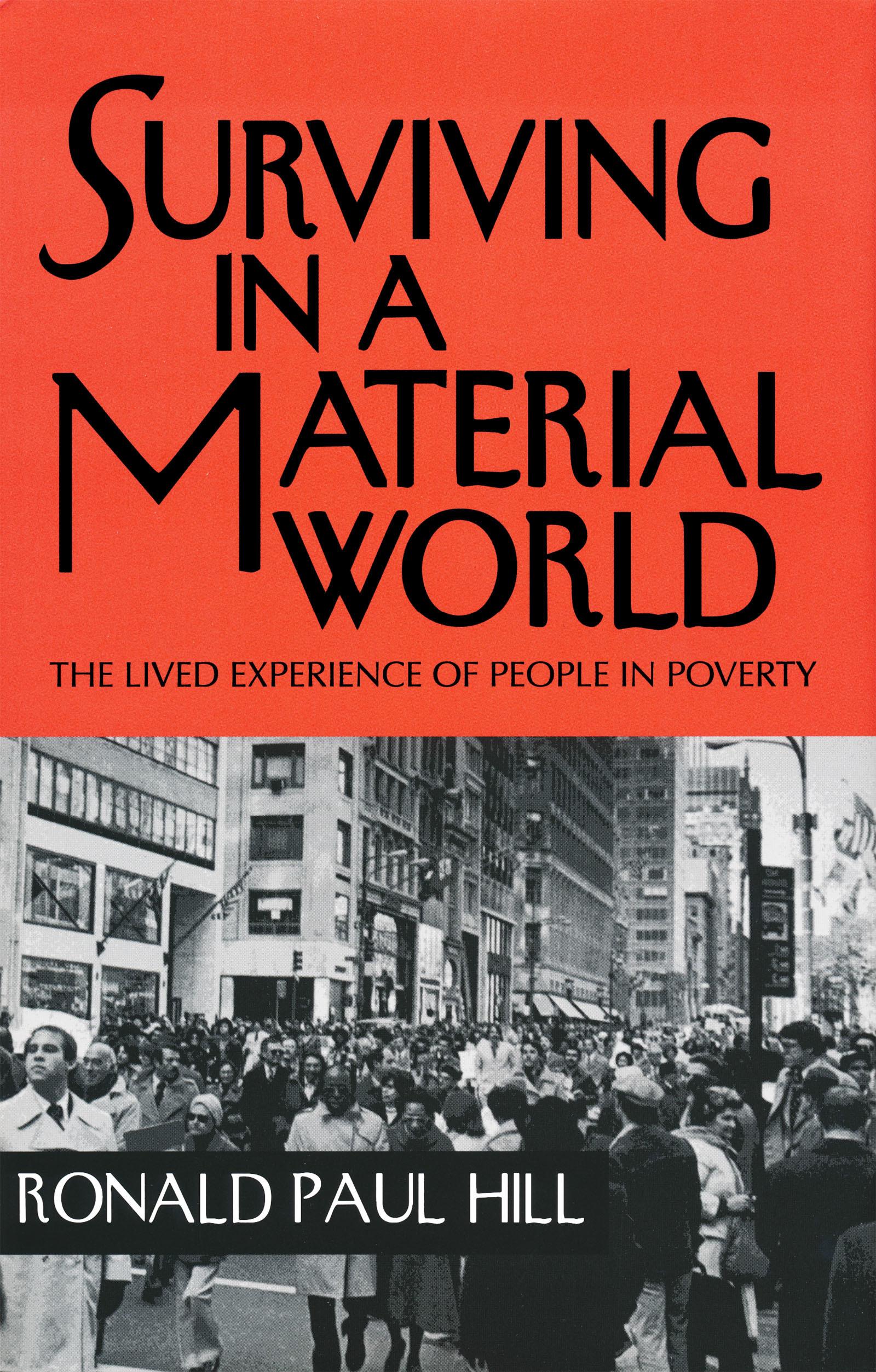
Cutting through the stereotypes that enable many people to dismiss the needs of the impoverished, Surviving in a Material World provides an eye-opening look at the material lives of the poor in America. Hill’s vivid, detailed narratives allow readers to envision themselves in the real world of the poor, to imagine what it would be like to be faced with their particular circumstances and limited options.
Social scientists have devoted considerable time and effort to unearthing the rationale behind why people buy; yet, very little attention has been paid to the consumption habits of the poor. Over the course of the last decade, Hill has dedicated his research efforts to answering the question: How do various subpopulations among the poor survive in our material world? Hill identifies six of these subgroups, including the "hidden homeless," homeless families living in shelters, poor children, and the rural poor.
Surviving in a Material World challenges readers to cast aside their biases and to make evaluations about the poor based on a complete picture of their lives. Americans often assume that the poor have access to family structures, teachers, and civic and community organizations that mirror their own. This insightful new book makes clear that such naive approaches fail to reflect the lived world and restrictions the poor endure in the face of the American dream.
Approximately 13 percent of Americans (35 million people) live in poverty. That rate soars for children: it is estimated that nearly one in five young people lives in a home without adequate income, shelter, food, and health care. Bearing in mind the specific needs of each community, Hill proposes solutions that attack the roots of poverty through an understanding of impoverished groups’ strengths and weaknesses.
Pay easily by card, Klarna, Apple Pay or Google Pay. Not happy? You always have a 14-day money-back guarantee. Read more in our terms. If you have any questions, email us at hello@memmo.org.
Memmo makes studying easier – wherever you are in the world. We bring your course books and smart study tools together in one place: summaries, quizzes, podcasts and flashcards. Plus Ted, your study buddy who answers anything you wonder. Over 50,000 students already study here – built to help you learn faster and stress less.