
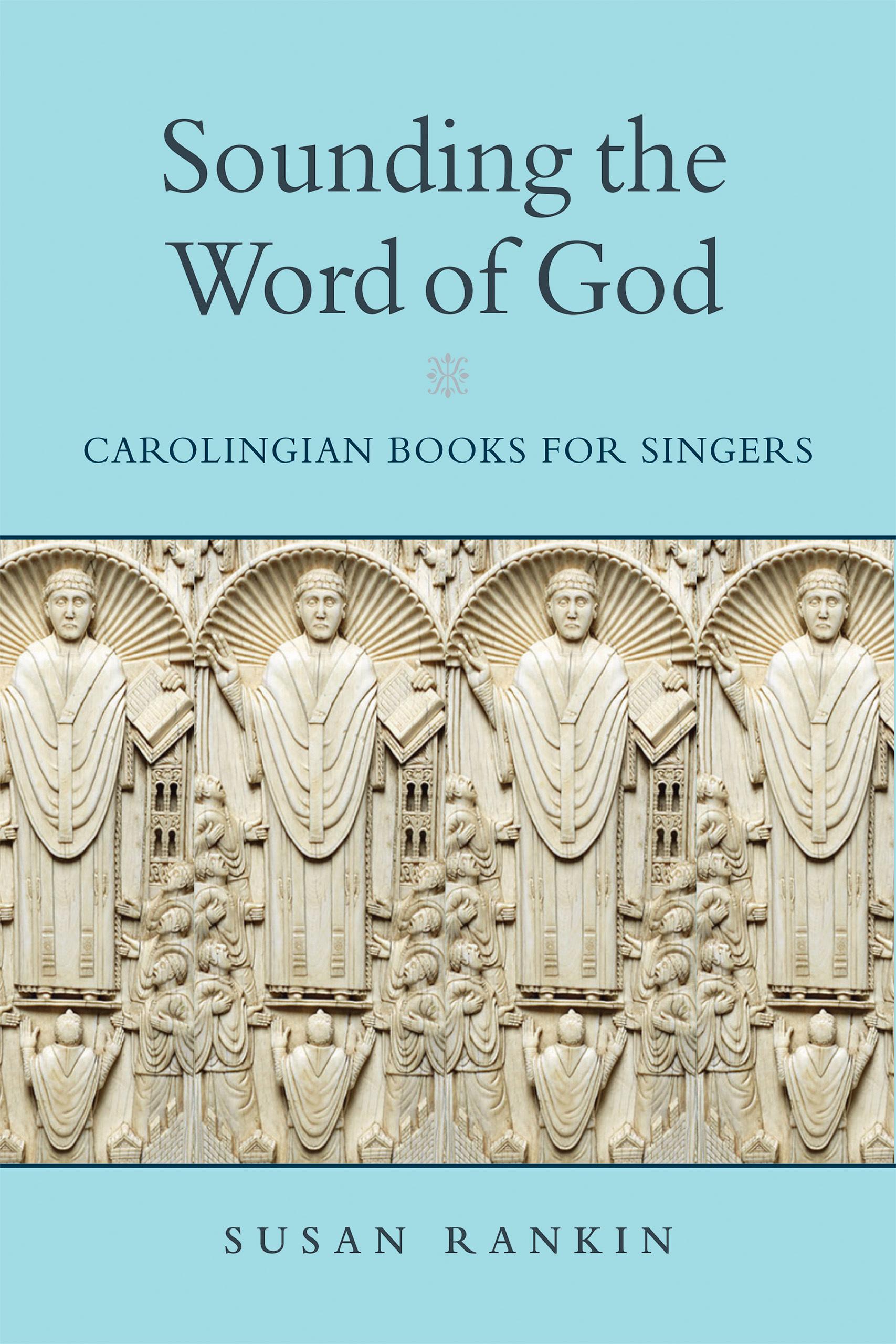
Drawing on a wide context of bookmaking, this sweeping study traces fundamental changes in books made to support musical practice during the Carolingian Renaissance.
During the late eighth and ninth centuries, there were dramatic changes in the way European medieval scribes made books for singers, moving from heavy reliance on unwritten knowledge to the introduction of musical notation into manuscripts. Well-made liturgical books were vital to the success of the Carolingian fight for Christian salvation: these were the basis for carrying out worship correctly, rendering it most effective in petitions to the Christian God. In Sounding the Word of God, Susan Rankin explores Carolingian concern with the expression and control of sound in writing—discernible through instructions for readers and singers visible in liturgical books. Her central focus is on books made for singers, including those made for priests. The emergence of musical notations for ecclesiastical chant and of books designed to accommodate those notations, Rankin concludes, are important aspects of the impact of Carolingian reforming zeal on material culture.
The book has three sections. Part 1 considers late antique and early medieval texts, which deal with the value of singing and its necessary regulation. Part 2 describes and investigates techniques used by Carolingian scribes to provide instructions for readers and singers. The extant books themselves are the focus of part 3. Rankin’s analysis of over two hundred manuscripts and extensive supporting images represents the work of a scholar who has spent a lifetime with the sources; her explication of the images, particularly those of the earlier manuscripts, changes the way in which musicologists and liturgical scholars will view the images. Indeed, it will change the way in which they approach the unfolding history of chant and liturgy in the Carolingian period.
Pay easily by card, Klarna, Apple Pay or Google Pay. Not happy? You always have a 14-day money-back guarantee. Read more in our terms. If you have any questions, email us at hello@memmo.org.
Memmo makes studying easier – wherever you are in the world. We bring your course books and smart study tools together in one place: summaries, quizzes, podcasts and flashcards. Plus Ted, your study buddy who answers anything you wonder. Over 50,000 students already study here – built to help you learn faster and stress less.