
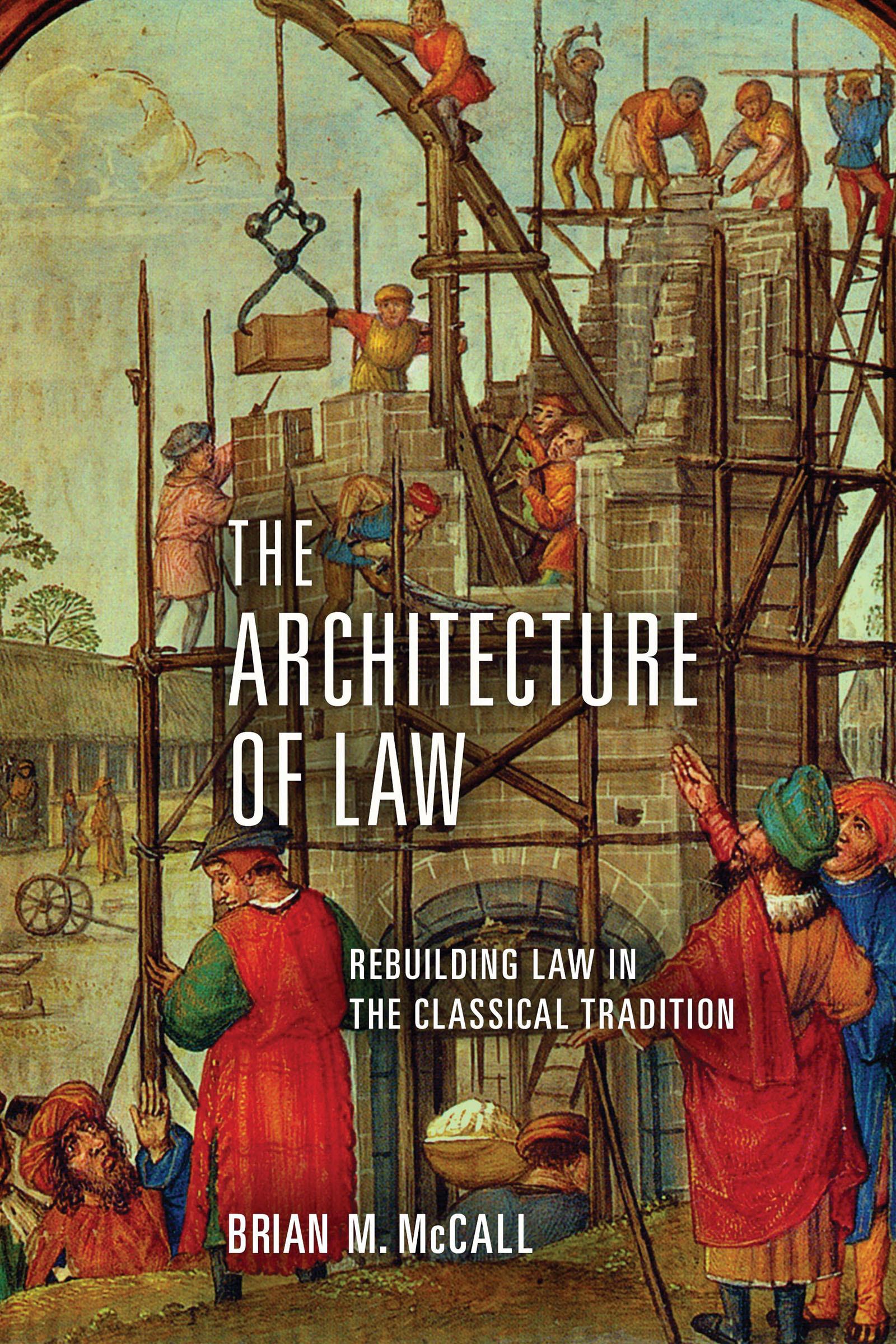
This book argues that classical natural law jurisprudence provides a superior answer to the questions “What is law?” and “How should law be made?” rather than those provided by legal positivism and “new” natural law theories.
What is law? How should law be made? Using St. Thomas Aquinas’s analogy of God as an architect, Brian McCall argues that classical natural law jurisprudence provides an answer to these questions far superior to those provided by legal positivism or the “new” natural law theories. The Architecture of Law explores the metaphor of law as an architectural building project, with eternal law as the foundation, natural law as the frame, divine law as the guidance provided by the architect, and human law as the provider of the defining details and ornamentation. Classical jurisprudence is presented as a synthesis of the work of the greatest minds of antiquity and the medieval period, including Cicero, Aristotle, Gratian, Augustine, and Aquinas; the significant texts of each receive detailed exposition in these pages. Along with McCall’s development of the architectural image, he raises a question that becomes a running theme throughout the book: To what extent does one need to know God to accept and understand natural law jurisprudence, given its foundational premise that all authority comes from God? The separation of the study of law from knowledge of theology and morality, McCall argues, only results in the impoverishment of our understanding of law. He concludes that they must be reunited in order for jurisprudence to flourish. This book will appeal to academics, students in law, philosophy, and theology, and to all those interested in legal or political philosophy.
Pay easily by card, Klarna, Apple Pay or Google Pay. Not happy? You always have a 14-day money-back guarantee. Read more in our terms. If you have any questions, email us at hello@memmo.org.
Memmo makes studying easier – wherever you are in the world. We bring your course books and smart study tools together in one place: summaries, quizzes, podcasts and flashcards. Plus Ted, your study buddy who answers anything you wonder. Over 50,000 students already study here – built to help you learn faster and stress less.