
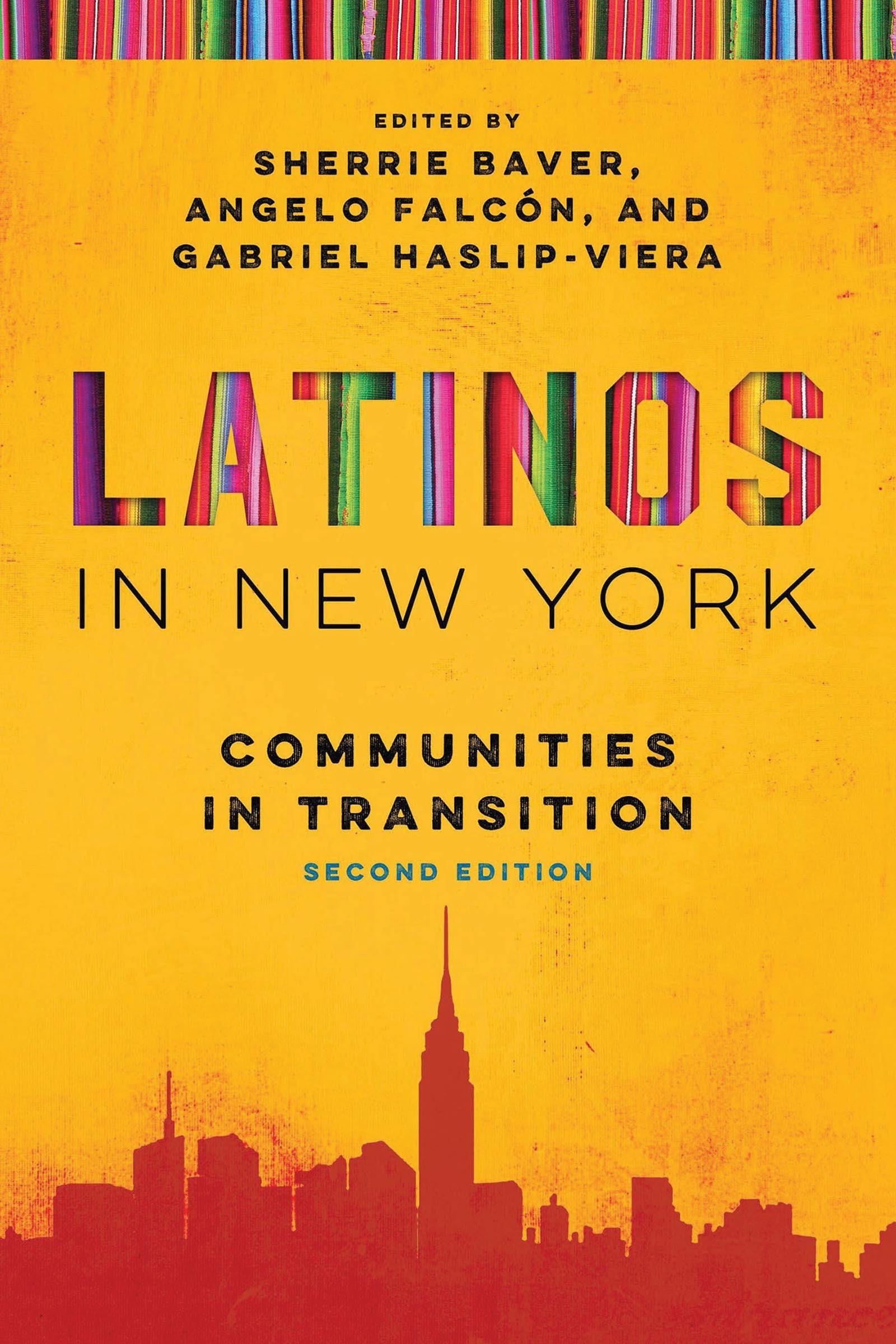
Significant changes in New York City's Latino community have occurred since the first edition of Latinos in New York: Communities in Transition was published in 1996. The Latino population in metropolitan New York has increased from 1.7 million in the 1990s to over 2.4 million, constituting a third of the population spread over five boroughs. Puerto Ricans remain the largest subgroup, followed by Dominicans and Mexicans; however, Puerto Ricans are no longer the majority of New York's Latinos as they were throughout most of the twentieth century.
Latinos in New York: Communities in Transition, second edition, is the most comprehensive reader available on the experience of New York City's diverse Latino population. The essays in Part I examine the historical and sociocultural context of Latinos in New York. Part II looks at the diversity comprising Latino New York. Contributors focus on specific national origin groups, including Ecuadorians, Colombians, and Central Americans, and examine the factors that prompted emigration from the country of origin, the socioeconomic status of the emigrants, the extent of transnational ties with the home country, and the immigrants' interaction with other Latino groups in New York. Essays in Part III focus on politics and policy issues affecting New York's Latinos. The book brings together leading social analysts and community advocates on the Latino experience to address issues that have been largely neglected in the literature on New York City. These include the role of race, culture and identity, health, the criminal justice system, the media, and higher education, subjects that require greater attention both from academic as well as policy perspectives.
Contributors: Sherrie Baver, Juan Cartagena, Javier Castaño, Ana María Díaz-Stevens, Angelo Falcón, Juan Flores, Gabriel Haslip-Viera, Ramona Hernández, Luz Yadira Herrera, Gilbert Marzán, Ed Morales, Pedro A. Noguera, Rosalía Reyes, Clara E. Rodríguez, José Ramón Sánchez, Walker Simon, Robert Courtney Smith, Andrés Torres, and Silvio Torres-Saillant.
Pay easily by card, Klarna, Apple Pay or Google Pay. Not happy? You always have a 14-day money-back guarantee. Read more in our terms. If you have any questions, email us at hello@memmo.org.
Memmo makes studying easier – wherever you are in the world. We bring your course books and smart study tools together in one place: summaries, quizzes, podcasts and flashcards. Plus Ted, your study buddy who answers anything you wonder. Over 50,000 students already study here – built to help you learn faster and stress less.