
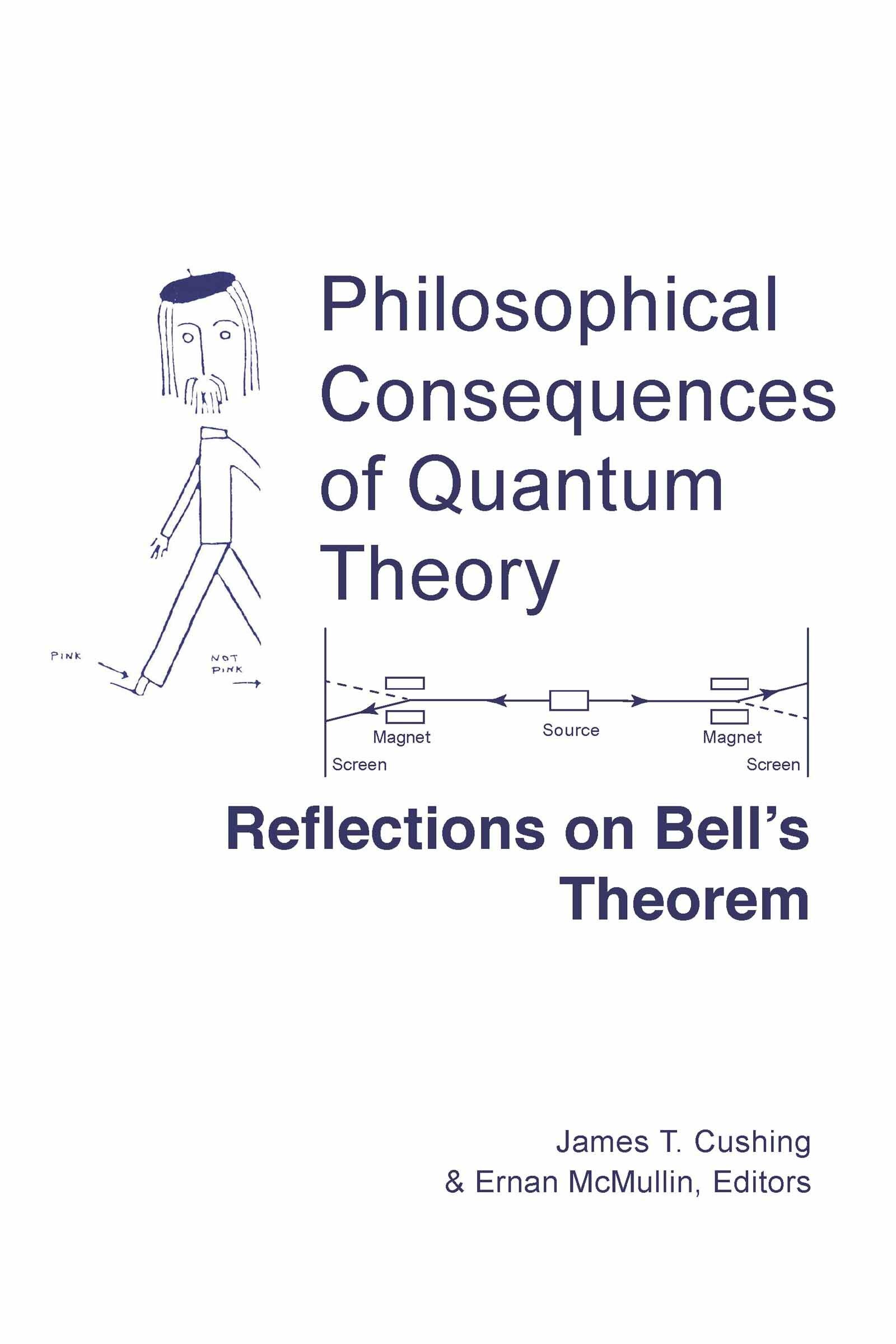
From the beginning, the implications of quantum theory for our most general understanding of the world have been a matter of intense debate. Einstein argues that the theory had to be regarded as fundamentally incomplete. Its inability, for example, to predict the exact time of decay of a single radioactive atom had to be due to a failure of the theory and not due to a permanent inability on our part or a fundamental indeterminism in nature itself.
In 1964, John Bell derived a theorem which showed that any deterministic theory which preserved "locality" (i.e., which rejected action at a distance) would have certain consequences for measurements performed at a distance from one another. An experimental check seems to show that these consequences are not, in fact, realized. The correlation between the sets of events is much stronger than any "local" deterministic theory could allow. What is more, this stronger correlation is precisely that which is predicted by quantum theory. The astonishing result is that local deterministic theories of the classical sort seem to be permanently excluded. Not only can the individual decay not be predicted, but no future theory can ever predict it.
The contributors in this volume wrestle with this conclusion. Some welcome it; others leave open a return to at lease some kind of deterministic world, one which must however allow something like action-at-a distance. How much lit it? And how can one avoid violating relativity theory, which excludes action-at-a-distance? How can a clash between the two fundamental theories of modern physics, relativity and quantum theory, be avoided? What are the consequences for the traditional philosophic issue of causality explanation and objectivity? One thing is certain; we can never return to the comfortable Newtonian world where everything that happened was, in principle, predictable and where what happened at one measurement site could not affect another set of measurements being performed light-years away, at a distance that a light-signal could not bridge.
Contributors: James T. Cushing, Abner Shimony, N. David Mermin, Jon P. Jarrett, Linda Wessels, Bas C. van Fraassen, Jeremy Butterfield, Michael L. G. Redhead, Henry P. Stapp, Arthur Fine, R. I. G. Hughes, Paul Teller, Don Howard, Henry J. Folse, and Ernan McMullin.
Pay easily by card, Klarna, Apple Pay or Google Pay. Not happy? You always have a 14-day money-back guarantee. Read more in our terms. If you have any questions, email us at hello@memmo.org.
Memmo makes studying easier – wherever you are in the world. We bring your course books and smart study tools together in one place: summaries, quizzes, podcasts and flashcards. Plus Ted, your study buddy who answers anything you wonder. Over 50,000 students already study here – built to help you learn faster and stress less.