
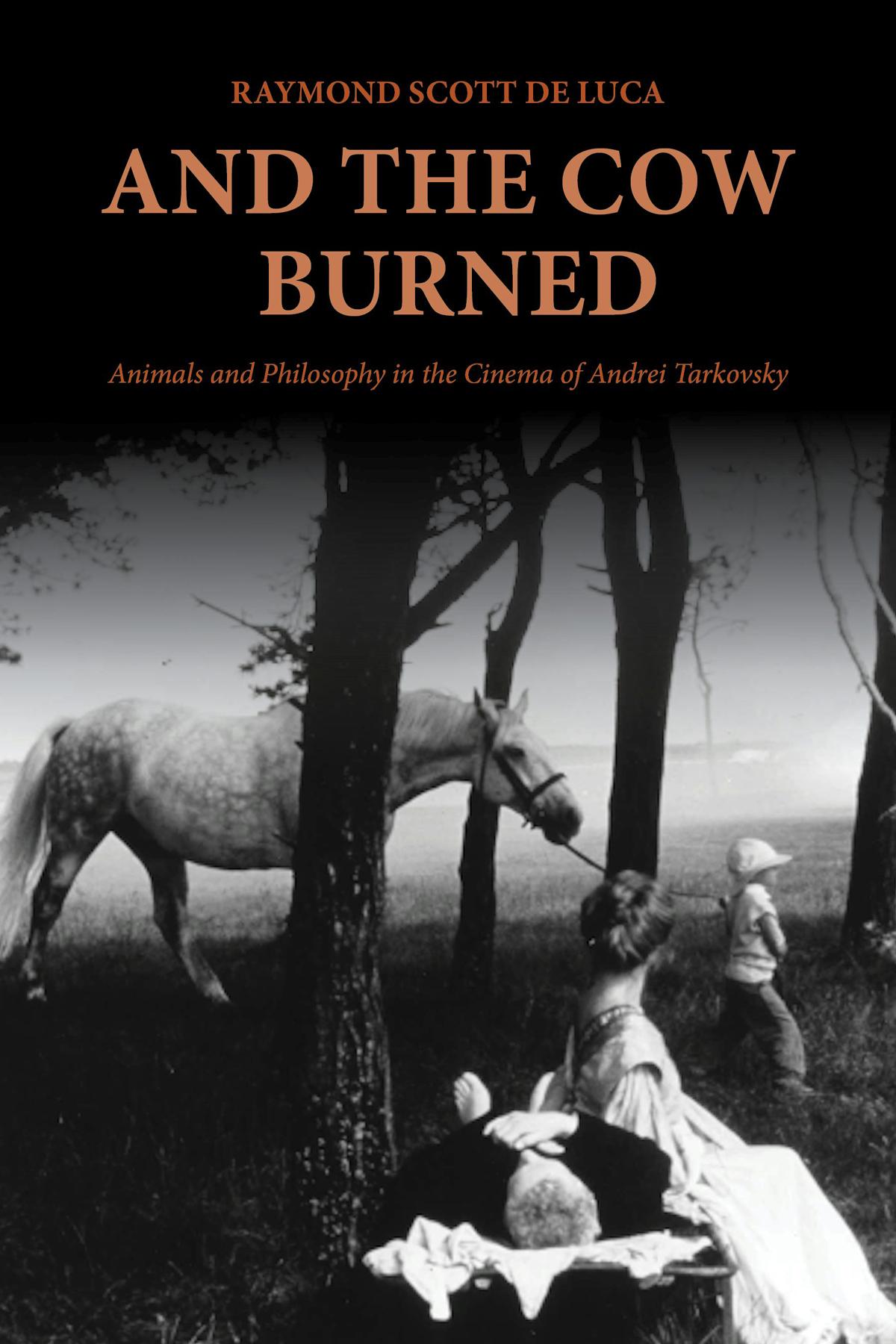
In the films of legendary Soviet director Andrei Tarkovsky, images of visually striking and mysterious animals serve as powerful symbols, marvels, and metaphors, from nomadic dogs to rolling horses and soaring birds. Yet Tarkovsky's hauntingly beautiful depictions of animals exist in suspended tension with his often grisly portrayals of animal cruelty—exemplified by the cow he set on fire while making his second feature film Andrei Rublev. These disturbing moments challenge viewers' perceptions of Tarkovsky's morality and complicate his films' refined artistry.
And the Cow Burned is a dynamic interdisciplinary study of Tarkovsky's filmography that draws on insights from animal studies, ethical philosophy, and film theory. Through focused case studies centered on different animals, De Luca posits that Tarkovsky's body of work serves as a canvas for animal philosophy, exposing contradictions inherent in human-animal relationships while raising questions about agency, ethics, and power. Readers are invited to engage with the ethical ramifications of Tarkovsky's depictions and understand these animals as real beings whose experiences are fundamentally woven into his moral and aesthetic considerations.
And the Cow Burned challenges us to rethink the connections between animals and humans, encouraging a fresh perspective on the paradoxical exchanges that shape our interactions and paving the way for new interpretations in the future.
Pay easily by card, Klarna, Apple Pay or Google Pay. Not happy? You always have a 14-day money-back guarantee. Read more in our terms. If you have any questions, email us at hello@memmo.org.
Memmo makes studying easier – wherever you are in the world. We bring your course books and smart study tools together in one place: summaries, quizzes, podcasts and flashcards. Plus Ted, your study buddy who answers anything you wonder. Over 50,000 students already study here – built to help you learn faster and stress less.