
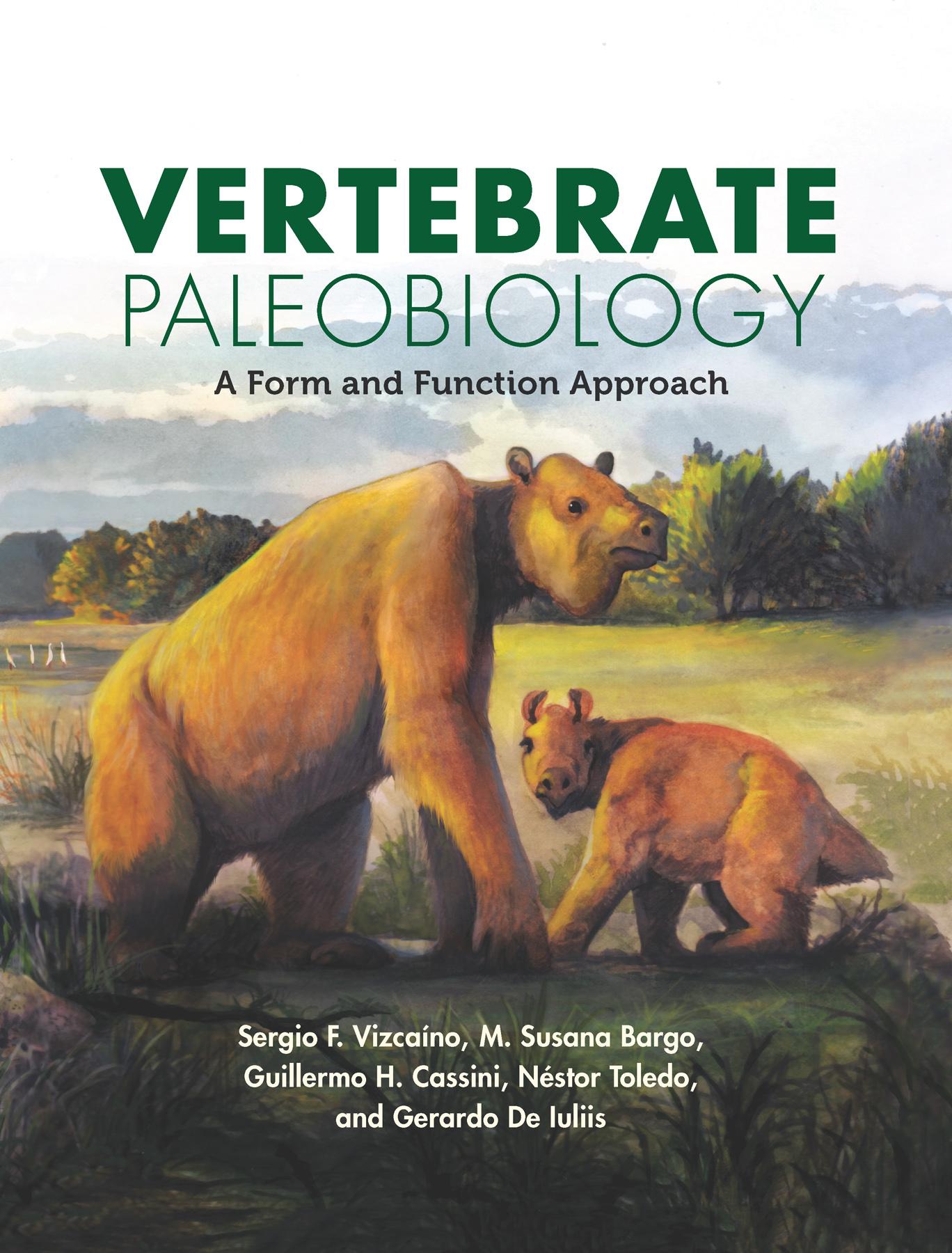
An essential introduction to the paleobiology of animal body size, locomotion, and feeding.
Paleobiology is the branch of evolutionary biology involved in the reconstruction of the life histories of extinct organisms. It answers the questions, How do we use fossils to reconstruct the size of prehistoric animals, and How did they move and feed? Drawing on a rich inventory of South American Miocene fossils, Vertebrate Paleobiology: A Form and Function Approach examines different aspects of functional morphology and how they are tested by paleontologists, anatomists, and zoologists.
Beginning with a review of various methodologies to interpret fossils, the authors turn to the main concepts important to functional morphology and give examples of each. They conclude by showing how functional morphology enables a dynamic, broadscale reconstruction of the life of prehistoric animals during the South American Miocene.
Originally published in Spanish, Vertebrate Paleobiology: A Form and Function Approach provides a broad sweep of recent developments, including theoretical and practical techniques, applied to the study of extinct vertebrates.
Pay easily by card, Klarna, Apple Pay or Google Pay. Not happy? You always have a 14-day money-back guarantee. Read more in our terms. If you have any questions, email us at hello@memmo.org.
Memmo makes studying easier – wherever you are in the world. We bring your course books and smart study tools together in one place: summaries, quizzes, podcasts and flashcards. Plus Ted, your study buddy who answers anything you wonder. Over 50,000 students already study here – built to help you learn faster and stress less.