
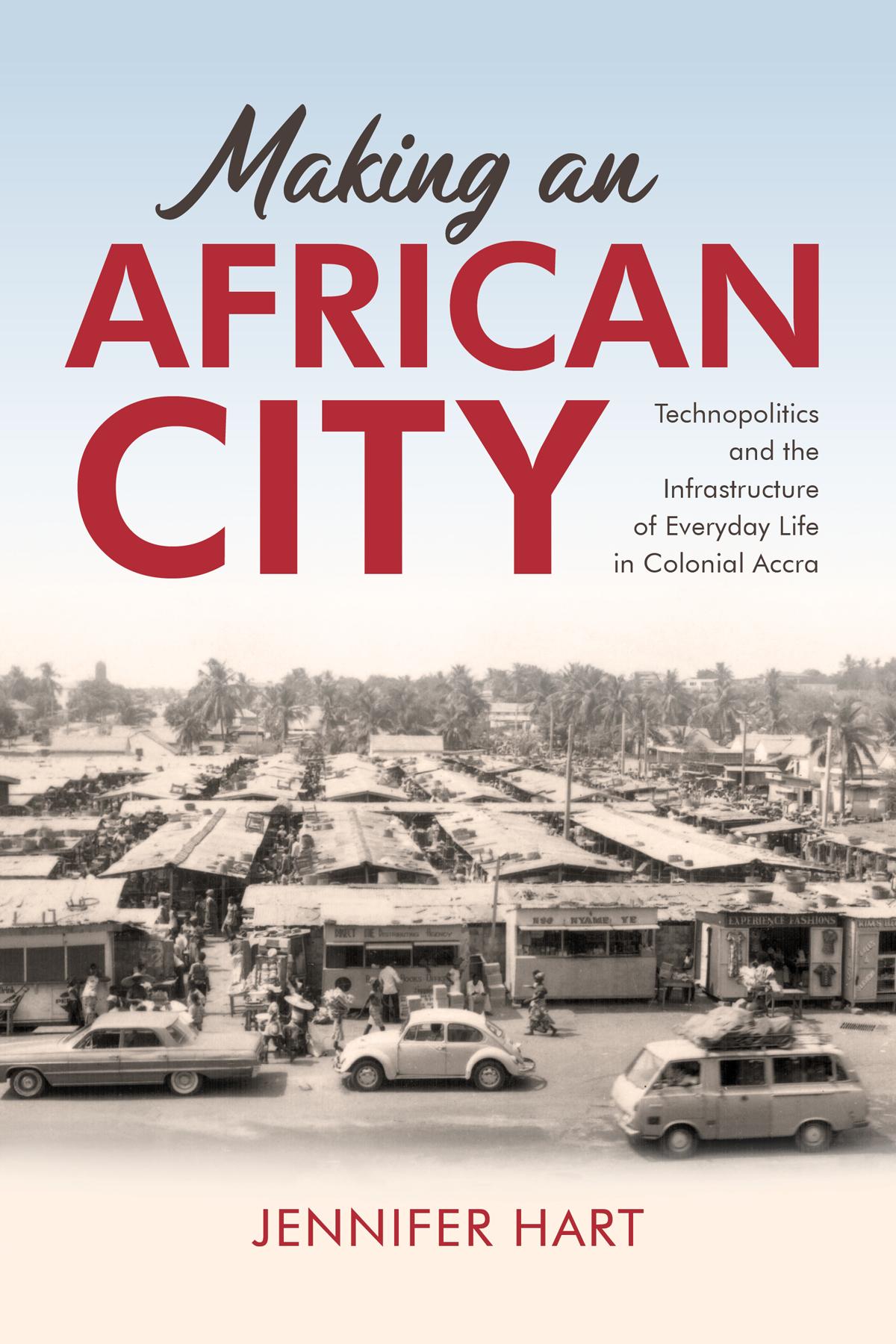
In Making an African City, Jennifer Hart traces the way that British colonial officials, Accra Town Council members, and a diverse group of technocrats used regulation to define what an "acceptable" city looked like. Unlike cities elsewhere on the continent, Accra had a long history of urbanism that predated British colonial presence. By criminalizing some activities and privileging others, colonial officials sought to marginalize indigenous practices of Accra residents and shape the development of a new, "modern" city.
Hart argues, however, that residents regularly pushed back, protesting regulations, refusing to participate in newly developed systems, reappropriating infrastructure, demanding rights to city services, and asserting their own informal vision for the future of the city. While urban plans and regulations ultimately failed to substantively remake the city, their effects were and are still felt by urban residents, who are often subject to but not served by urban infrastructure.
Making an African City explores how the informalization of Accra's development was a historical process, not a natural and self-evident phenomenon, which connects the history of the city with the history of urban development and the growth of technocracy around the world.
Pay easily by card, Klarna, Apple Pay or Google Pay. Not happy? You always have a 14-day money-back guarantee. Read more in our terms. If you have any questions, email us at hello@memmo.org.
Memmo makes studying easier – wherever you are in the world. We bring your course books and smart study tools together in one place: summaries, quizzes, podcasts and flashcards. Plus Ted, your study buddy who answers anything you wonder. Over 50,000 students already study here – built to help you learn faster and stress less.