
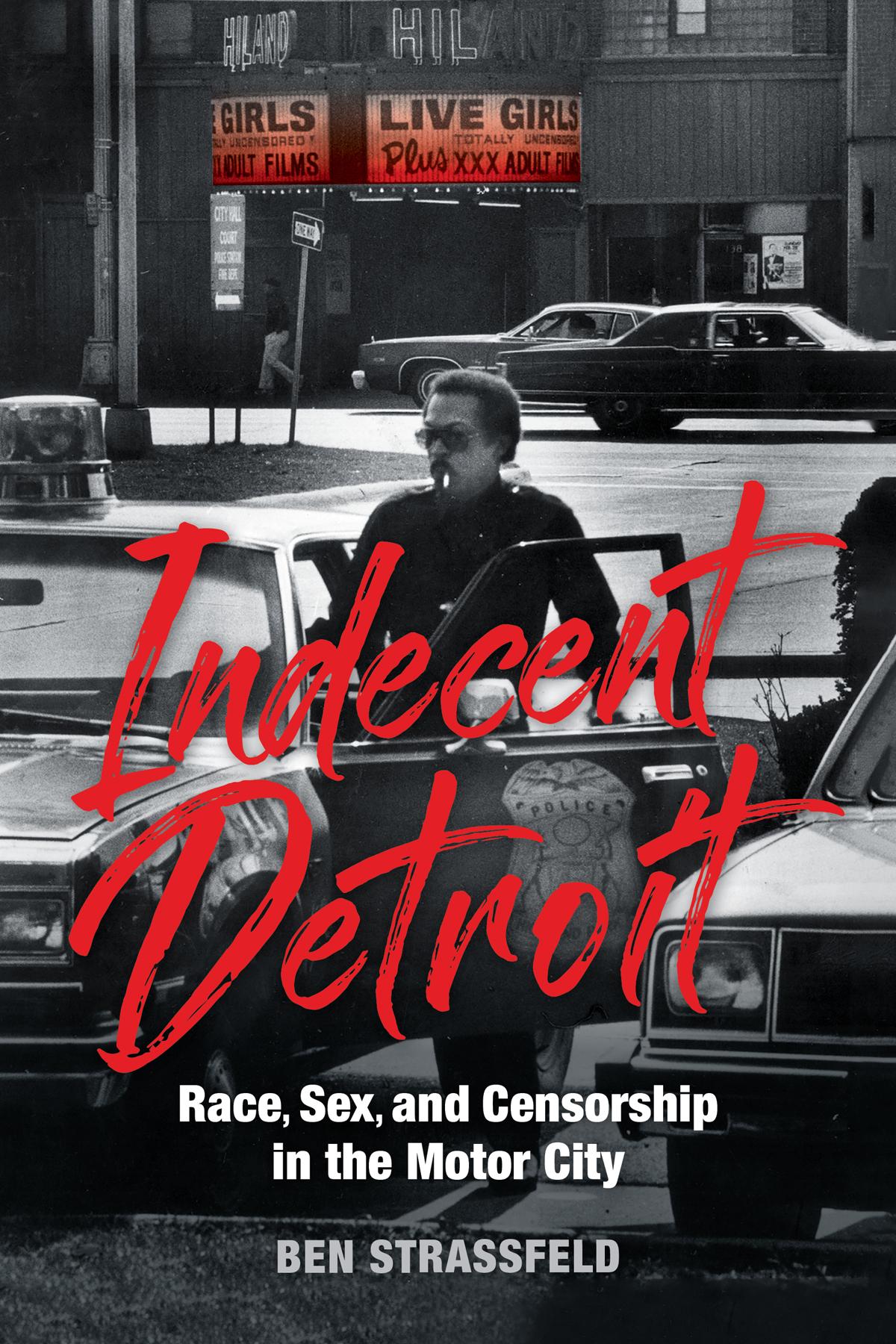
While Detroit has been a major focus in urban history, little has been written on censorship in the very city that—due to shifting legalities, the urban crisis, and racial tensions—profoundly shaped media suppression in the United States.
By examining censorship in film and literature, Indecent Detroit recounts the evolution of media control from the end of WWII through the 1970s, when the US saw a major change in the legal mechanisms used to censor media due to court rulings that curtailed censorship laws. Ben Strassfeld reveals how Detroit altered its censorial tactics and rhetoric from an obscenity-based system of censorship centered in the Detroit Police Department to a regulatory model based in zoning law that was then expanded nationwide. This shift was connected to broader social and political trends, including the sexual revolution, that led the public to increasingly turn against censorship.
A must-read for film and media scholars, Indecent Detroit highlights how one Midwest city's ordinance was imitated across the country after it was upheld by the US Supreme Court, making this more than a local curiosity but also an influential model for the cultural, political, and moral control of urban space through media regulation.
Pay easily by card, Klarna, Apple Pay or Google Pay. Not happy? You always have a 14-day money-back guarantee. Read more in our terms. If you have any questions, email us at hello@memmo.org.
Memmo makes studying easier – wherever you are in the world. We bring your course books and smart study tools together in one place: summaries, quizzes, podcasts and flashcards. Plus Ted, your study buddy who answers anything you wonder. Over 50,000 students already study here – built to help you learn faster and stress less.