
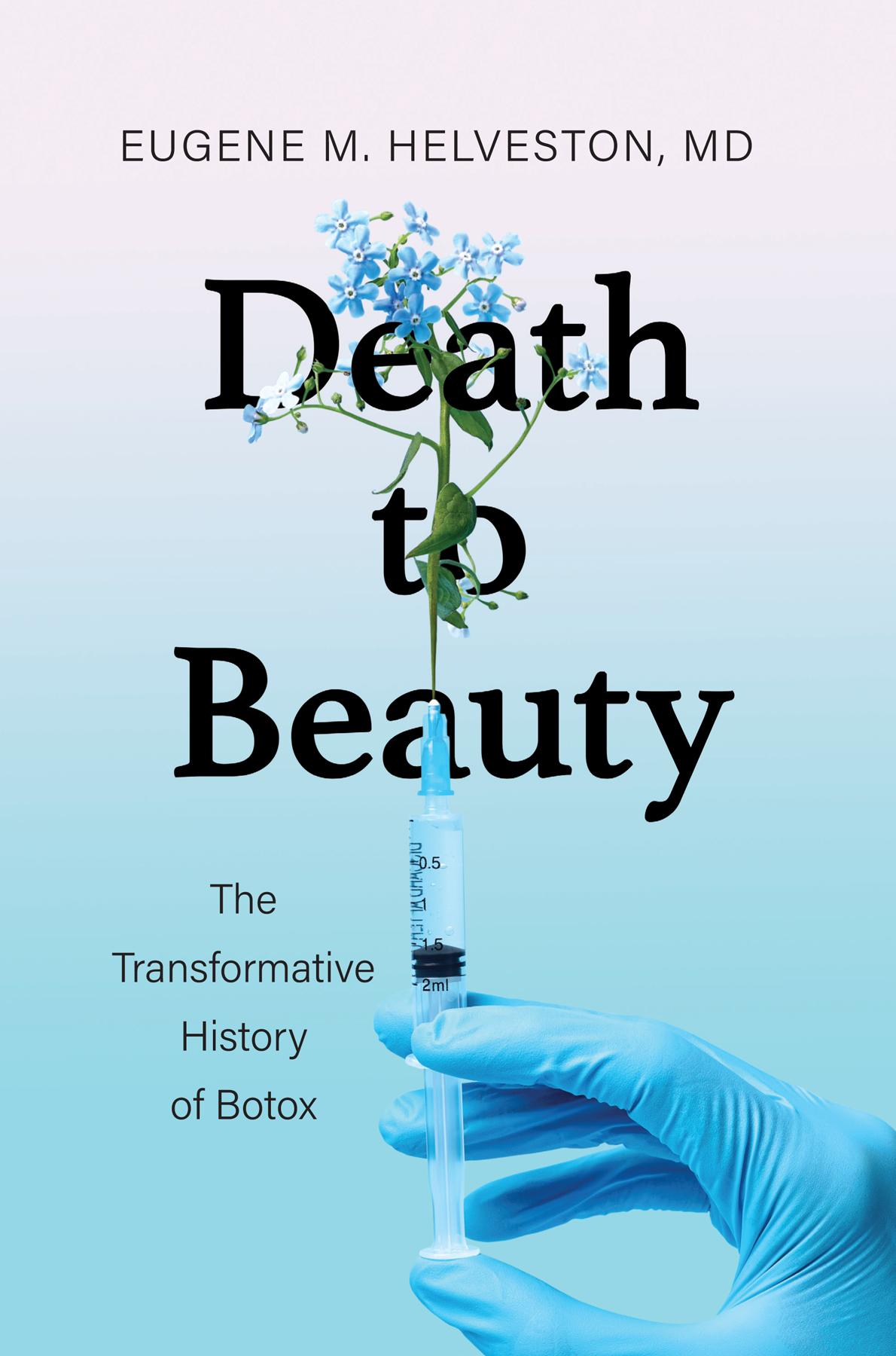
In the 1970s, Dr. Alan Scott sought to selectively weaken eye muscles to treat strabismus (when one or both eyes are misaligned) without surgery. After failed attempts with other agents, Scott developed a method to stabilize the bacteria that causes botulism, culminating in a drug that eventually became known as Botox.
In Death to Beauty, Eugene M. Helveston, MD, follows the unlikely story of botulism's 1817 discovery in contaminated German sausages, to its use in military and research facilities, to Scott, an ophthalmologist who aimed to safely use the drug in humans. Scott struggled alone as an unknown in the pharmaceutical industry, searching for clinical trial financing and FDA approval, which he achieved at a fraction of the billions big pharma usually spends to bring a drug to market. Eventually, the company Allergan bought him out, capitalizing on the possibilities for cosmetic uses. Scott's formula was renamed "Botox" and reached annual sales in the billions. After the sale, Scott received no further compensation from Botox sales and remained the same unassuming man.
A fascinating walk through the intricate history of how the world's deadliest toxin starting as a treatment for crossed eyes became a routine tool for the cosmetic industry, Death to Beauty will make you rethink success, beauty, and deadly bacteria.
Pay easily by card, Klarna, Apple Pay or Google Pay. Not happy? You always have a 14-day money-back guarantee. Read more in our terms. If you have any questions, email us at hello@memmo.org.
Memmo makes studying easier – wherever you are in the world. We bring your course books and smart study tools together in one place: summaries, quizzes, podcasts and flashcards. Plus Ted, your study buddy who answers anything you wonder. Over 75,000 students already study here – built to help you learn faster and stress less.