
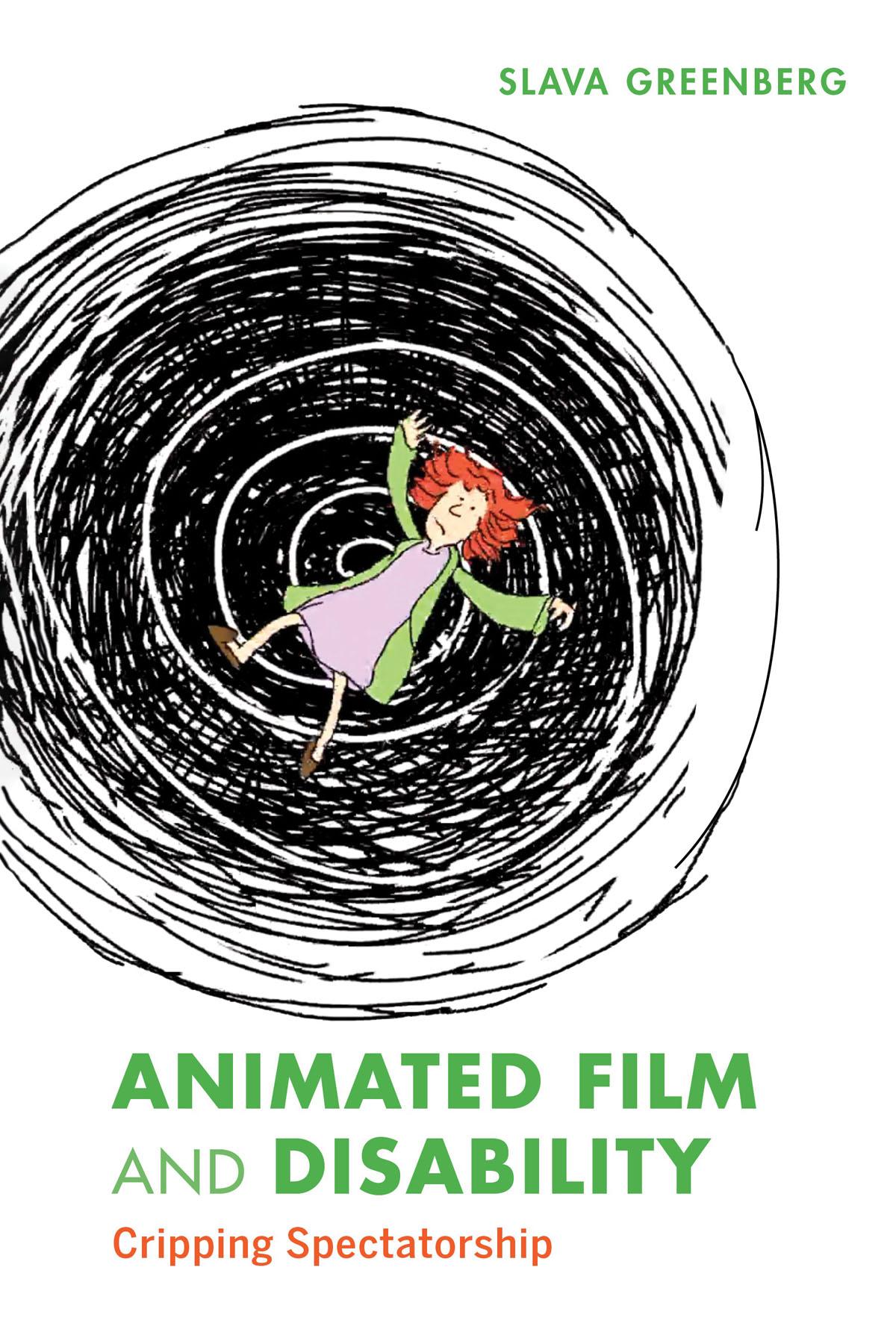
While many live-action films portray disability as a spectacle, "crip animation" (a genre of animated films that celebrates disabled people's lived experiences) uses a variety of techniques like clay animation, puppets, pixilation, and computer-generated animation to represent the inner worlds of people with disabilities. Crip animation has the potential to challenge the ableist gaze and immerse viewers in an alternative bodily experience.
In Animated Film and Disability, Slava Greenberg analyzes over 30 animated works about disabilities, including Rocks in My Pockets, An Eyeful of Sound, and A Shift in Perception. He considers the ableism of live-action cinematography, the involvement of filmmakers with disabilities in the production process, and the evocation of the spectators' senses of sight and hearing, consequently subverting traditional spectatorship and listenership hierarchies. In addition, Greenberg explores physical and sensory accessibility in theaters and suggests new ways to accommodate cinematic screenings.
Offering an introduction to disability studies and crip theory for film, media, and animation scholars, Animated Film and Disability demonstrates that crip animation has the power to breach the spectator's comfort, evoking awareness of their own bodies and, in certain cases, their social privileges.
Pay easily by card, Klarna, Apple Pay or Google Pay. Not happy? You always have a 14-day money-back guarantee. Read more in our terms. If you have any questions, email us at hello@memmo.org.
Memmo makes studying easier – wherever you are in the world. We bring your course books and smart study tools together in one place: summaries, quizzes, podcasts and flashcards. Plus Ted, your study buddy who answers anything you wonder. Over 50,000 students already study here – built to help you learn faster and stress less.