
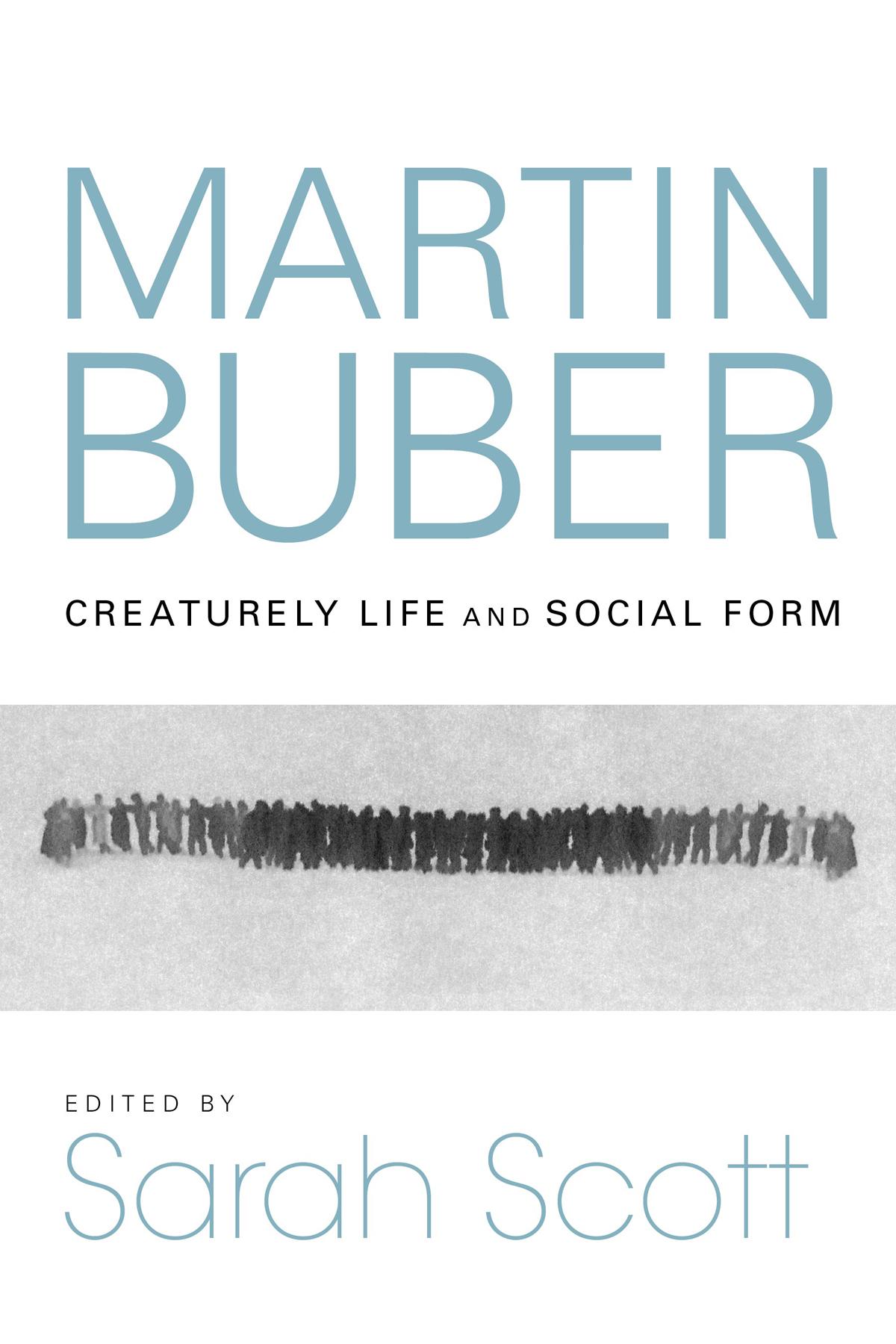
A new collection of essays highlighting the wide range of Buber's thought, career, and activism.
Best known for I and Thou, which laid out his distinction between dialogic and monologic relations, Martin Buber (1878–1965) was also an anthologist, translator, and author of some seven hundred books and papers. Martin Buber: Creaturely Life and Social Form, edited by Sarah Scott, is a collection of nine essays that explore his thought and career.
Martin Buber: Creaturely Life and Social Form shakes up the legend of Buber by decentering the importance of the I-Thou dialogue in order to highlight Buber as a thinker preoccupied by the image of relationship as a guide to spiritual, social, and political change. The result is a different Buber than has hitherto been portrayed, one that is characterized primarily by aesthetics and politics rather than by epistemology or theology.
Martin Buber: Creaturely Life and Social Form will serve as a guide to the entirety of Buber's thinking, career, and activism, placing his work in context and showing both the evolution of his thought and the extent to which he remained driven by a persistent set of concerns.
Pay easily by card, Klarna, Apple Pay or Google Pay. Not happy? You always have a 14-day money-back guarantee. Read more in our terms. If you have any questions, email us at hello@memmo.org.
Memmo makes studying easier – wherever you are in the world. We bring your course books and smart study tools together in one place: summaries, quizzes, podcasts and flashcards. Plus Ted, your study buddy who answers anything you wonder. Over 50,000 students already study here – built to help you learn faster and stress less.