
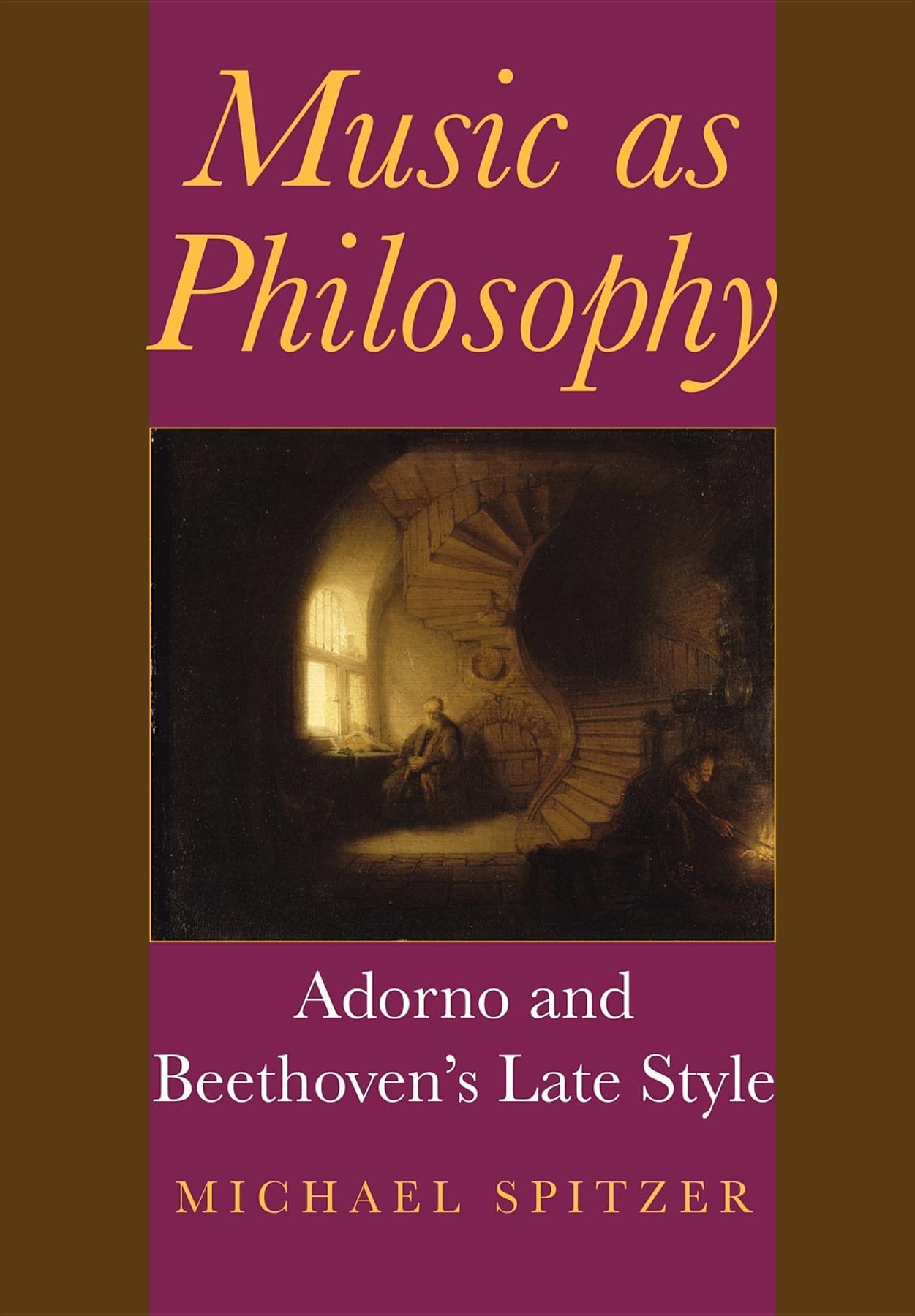
Beethoven's late style is the language of his ninth symphony, the Missa Solemnis, the last piano sonatas and string quartets, the Diabelli Variations, the Bagatelles, as well as five piano sonatas, five string quartets, and several smaller piano works. Historically, these works are seen as forging a bridge between the Classical and Romantic traditions: in terms of their musical structure, they continue to be regarded as revolutionary.
Spitzer's book examines these late works in light of the musical and philosophical writings of the German intellectual Theodor Adorno, and in so doing, attempts to reconcile the conflicting approaches of musical semiotics and critical theory. He draws from various approaches to musical, linguistic, and aesthetic meaning, relating Adorno to such writers as Derrida, Benjamin, and Habermas, as well as contemporary music theorists. Through analyses of Beethoven's use of specific musical techniques (including neo-Baroque fugues and counterpoint), Spitzer suggests that the composer's last works offer a philosophical and musical critique of the Enlightenment, and in doing so created the musical language of premodernism.
Pay easily by card, Klarna, Apple Pay or Google Pay. Not happy? You always have a 14-day money-back guarantee. Read more in our terms. If you have any questions, email us at hello@memmo.org.
Memmo makes studying easier – wherever you are in the world. We bring your course books and smart study tools together in one place: summaries, quizzes, podcasts and flashcards. Plus Ted, your study buddy who answers anything you wonder. Over 50,000 students already study here – built to help you learn faster and stress less.