
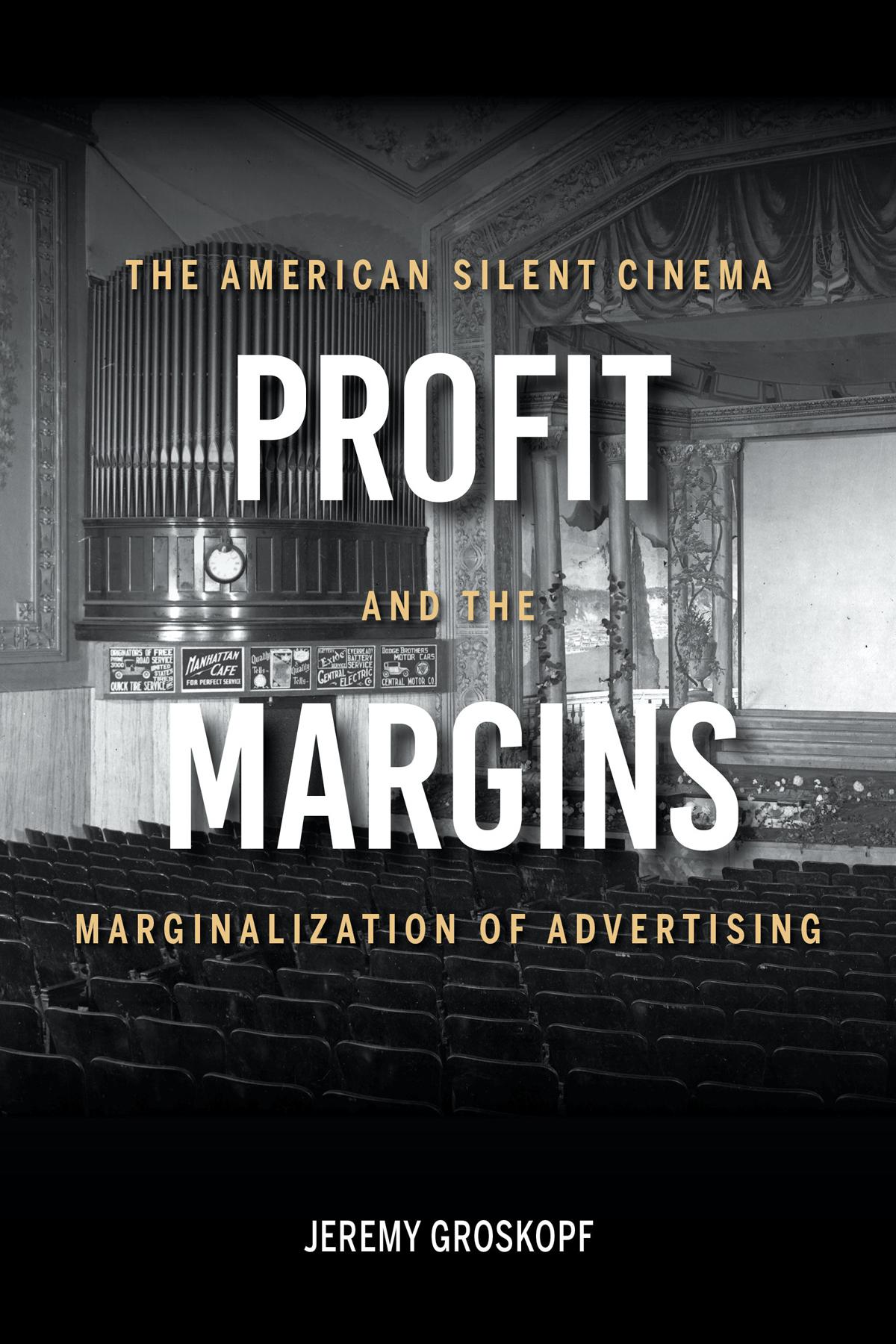
Between the advent of print advertising and the dawn of radio came cinema ads. These ads, aimed at a captive theater audience, became a symbol of the developing binary between upper-class film consumption and more consumerist media.
In Profit Margins, Jeremy Groskopf examines how the ad industry jockeyed for direct advertisement space in American motion pictures. In fact, advertisers, who recognized the import of film audiences, fought exhibitors over what audiences expected in a theater outing. Looking back at these debates in four case studies, Groskopf reveals that advertising became a marker of class distinctions in the cinema experience as the film industry pushed out advertisers in order to create a space free of ads. By restricting advertising, especially during the rise of high-class, palatial theaters, the film industry continued its ongoing effort to ascend the cultural hierarchy of the arts.
An important read for film studies and the history of marketing, Profit Margins exposes the fascinating truth surrounding the invention of cinema advertising techniques and the resulting rhetoric of class division.
Pay easily by card, Klarna, Apple Pay or Google Pay. Not happy? You always have a 14-day money-back guarantee. Read more in our terms. If you have any questions, email us at hello@memmo.org.
Memmo makes studying easier – wherever you are in the world. We bring your course books and smart study tools together in one place: summaries, quizzes, podcasts and flashcards. Plus Ted, your study buddy who answers anything you wonder. Over 50,000 students already study here – built to help you learn faster and stress less.