
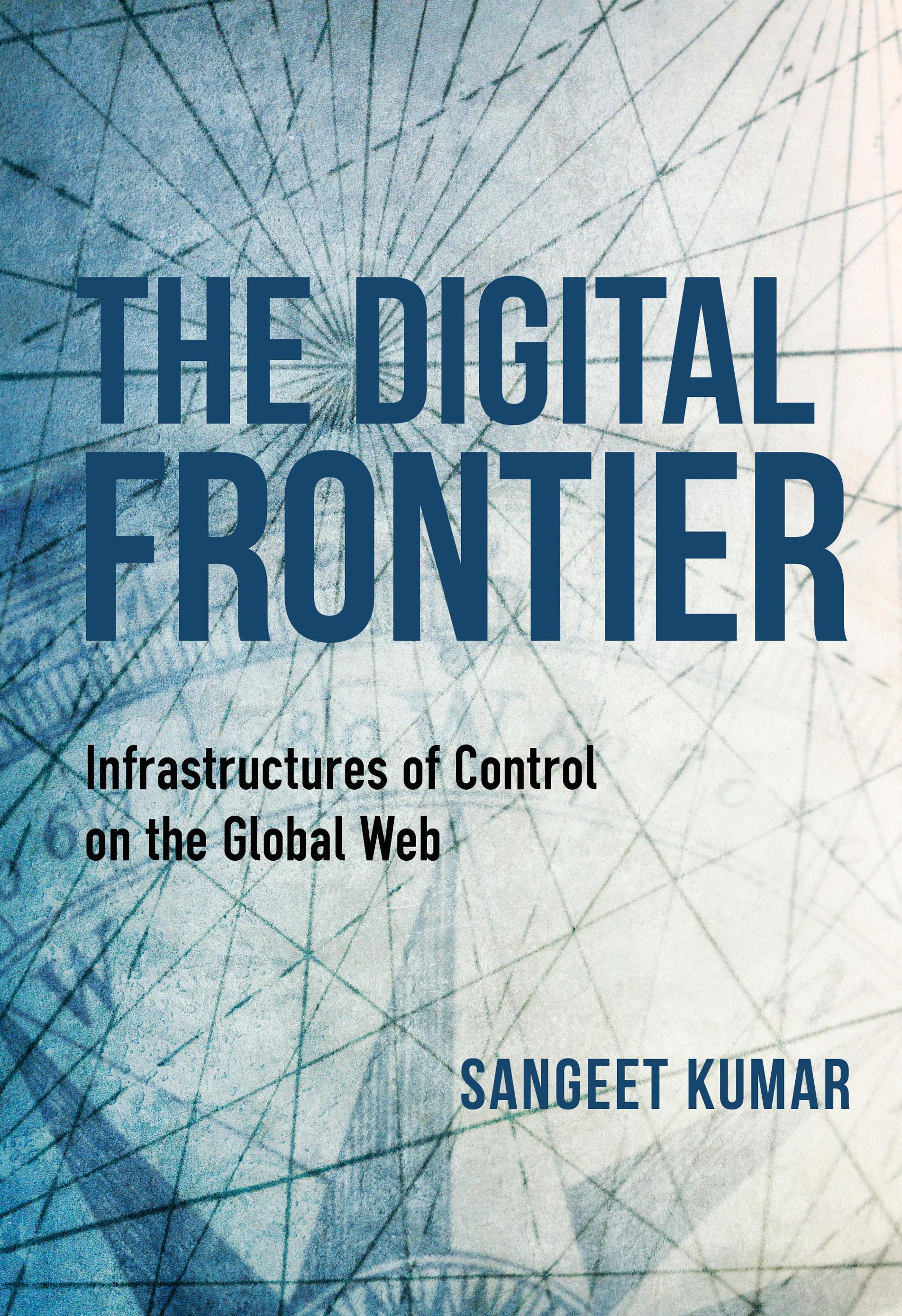
The global web and its digital ecosystem can be seen as tools of emancipation, communication, and spreading knowledge or as means of control, fueled by capitalism, surveillance, and geopolitics.
The Digital Frontier interrogates the world wide web and the digital ecosystem it has spawned to reveal how their conventions, protocols, standards, and algorithmic regulations represent a novel form of global power. Sangeet Kumar shows the operation of this power through the web's "infrastructures of control" visible at sites where the universalizing imperatives of the web run up against local values, norms, and cultures. These include how the idea of the "global common good" is used as a ruse by digital oligopolies to expand their private enclosures, how seemingly collaborative spaces can simultaneously be exclusionary as they regulate legitimate knowledge, how selfhood is being redefined online along Eurocentric ideals, and how the web's political challenge is felt differentially by sovereign nation states.
In analyzing this new modality of cultural power in the global digital ecosystem, The Digital Frontier is an important read for scholars, activists, academics and students inspired by the utopian dream of a truly representative global digital network.
Pay easily by card, Klarna, Apple Pay or Google Pay. Not happy? You always have a 14-day money-back guarantee. Read more in our terms. If you have any questions, email us at hello@memmo.org.
Memmo makes studying easier – wherever you are in the world. We bring your course books and smart study tools together in one place: summaries, quizzes, podcasts and flashcards. Plus Ted, your study buddy who answers anything you wonder. Over 50,000 students already study here – built to help you learn faster and stress less.