
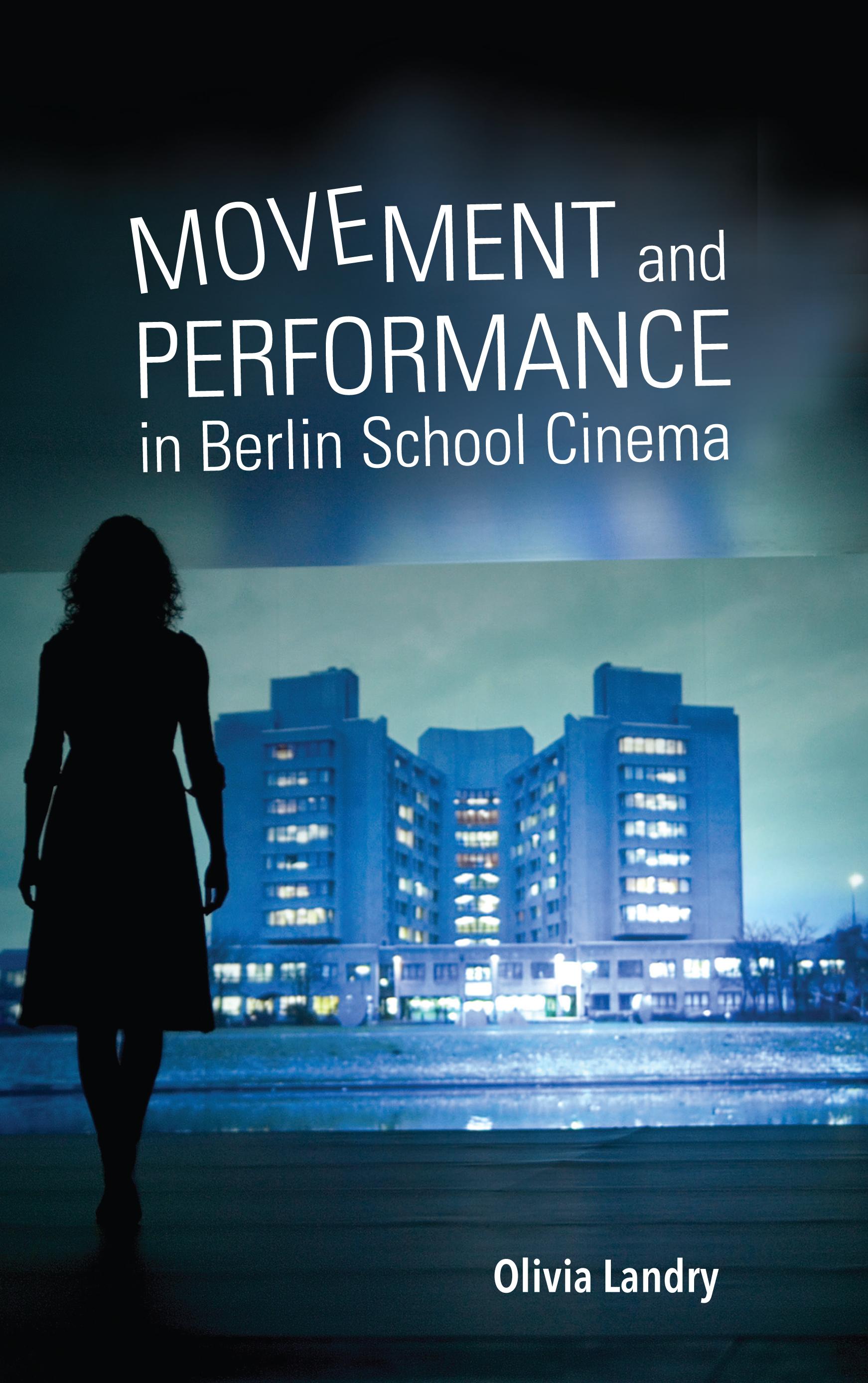
Through a study of the contemporary German film movement the Berlin School, Olivia Landry examines how narrative film has responded to our highly digitalized and mediatized age, not with a focus on stasis and realism, but by turning back to movement, spectacle, and performance. She argues that a preoccupation with presence, liveness, and affect—all of which are viewed as critical components of live performance—can be found in many of the films of the Berlin School. Challenging the perception that the Berlin School is a sheer adherent of "slow cinema," Landry closely analyzes the use of movement, dynamism, presence, and speed in a broad selection of films to show how filmmakers such as Christian Petzold, Angela Schanelec, Thomas Arslan, and Christoph Hochhäusler invoke the pulse of the kinesthetic and the tangibly affective. Her analysis draws on an array of film theories from early materialism to body theories, phenomenology, and contemporary affect theories. Arguing that these theories readily and energetically forge a path from film to performance, Landry traces a trajectory between the two through which live experience, presence, spectacle, intersubjectivity, and the body in motion emerge and powerfully intersect. Ultimately, Movement and Performance in Berlin School Cinema expands the methodological and disciplinary boundaries of film studies by offering new ways of articulating and understanding movement in cinema.
Pay easily by card, Klarna, Apple Pay or Google Pay. Not happy? You always have a 14-day money-back guarantee. Read more in our terms. If you have any questions, email us at hello@memmo.org.
Memmo makes studying easier – wherever you are in the world. We bring your course books and smart study tools together in one place: summaries, quizzes, podcasts and flashcards. Plus Ted, your study buddy who answers anything you wonder. Over 50,000 students already study here – built to help you learn faster and stress less.