
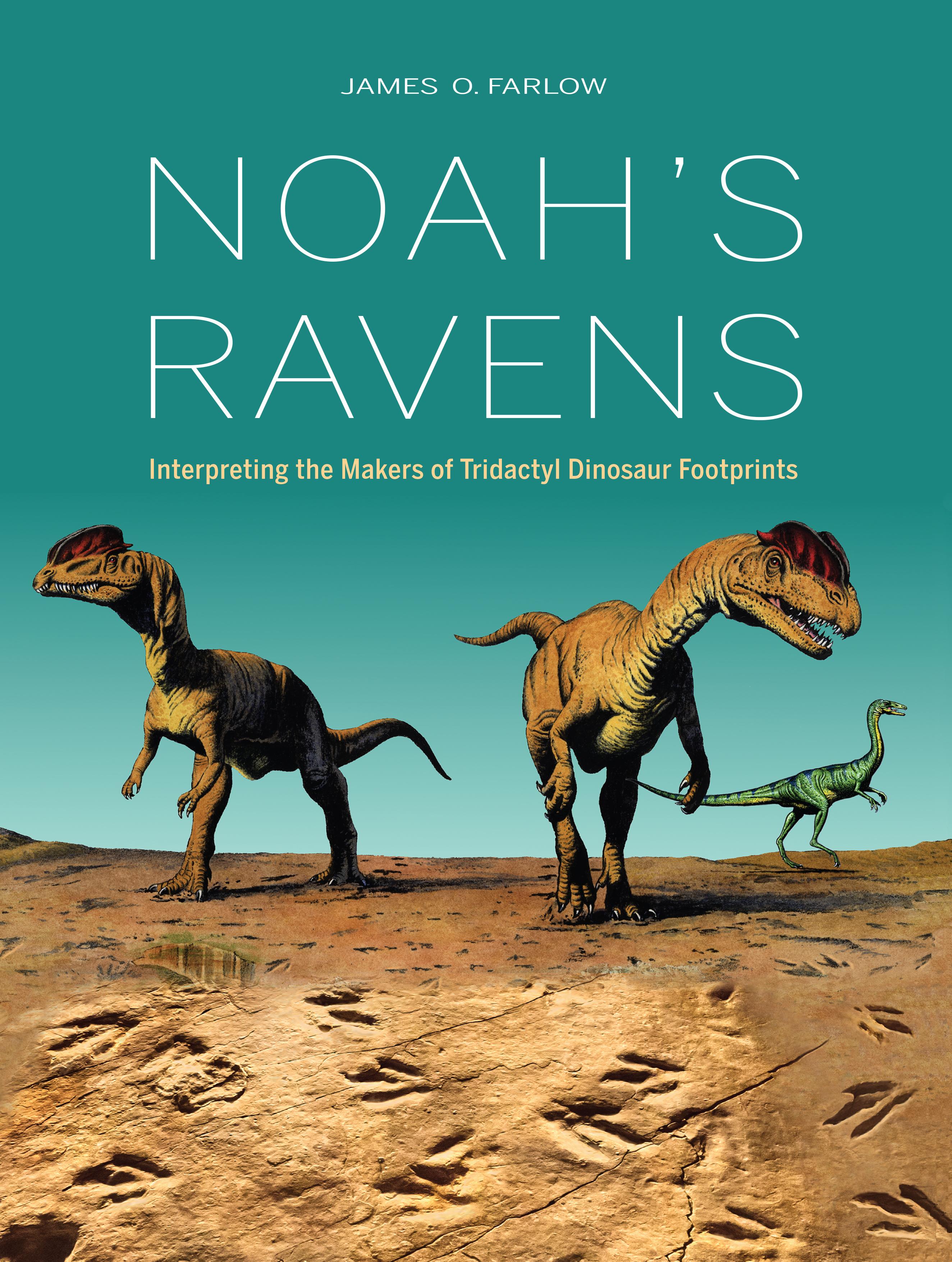
How can the tracks of dinosaurs best be interpreted and used to reconstruct them? In many Mesozoic sedimentary rock formations, fossilized footprints of bipedal, three-toed (tridactyl) dinosaurs are preserved in huge numbers, often with few or no skeletons. Such tracks sometimes provide the only clues to the former presence of dinosaurs, but their interpretation can be challenging: How different in size and shape can footprints be and yet have been made by the same kind of dinosaur? How similar can they be and yet have been made by different kinds of dinosaurs? To what extent can tridactyl dinosaur footprints serve as proxies for the biodiversity of their makers?
Profusely illustrated and meticulously researched, Noah's Ravens quantitatively explores a variety of approaches to interpreting the tracks, carefully examining within-species and across-species variability in foot and footprint shape in nonavian dinosaurs and their close living relatives. The results help decipher one of the world's most important assemblages of fossil dinosaur tracks, found in sedimentary rocks deposited in ancient rift valleys of eastern North America. Those often beautifully preserved tracks were among the first studied by paleontologists, and they were initially interpreted as having been made by big birds—one of which was jokingly identified as Noah's legendary raven.
Pay easily by card, Klarna, Apple Pay or Google Pay. Not happy? You always have a 14-day money-back guarantee. Read more in our terms. If you have any questions, email us at hello@memmo.org.
Memmo makes studying easier – wherever you are in the world. We bring your course books and smart study tools together in one place: summaries, quizzes, podcasts and flashcards. Plus Ted, your study buddy who answers anything you wonder. Over 50,000 students already study here – built to help you learn faster and stress less.