
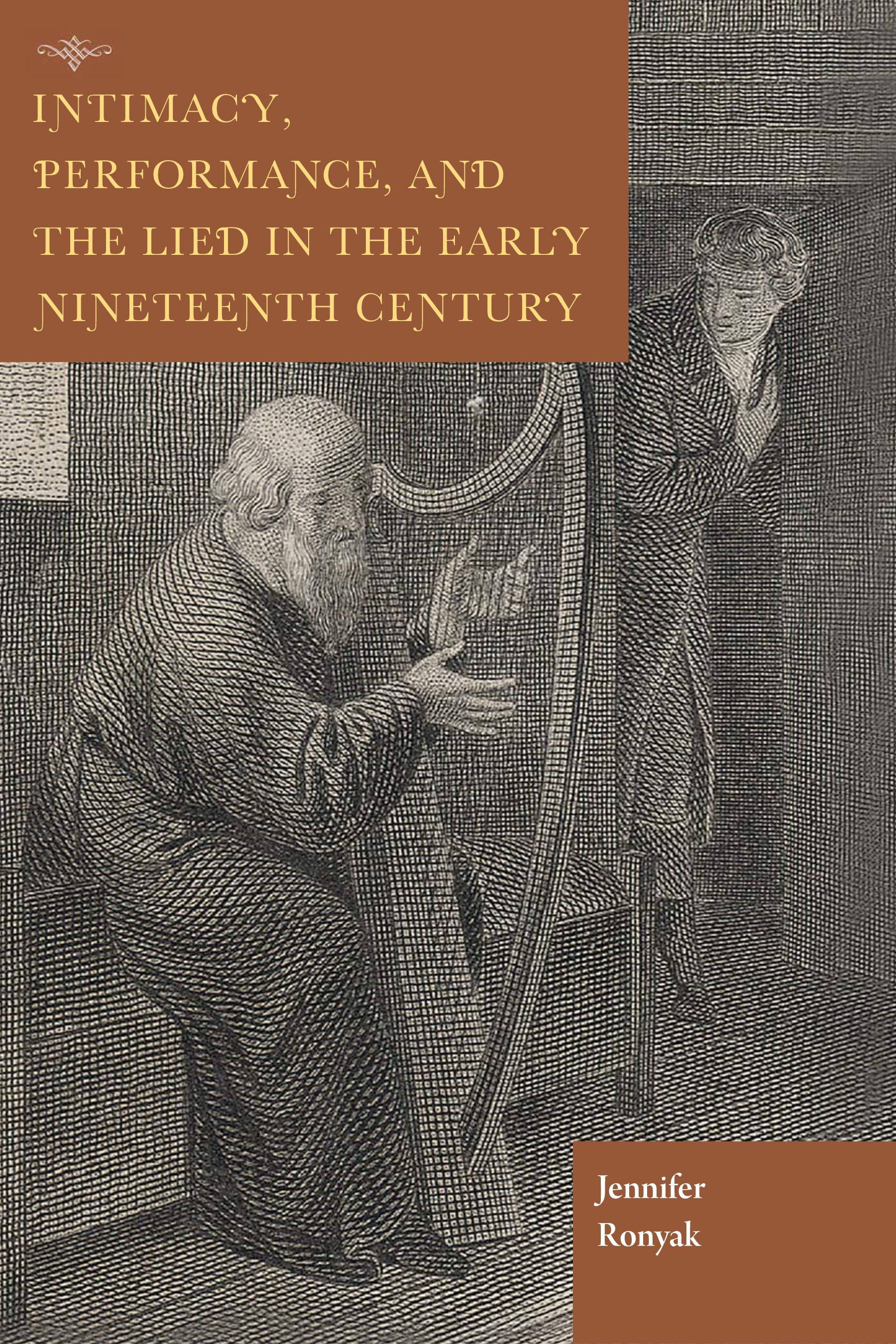
The German lied, or art song, is considered one of the most intimate of all musical genres—often focused on the poetic speaker's inner world and best suited for private and semi-private performance in the home or salon. Yet, problematically, any sense of inwardness in lieder depends on outward expression through performance.
With this paradox at its heart, Intimacy, Performance, and the Lied in the Early Nineteenth Century explores the relationships between early nineteenth-century theories of the inward self, the performance practices surrounding inward lyric poetry and song, and the larger conventions determining the place of intimate poetry and song in the public concert hall. Jennifer Ronyak studies the cultural practices surrounding lieder performances in northern and central Germany in the first quarter of the nineteenth century, demonstrating how presentations of lieder during the formative years of the genre put pressure on their sense of interiority. She examines how musicians responded to public concern that outward expression would leave the interiority of the poet, the song, or the performer unguarded and susceptible to danger. Through this rich performative paradox Ronyak reveals how a song maintains its powerful intimacy even during its inherently public performance.
Pay easily by card, Klarna, Apple Pay or Google Pay. Not happy? You always have a 14-day money-back guarantee. Read more in our terms. If you have any questions, email us at hello@memmo.org.
Memmo makes studying easier – wherever you are in the world. We bring your course books and smart study tools together in one place: summaries, quizzes, podcasts and flashcards. Plus Ted, your study buddy who answers anything you wonder. Over 50,000 students already study here – built to help you learn faster and stress less.