
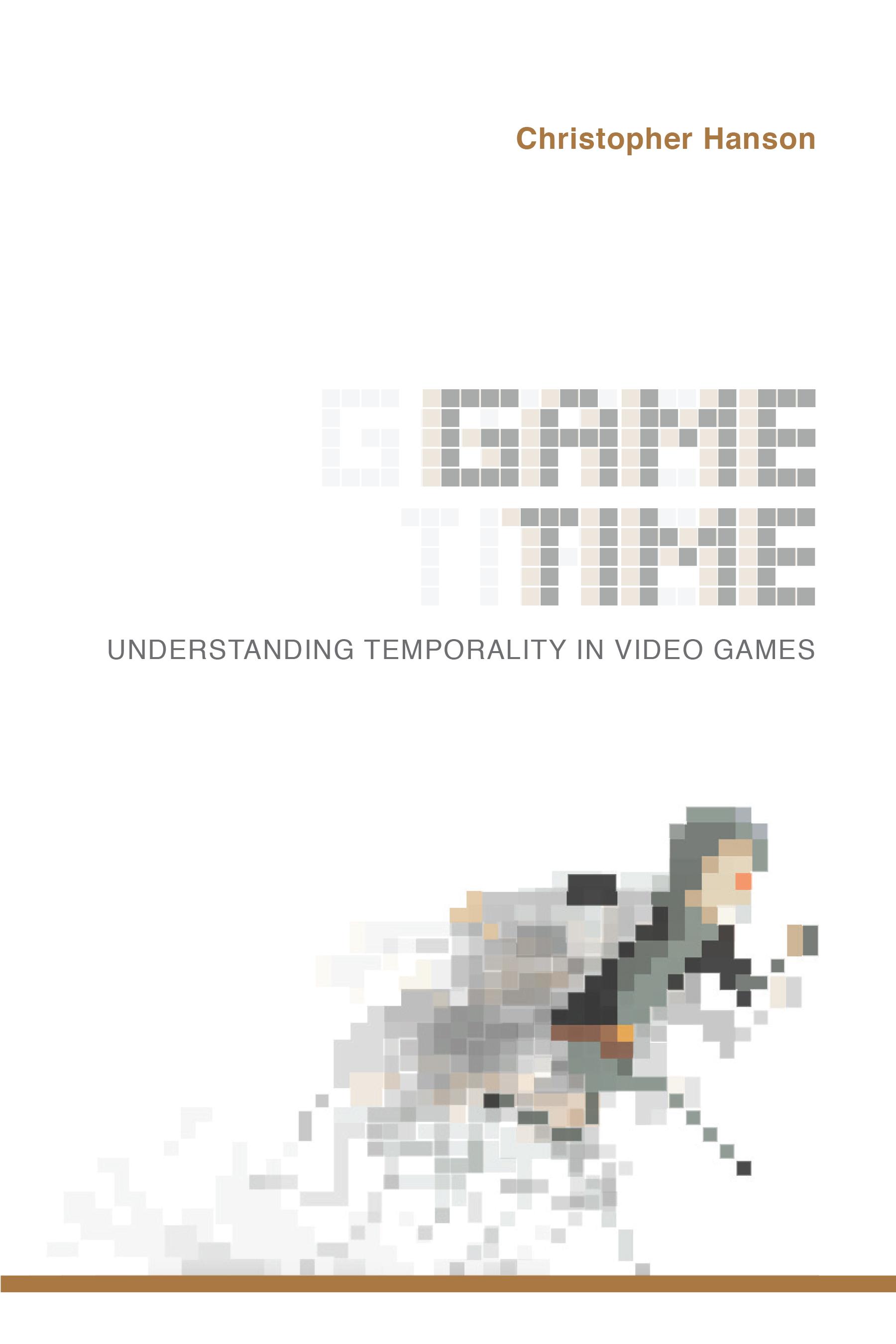
Preserving, pausing, slowing, rewinding, replaying, reactivating, reanimating Has the ability to manipulate video game timelines altered our cultural conceptions of time?
Video game scholar Christopher Hanson argues that the mechanics of time in digital games have presented a new model for understanding time in contemporary culture, a concept he calls "game time." Multivalent in nature, game time is characterized by apparent malleability, navigability, and possibility while simultaneously being highly restrictive and requiring replay and repetition. When compared to analog tabletop games, sports, film, television, and other forms of media, Hanson demonstrates that the temporal structures of digital games provide unique opportunities to engage players with liveness, causality, potentiality, and lived experience that create new ways of experiencing time
Featuring comparative analysis of key video games titles—including Braid, Quantum Break, Battle of the Bulge, Prince of Persia: The Sands of Time, Passage, The Legend of Zelda: The Ocarina of Time, Lifeline, and A Dark Room.
Pay easily by card, Klarna, Apple Pay or Google Pay. Not happy? You always have a 14-day money-back guarantee. Read more in our terms. If you have any questions, email us at hello@memmo.org.
Memmo makes studying easier – wherever you are in the world. We bring your course books and smart study tools together in one place: summaries, quizzes, podcasts and flashcards. Plus Ted, your study buddy who answers anything you wonder. Over 50,000 students already study here – built to help you learn faster and stress less.