
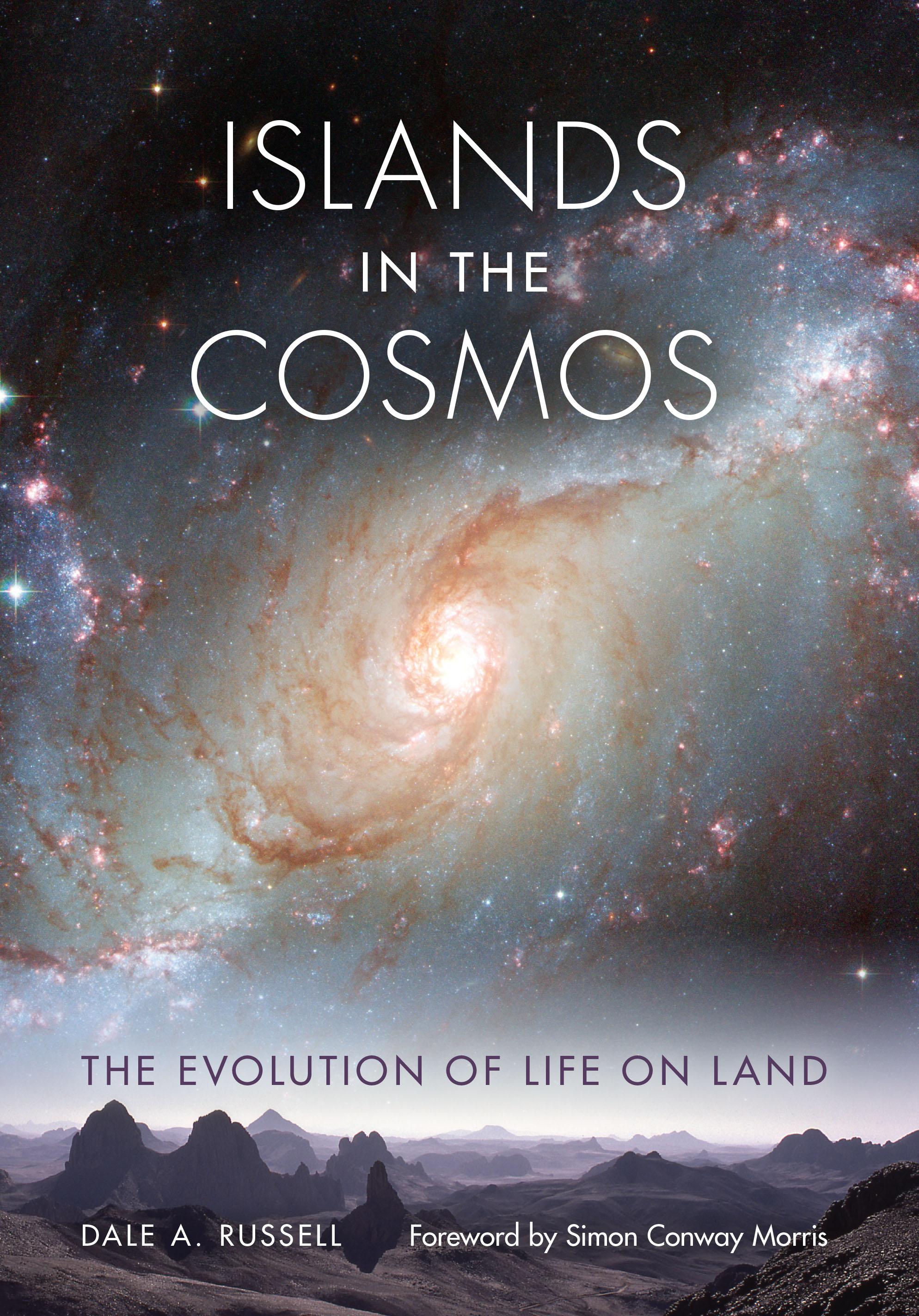
How is it that we came to be here? The search for answers to that question has preoccupied humans for millennia. Scientists have sought clues in the genes of living things, in the physical environments of Earth from mountaintops to the depths of the ocean, in the chemistry of this world and those nearby, in the tiniest particles of matter, and in the deepest reaches of space. In Islands of the Cosmos, Dale A. Russell traces a path from the dawn of the universe to speculations about our future on this planet. He centers his story on the physical and biological processes in evolution, which interact to favor more successful, and eliminate less successful, forms of life. Marvelously, these processes reveal latent possibilities in life's basic structure, and propel a major evolutionary theme: the increasing proficiency of biological function. It remains to be seen whether the human form can survive the dynamic processes that brought it into existence. Yet the emergence of the ability to acquire knowledge from experience, to optimize behavior, to conceptualize, to distinguish "good" from "bad" behavior all hint at an evolutionary outcome that science is only beginning to understand.
Pay easily by card, Klarna, Apple Pay or Google Pay. Not happy? You always have a 14-day money-back guarantee. Read more in our terms. If you have any questions, email us at hello@memmo.org.
Memmo makes studying easier – wherever you are in the world. We bring your course books and smart study tools together in one place: summaries, quizzes, podcasts and flashcards. Plus Ted, your study buddy who answers anything you wonder. Over 50,000 students already study here – built to help you learn faster and stress less.