
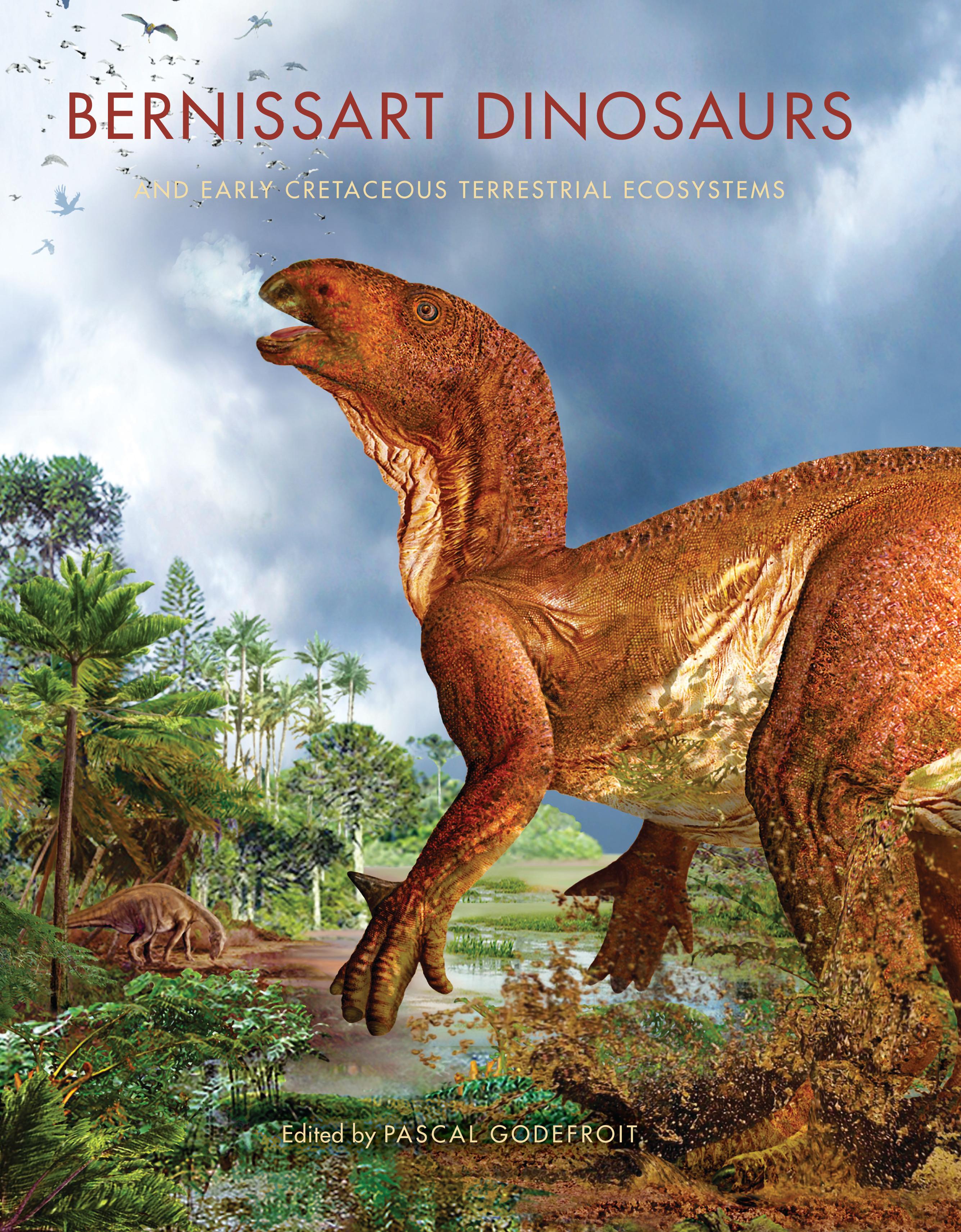
Bernissart Dinosaurs and Early Cretaceous Terrestrial Ecosystems
In 1878, the first complete dinosaur skeleton was discovered in a coal mine in Bernissart, Belgium. Iguanodon, first described by Gideon Mantell on the basis of fragments discovered in England in 1824, was initially reconstructed as an iguana-like reptile or a heavily built, horned quadruped. However, the Bernissart skeleton changed all that. The animal was displayed in an upright posture similar to a kangaroo, and later with its tail off the ground like the dinosaur we know of today. Focusing on the Bernissant discoveries, this book presents the latest research on Iguanodon and other denizens of the Cretaceous ecosystems of Europe, Asia, and Africa. Pascal Godefroit and contributors consider the Bernissart locality itself and the new research programs that are underway there. The book also presents a systematic revision of Iguanodon; new material from Spain, Romania, China, and Kazakhstan; studies of other Early Cretaceous terrestrial ecosystems; and examinations of Cretaceous vertebrate faunas.
Pay easily by card, Klarna, Apple Pay or Google Pay. Not happy? You always have a 14-day money-back guarantee. Read more in our terms. If you have any questions, email us at hello@memmo.org.
Memmo makes studying easier – wherever you are in the world. We bring your course books and smart study tools together in one place: summaries, quizzes, podcasts and flashcards. Plus Ted, your study buddy who answers anything you wonder. Over 50,000 students already study here – built to help you learn faster and stress less.