
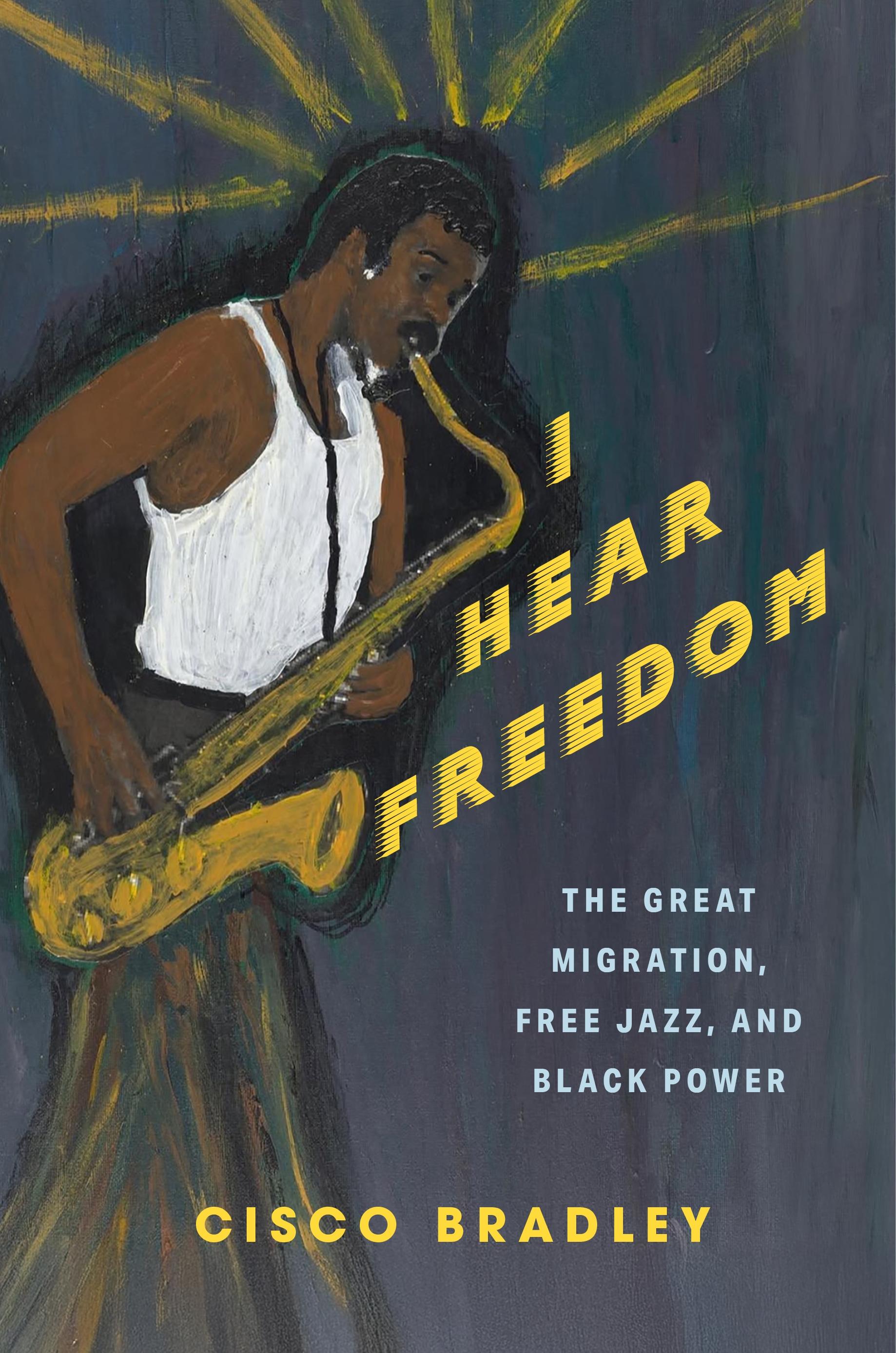
In the 1960s, a musical revolution took place in the industrial landscapes of Cleveland and Detroit. Disenchanted with the strictures of bebop, musicians forged a new style—free jazz—that took inspiration from a vast range of sources, including figures such as Ornette Coleman, Cecil Taylor, and John Coltrane; African and Middle Eastern music; avant-garde modernism; and the politics and aesthetics of Black Power. How did this radical movement come about, and what explains its creativity and vitality?
Based on interviews with dozens of musicians, I Hear Freedom tells the story of free jazz and its connection to the broader Black experience. Cisco Bradley demonstrates that although this part of the free jazz movement arose in the Midwest, it is deeply rooted in the musical traditions and aesthetics that the Great Migration brought from the South. As postwar urban renewal projects fractured Black communities, musicians drew on this heritage to create new forms of expression. Figures such as Albert Ayler, Donald Ayler, Charles Tyler, Frank Wright, Bobby Few, Charles Moore, and Faruq Z. Bey developed distinct artistic visions, often influenced by their involvement in Black liberation movements. I Hear Freedom chronicles the Cleveland and Detroit free jazz scenes, and it follows musicians to New York, Los Angeles, Paris, and beyond. A revelatory oral history, this book shows that free jazz is a uniquely Black style shaped by mobility, community, and the struggle for freedom.
Pay easily by card, Klarna, Apple Pay or Google Pay. Not happy? You always have a 14-day money-back guarantee. Read more in our terms. If you have any questions, email us at hello@memmo.org.
Memmo makes studying easier – wherever you are in the world. We bring your course books and smart study tools together in one place: summaries, quizzes, podcasts and flashcards. Plus Ted, your study buddy who answers anything you wonder. Over 50,000 students already study here – built to help you learn faster and stress less.