
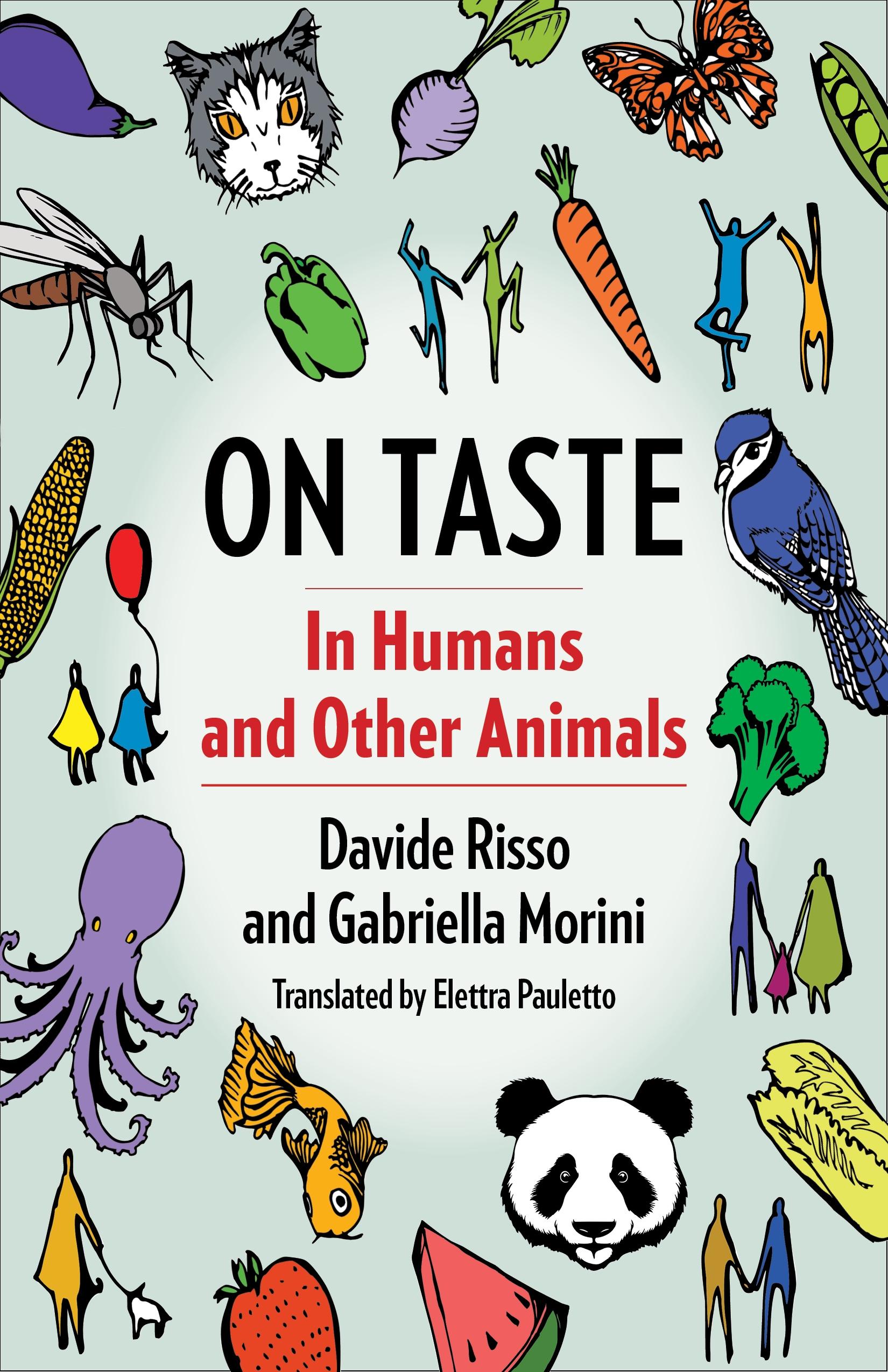
Are there only five tastes, sweet, salty, sour, bitter, and umami? Why are some so appealing to us while others are what we call acquired tastes? Do other animals perceive tastes in the same way humans do? How did the sense of taste evolve? Should the hotness of chili peppers, the coolness of mint, and the pungency of garlic be considered tastes? What can taste teach us about our health and our environment?
In this book, two leading researchers take readers on a lively journey through the science of taste. Davide Risso and Gabriella Morini trace its evolution across millions of years, ranging from microbes to octopuses through birds and finally humans. They explain how taste receptors allow us to decode the chemical composition of food and distinguish between edible and toxic items. Evolution has given varied species different capabilities, so pandas lack the ability to taste umami and cats do not perceive sweetness. On Taste also reveals how mosquitoes choose their prey—and why they like some people more than others. Rigorous and accessible, this book shows how taste unlocks the connections between science and culture, letting us understand our foods and our world more richly.
Pay easily by card, Klarna, Apple Pay or Google Pay. Not happy? You always have a 14-day money-back guarantee. Read more in our terms. If you have any questions, email us at hello@memmo.org.
Memmo makes studying easier – wherever you are in the world. We bring your course books and smart study tools together in one place: summaries, quizzes, podcasts and flashcards. Plus Ted, your study buddy who answers anything you wonder. Over 50,000 students already study here – built to help you learn faster and stress less.