
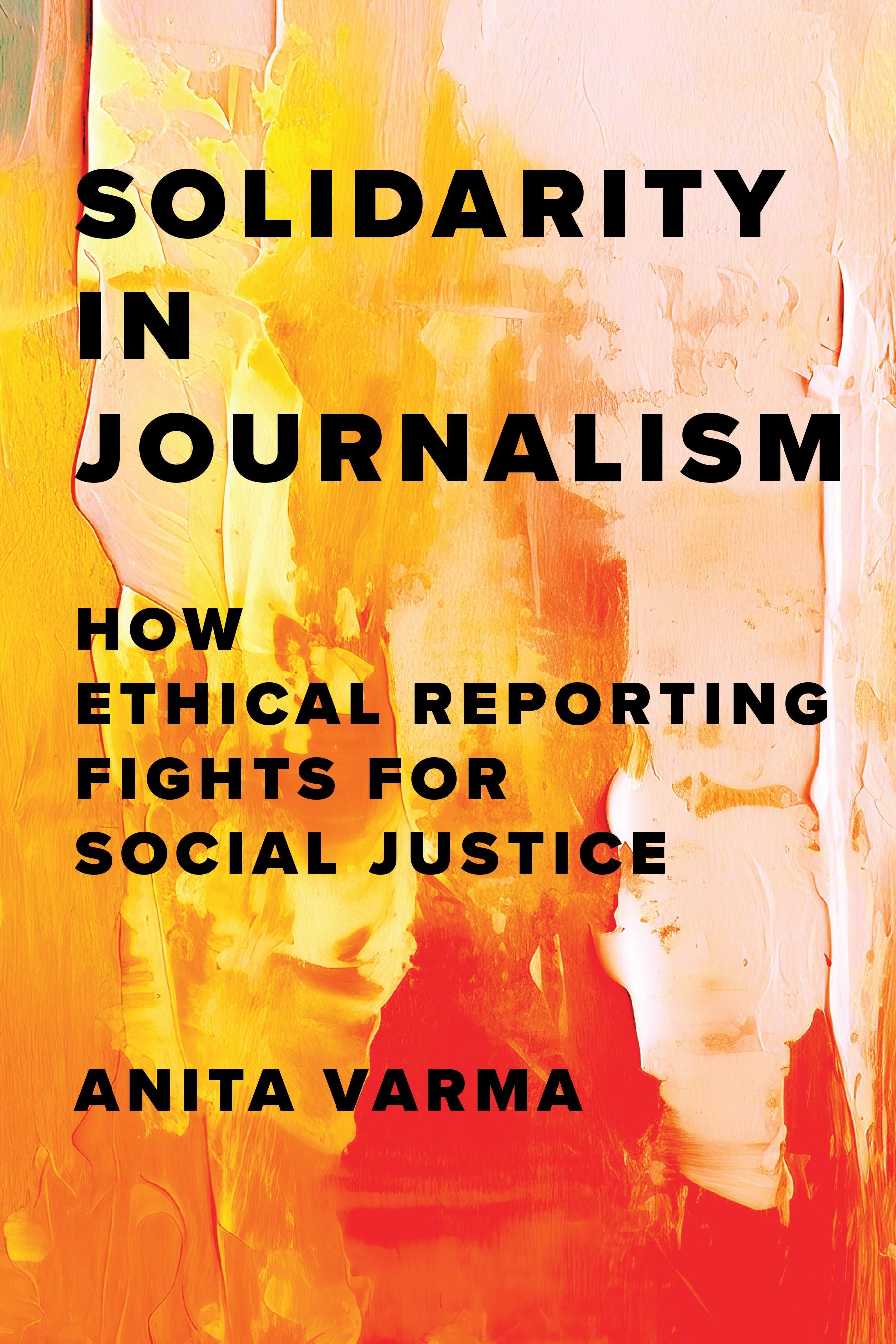
Conventional journalistic norms discourage reporters from taking sides. They are supposed to remain neutral, impartial, and objective. Yet there is also a long tradition in journalism, dating back to the 1800s, that pursues truth by practicing solidarity for social justice.
Anita Varma offers a bold defense of reporting for social justice, showing what journalistic solidarity looks like in principle and in practice. She argues that solidarity is a longstanding yet unacknowledged journalistic norm that fosters truthful reporting when people’s basic dignity is at stake. Ethical journalism incorporates solidarity throughout the reporting process: deciding what is newsworthy, whom to include, how to approach them, what questions to ask, how to structure stories, and how to assess impact. Varma illustrates these practices through case studies of local and national reporting on homelessness, housing instability, and the cost of living.
Based on analysis of published journalism, in-depth interviews with journalists, and public engagement with people who aim to make journalism better, Solidarity in Journalism demonstrates how reporting can help society’s most vulnerable. Amid intense debate over the role of the media, this book makes an urgent case for solidarity in journalism as crucial for representing and addressing social division.
Pay easily by card, Klarna, Apple Pay or Google Pay. Not happy? You always have a 14-day money-back guarantee. Read more in our terms. If you have any questions, email us at hello@memmo.org.
Memmo makes studying easier – wherever you are in the world. We bring your course books and smart study tools together in one place: summaries, quizzes, podcasts and flashcards. Plus Ted, your study buddy who answers anything you wonder. Over 75,000 students already study here – built to help you learn faster and stress less.