
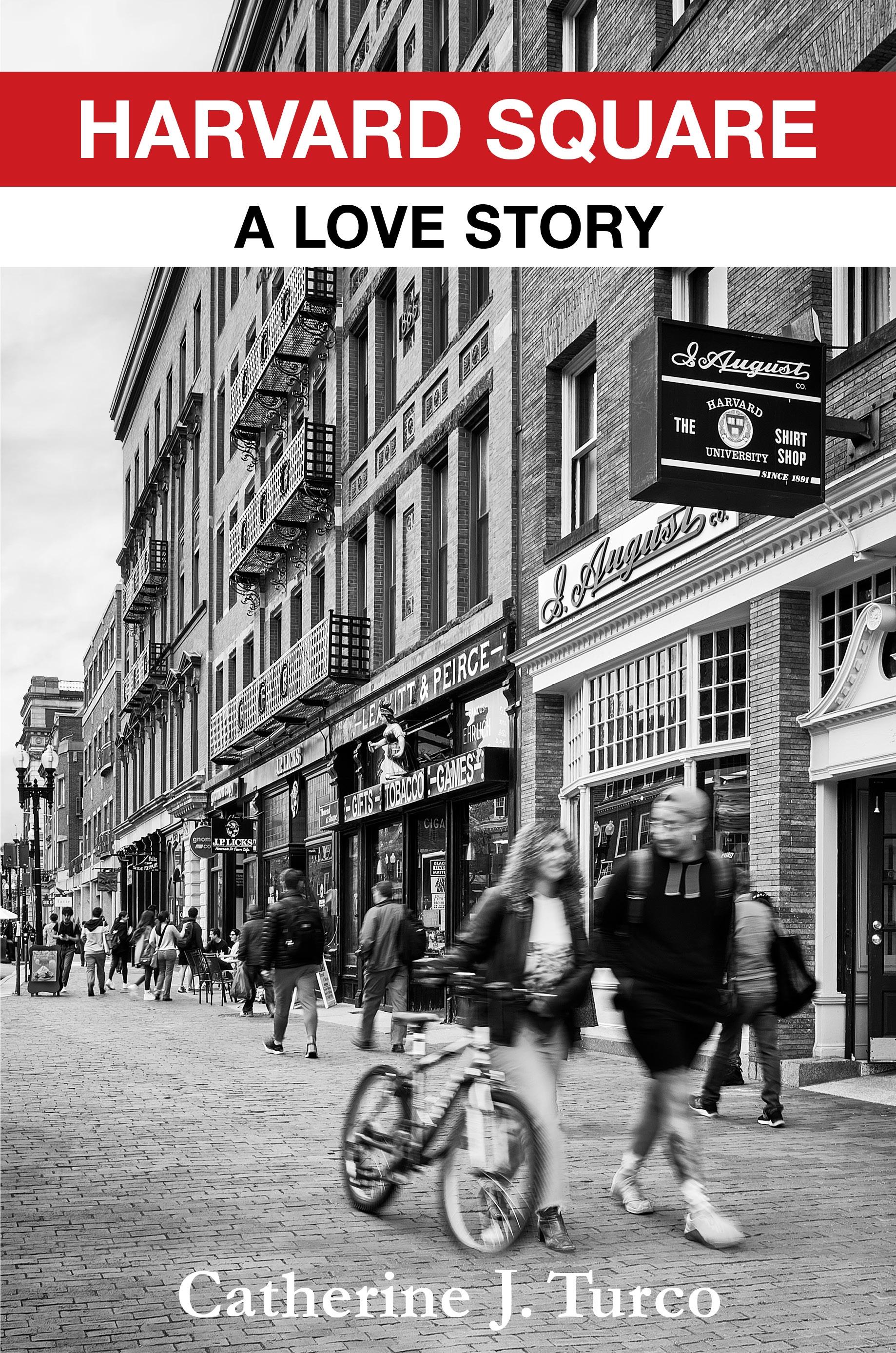
“Harvard Square isn’t what it used to be.” Spend any time there, and you’re bound to hear that lament. Yet people have been saying the very same thing for well over a century. So what does it really mean that Harvard Square—or any other beloved Main Street or downtown—“isn’t what it used to be”? Catherine J. Turco, an economic sociologist and longtime denizen of Harvard Square, set out to answer this question after she started to wonder about her own complicated feelings concerning the changing Square.
Diving into Harvard Square’s past and present, Turco explores why we love our local marketplaces and why we so often struggle with changes in them. Along the way, she introduces readers to a compelling set of characters, including the early twentieth-century businessmen who bonded over scotch and cigars to found the Harvard Square Business Association; a feisty, frugal landlady who became one of the Square’s most powerful property owners in the mid-1900s; a neighborhood group calling itself the Harvard Square Defense Fund that fought real estate developers throughout the 1980s and ’90s; and a local businesswoman who, in recent years, strove to keep her shop afloat amid personal tragedy, the rise of Amazon, and a globalizing property market that sent her rent soaring.
Harvard Square tells the crazy, complicated love story of one quirky little marketplace and in the process, reveals the hidden love story Americans everywhere have long had with their own Main Streets and downtowns. Offering a new and powerful lens that exposes the stability and instability, the security and insecurity, markets provide, Turco transforms how we think about our cherished local marketplaces and markets in general. We come to see that our relationship with the markets in our lives is, and has always been, about our relationship with ourselves and one another, how we come together and how we come apart.
Pay easily by card, Klarna, Apple Pay or Google Pay. Not happy? You always have a 14-day money-back guarantee. Read more in our terms. If you have any questions, email us at hello@memmo.org.
Memmo makes studying easier – wherever you are in the world. We bring your course books and smart study tools together in one place: summaries, quizzes, podcasts and flashcards. Plus Ted, your study buddy who answers anything you wonder. Over 50,000 students already study here – built to help you learn faster and stress less.