
Winner, 2024 Symposium Book Award, Canadian Society for Continental Philosophy
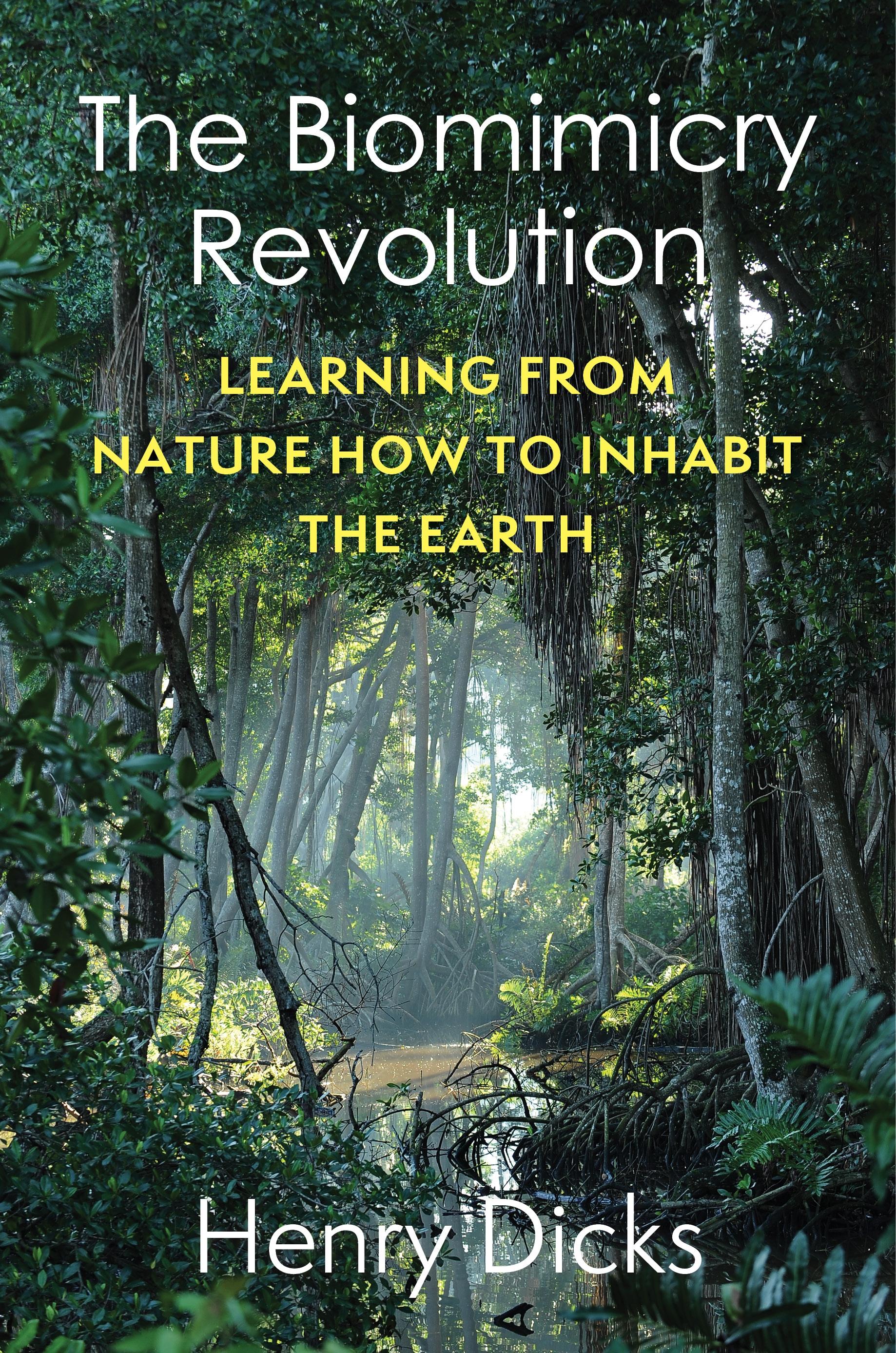
Modernity is founded on the belief that the world we build is a human invention, not a part of nature. The ecological consequences of this idea have been catastrophic. We have laid waste to natural ecosystems, replacing them with fundamentally unsustainable human designs. With time running out to address the environmental crises we have caused, our best path forward is to turn to nature for guidance.
In this book, Henry Dicks explores the philosophical significance of a revolutionary approach to sustainable innovation: biomimicry. The term describes the application and adaptation of strategies found in nature to the development of artificial products and systems, such as passive cooling techniques modeled on termite mounds or solar cells modeled on leaves. Dicks argues that biomimicry, typically seen as just a design strategy, can also serve as the basis for a new environmental philosophy that radically alters how we understand and relate to the natural world. By showing how we can imitate, emulate, and learn from nature, biomimicry points us toward a genuinely sustainable way of inhabiting the earth.
Rooted in philosophy, The Biomimicry Revolution has profound implications spanning the natural sciences, design, architecture, sustainability studies, science and technology studies, and the environmental humanities. It presents a sweeping reconception of what philosophy can be and offers a powerful new vision of terrestrial existence.
Pay easily by card, Klarna, Apple Pay or Google Pay. Not happy? You always have a 14-day money-back guarantee. Read more in our terms. If you have any questions, email us at hello@memmo.org.
Memmo makes studying easier – wherever you are in the world. We bring your course books and smart study tools together in one place: summaries, quizzes, podcasts and flashcards. Plus Ted, your study buddy who answers anything you wonder. Over 50,000 students already study here – built to help you learn faster and stress less.