
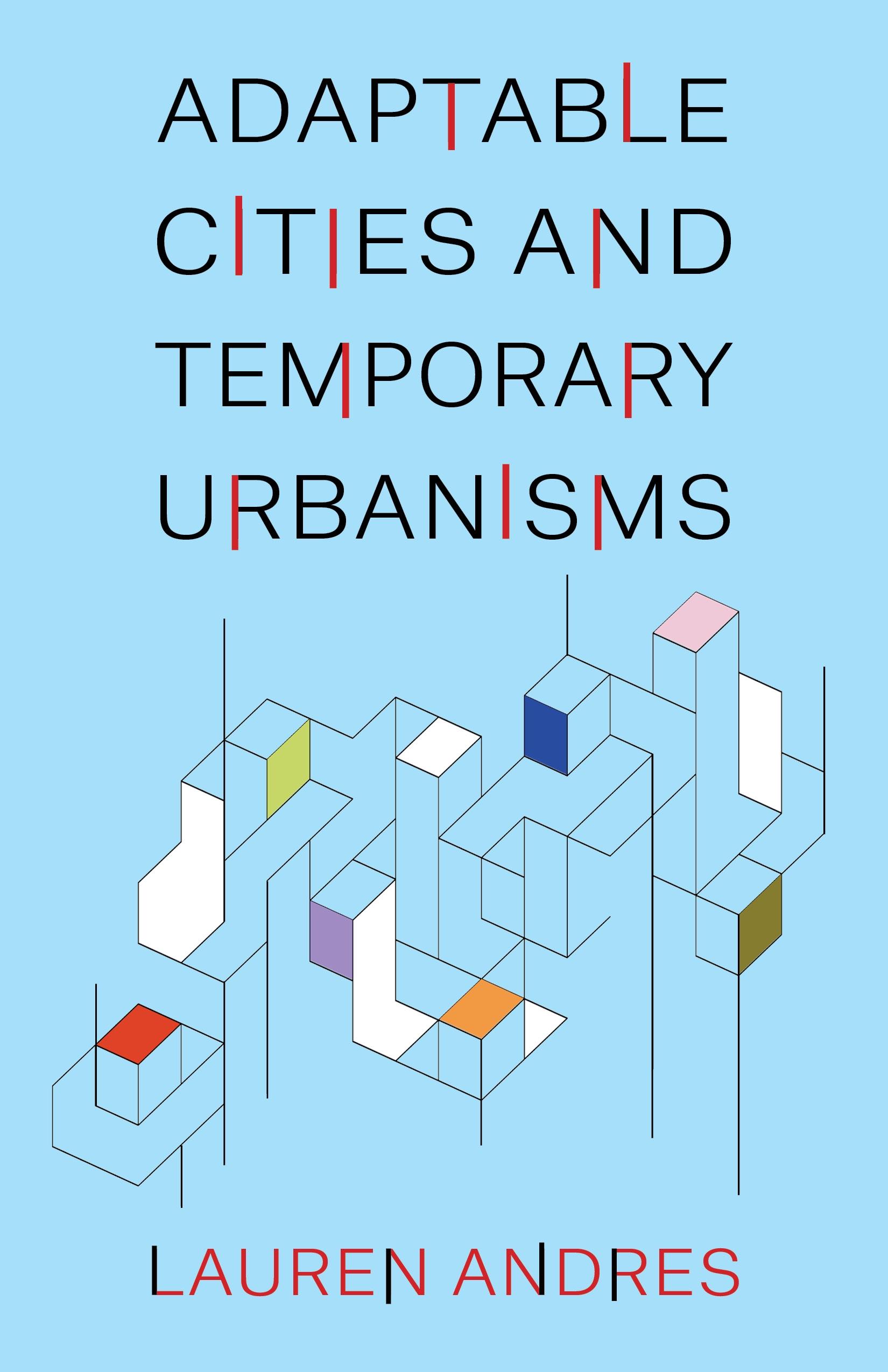
Cities are typically thought of as permanent. Structures, streets, infrastructure, and other features of the built environment, even if they are periodically replaced, are intended to endure. But temporary, flexible spaces and uses are essential to how cities function and the ways urban dwellers inhabit them. Such adaptability, moreover, is fundamental if cities are to meet the challenges of the future.
This book examines temporary urbanisms across varied global contexts, considering their significance for cities and everyday life as well as for policy and practice. It brings together many distinct forms and facets of temporariness and adaptability—from sites of consumption by privileged residents to the survival strategies of marginalized groups—drawing on examples spanning five continents. Lauren Andres explores the driving forces of adaptability as well as the power dynamics and tensions between temporariness and permanence. She highlights how adaptability enhances livability, sustainability, and resilience, showing its importance for addressing crises such as climate change, socioeconomic inequalities, and pandemics. Authoritative and wide-ranging, Adaptable Cities and Temporary Urbanisms reveals why experimentation and creativity are crucial to the present and future of cities.
Pay easily by card, Klarna, Apple Pay or Google Pay. Not happy? You always have a 14-day money-back guarantee. Read more in our terms. If you have any questions, email us at hello@memmo.org.
Memmo makes studying easier – wherever you are in the world. We bring your course books and smart study tools together in one place: summaries, quizzes, podcasts and flashcards. Plus Ted, your study buddy who answers anything you wonder. Over 75,000 students already study here – built to help you learn faster and stress less.