
Winner, 2025 Donald W. Light Award for Applied Medical Sociology, Medical Sociology Section, American Sociological Association
Winner, 2025 Merton Book Award, Science, Knowledge, and Technology Section, American Sociological Association
Winner 2024 Sociology of Disability in Society Outstanding Publication Award, Disability in Society Section, American Sociological Association
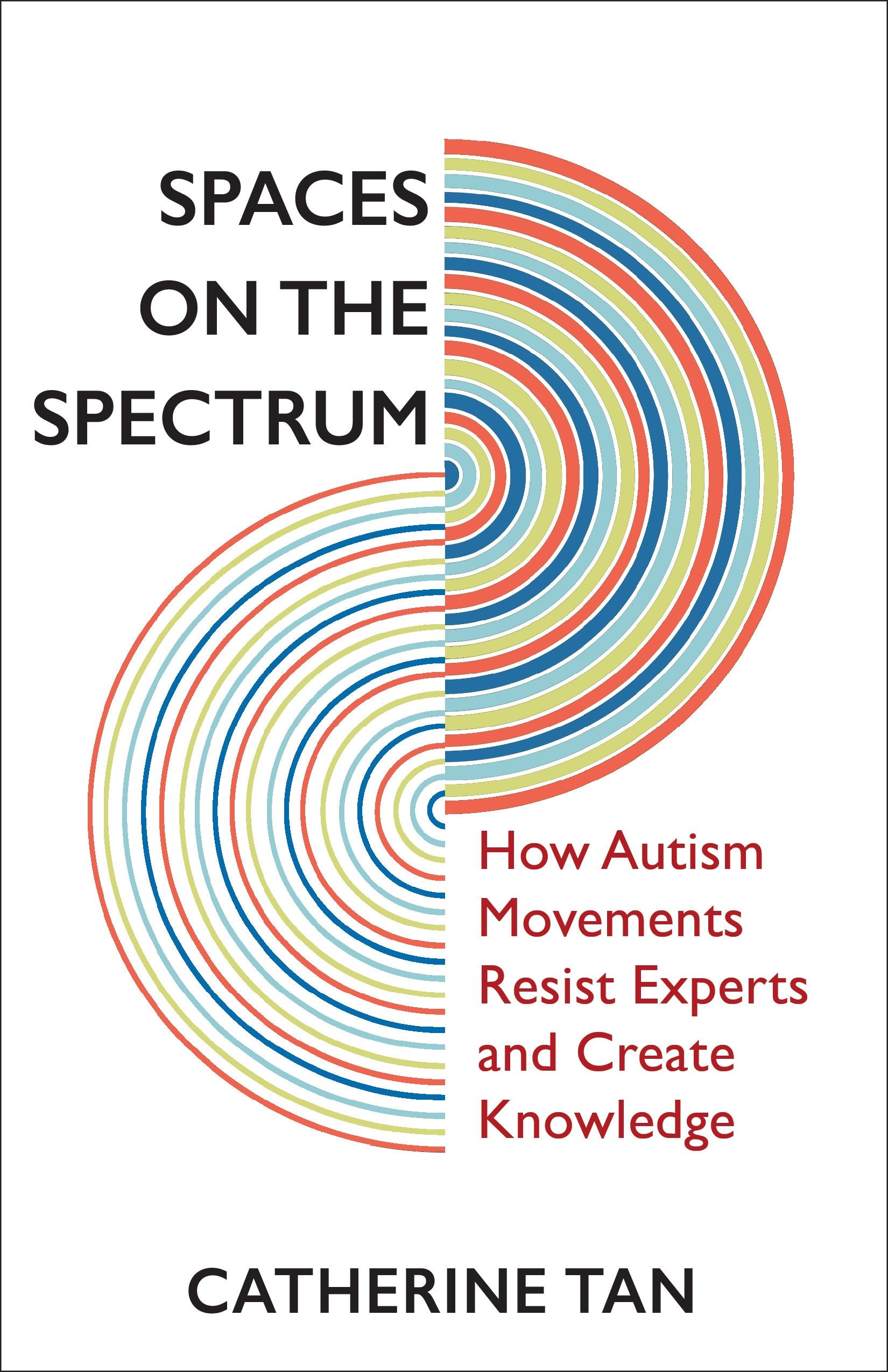
Movements that take issue with conventional understandings of autism spectrum disorder, a developmental disability, have become increasingly visible. Drawing on more than three years of ethnographic fieldwork and interviews with participants, Catherine Tan investigates two autism-focused movements, shedding new light on how members contest expert authority. Examining their separate struggles to gain legitimacy and represent autistic people, she develops a new account of the importance of social movements as spaces for constructing knowledge that aims to challenge dominant frameworks.
Spaces on the Spectrum examines the autistic rights and alternative biomedical movements, which reimagine autism in different and conflicting ways: as a difference to be accepted or as a sickness to treat. Both, however, provide a window into how ideas that conflict with dominant beliefs develop, take hold, and persist. The autistic rights movement is composed primarily of autistic adults who contend that autism is a natural human variation, not a disorder, and advocate for social and cultural inclusion and policy changes. The alternative biomedical movement, in contrast, is dominated by parents and practitioners who believe in the disproven idea that vaccines trigger autism and seek to reverse it with scientifically unsupported treatments. Both movements position themselves in opposition to researchers, professionals, and parents outside their communities. Spaces on the Spectrum offers timely insights into the roles of shared identity and communal networks in movements that question scientific and medical authority.
Pay easily by card, Klarna, Apple Pay or Google Pay. Not happy? You always have a 14-day money-back guarantee. Read more in our terms. If you have any questions, email us at hello@memmo.org.
Memmo makes studying easier – wherever you are in the world. We bring your course books and smart study tools together in one place: summaries, quizzes, podcasts and flashcards. Plus Ted, your study buddy who answers anything you wonder. Over 50,000 students already study here – built to help you learn faster and stress less.