
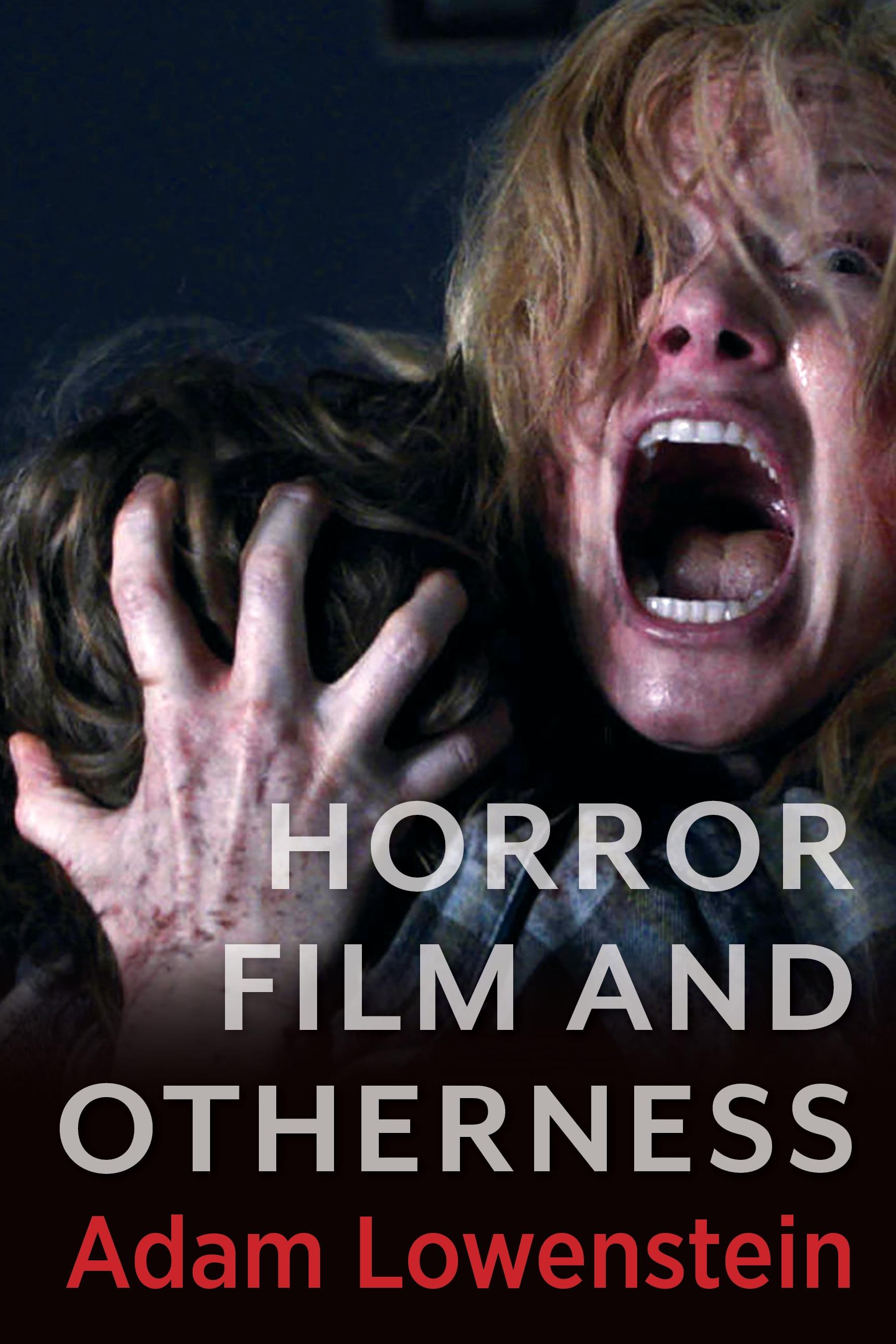
What do horror films reveal about social difference in the everyday world? Criticism of the genre often relies on a dichotomy between monstrosity and normality, in which unearthly creatures and deranged killers are metaphors for society’s fear of the “others” that threaten the “normal.” The monstrous other might represent women, Jews, or Blacks, as well as Indigenous, queer, poor, elderly, or disabled people. The horror film’s depiction of such minorities can be sympathetic to their exclusion or complicit in their oppression, but ultimately, these images are understood to stand in for the others that the majority dreads and marginalizes.
Adam Lowenstein offers a new account of horror and why it matters for understanding social otherness. He argues that horror films reveal how the category of the other is not fixed. Instead, the genre captures ongoing metamorphoses across “normal” self and “monstrous” other. This “transformative otherness” confronts viewers with the other’s experience—and challenges us to recognize that we are all vulnerable to becoming or being seen as the other. Instead of settling into comforting certainties regarding monstrosity and normality, horror exposes the ongoing struggle to acknowledge self and other as fundamentally intertwined.
Horror Film and Otherness features new interpretations of landmark films by directors including Tobe Hooper, George A. Romero, John Carpenter, David Cronenberg, Stephanie Rothman, Jennifer Kent, Marina de Van, and Jordan Peele. Through close analysis of their engagement with different forms of otherness, this book provides new perspectives on horror’s significance for culture, politics, and art.
Pay easily by card, Klarna, Apple Pay or Google Pay. Not happy? You always have a 14-day money-back guarantee. Read more in our terms. If you have any questions, email us at hello@memmo.org.
Memmo makes studying easier – wherever you are in the world. We bring your course books and smart study tools together in one place: summaries, quizzes, podcasts and flashcards. Plus Ted, your study buddy who answers anything you wonder. Over 50,000 students already study here – built to help you learn faster and stress less.