
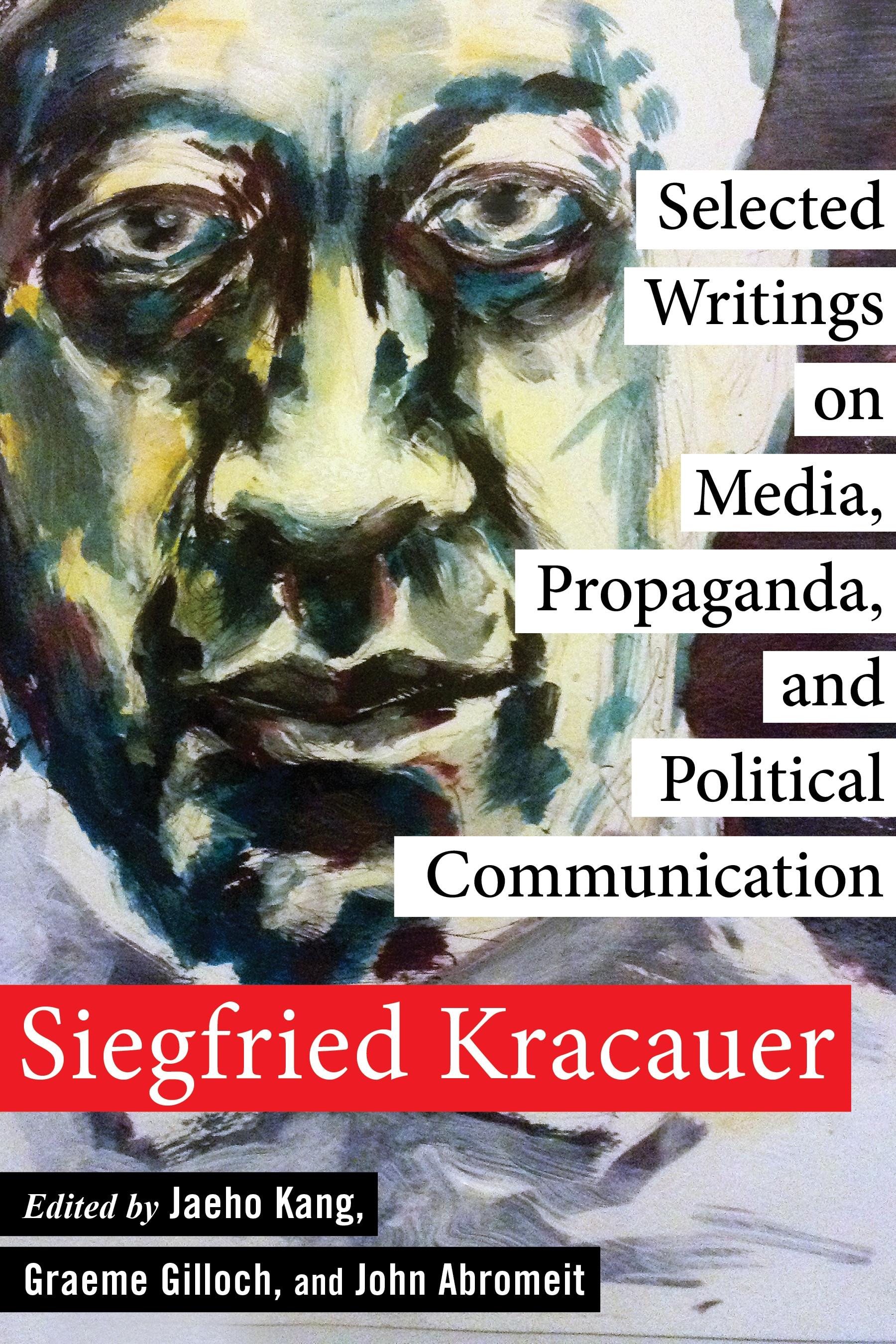
Siegfried Kracauer stands out as one of the most significant theorists and critics of the twentieth century, acclaimed for his analyses of film and popular culture. However, his writing on propaganda and politics has been overshadowed by the works of his contemporaries and colleagues associated with the Frankfurt School.
This book brings together a broad selection of Kracauer’s work on media and political communication, much of it previously unavailable in English. It features writings spanning more than two decades, from studies of totalitarian propaganda written in the 1930s to wartime work on Nazi newsreels and anti-Semitism through to examinations of American and Soviet political messaging in the early Cold War period. These varied texts illuminate the interplay among politics, mass culture, and the media, and they encompass Kracauer’s core concerns: the individual and the masses, the conditions of cultural production, and the critique of modernity.
The introduction and afterword explore the significance of Kracauer’s contributions to critical theory, film and media studies, and the analysis of political communication both in his era and the present day. At a time when demagoguery and bigotry loom over world politics, Kracauer’s inquiries into topics such as the widespread appeal of fascist propaganda and the relationship of new media forms and technologies to authoritarianism are strikingly relevant.
Pay easily by card, Klarna, Apple Pay or Google Pay. Not happy? You always have a 14-day money-back guarantee. Read more in our terms. If you have any questions, email us at hello@memmo.org.
Memmo makes studying easier – wherever you are in the world. We bring your course books and smart study tools together in one place: summaries, quizzes, podcasts and flashcards. Plus Ted, your study buddy who answers anything you wonder. Over 50,000 students already study here – built to help you learn faster and stress less.