
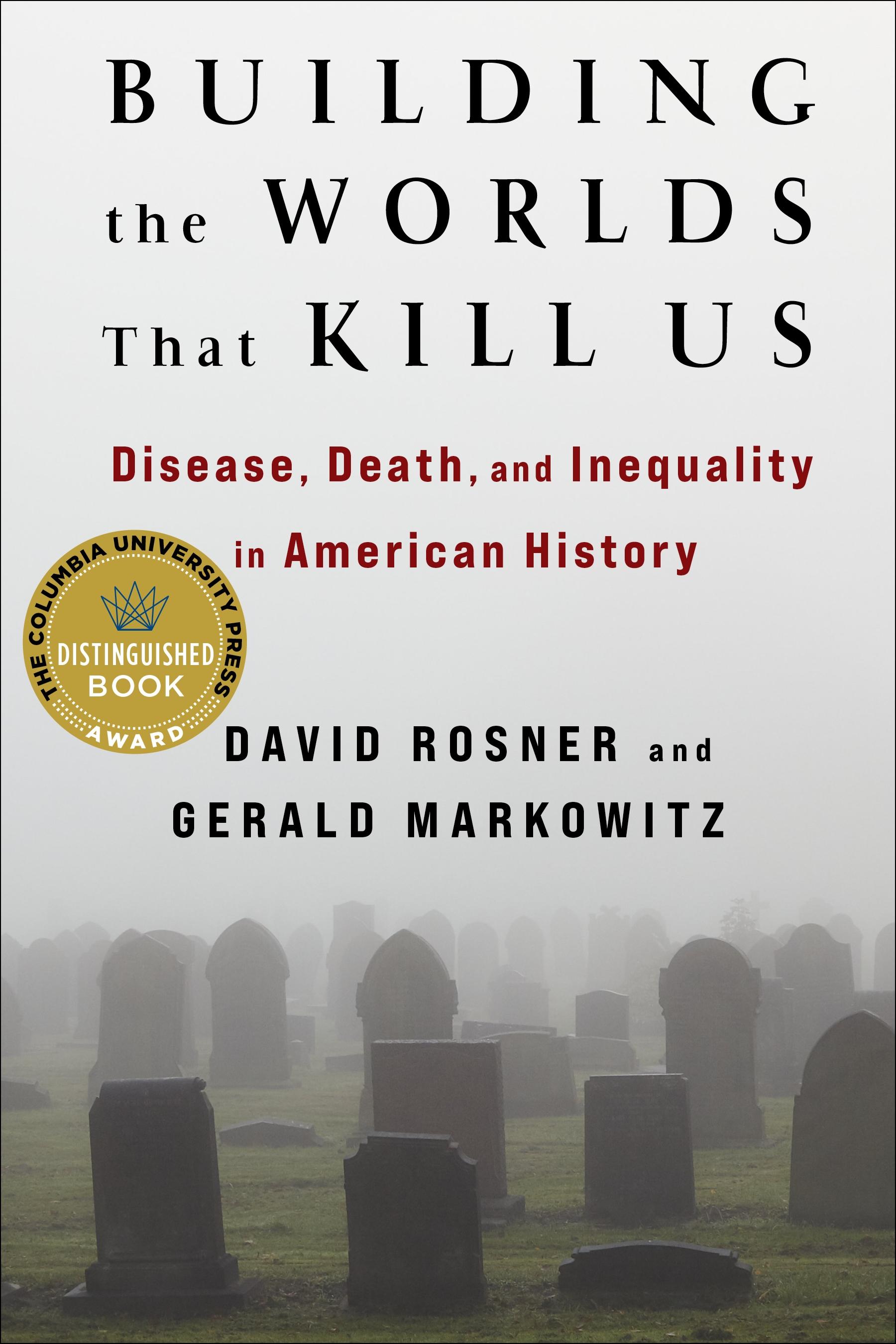
Winner, 2025 Columbia University Press Distinguished Book Award
Across American history, the question of whose lives are long and healthy and whose lives are short and sick has always been shaped by the social and economic order. From the dispossession of Indigenous people and the horrors of slavery to infectious diseases spreading in overcrowded tenements and the vast environmental contamination caused by industrialization, and through climate change and pandemics in the twenty-first century, those in power have left others behind.
Through the lens of death and disease, Building the Worlds That Kill Us provides a new way of understanding the history of the United States from the colonial era to the present. David Rosner and Gerald Markowitz demonstrate that the changing rates and kinds of illnesses reflect social, political, and economic structures and inequalities of race, class, and gender. These deep inequities determine the disparate health experiences of rich and poor, Black and white, men and women, immigrant and native-born, boss and worker, Indigenous and settler. This book underscores that powerful people and institutions have always seen some lives as more valuable than others, and it emphasizes how those who have been most affected by the disparities in rates of disease and death have challenged and changed these systems. Ultimately, this history shows that unequal outcomes are a choice—and we can instead collectively make decisions that foster life and health.
Pay easily by card, Klarna, Apple Pay or Google Pay. Not happy? You always have a 14-day money-back guarantee. Read more in our terms. If you have any questions, email us at hello@memmo.org.
Memmo makes studying easier – wherever you are in the world. We bring your course books and smart study tools together in one place: summaries, quizzes, podcasts and flashcards. Plus Ted, your study buddy who answers anything you wonder. Over 50,000 students already study here – built to help you learn faster and stress less.