
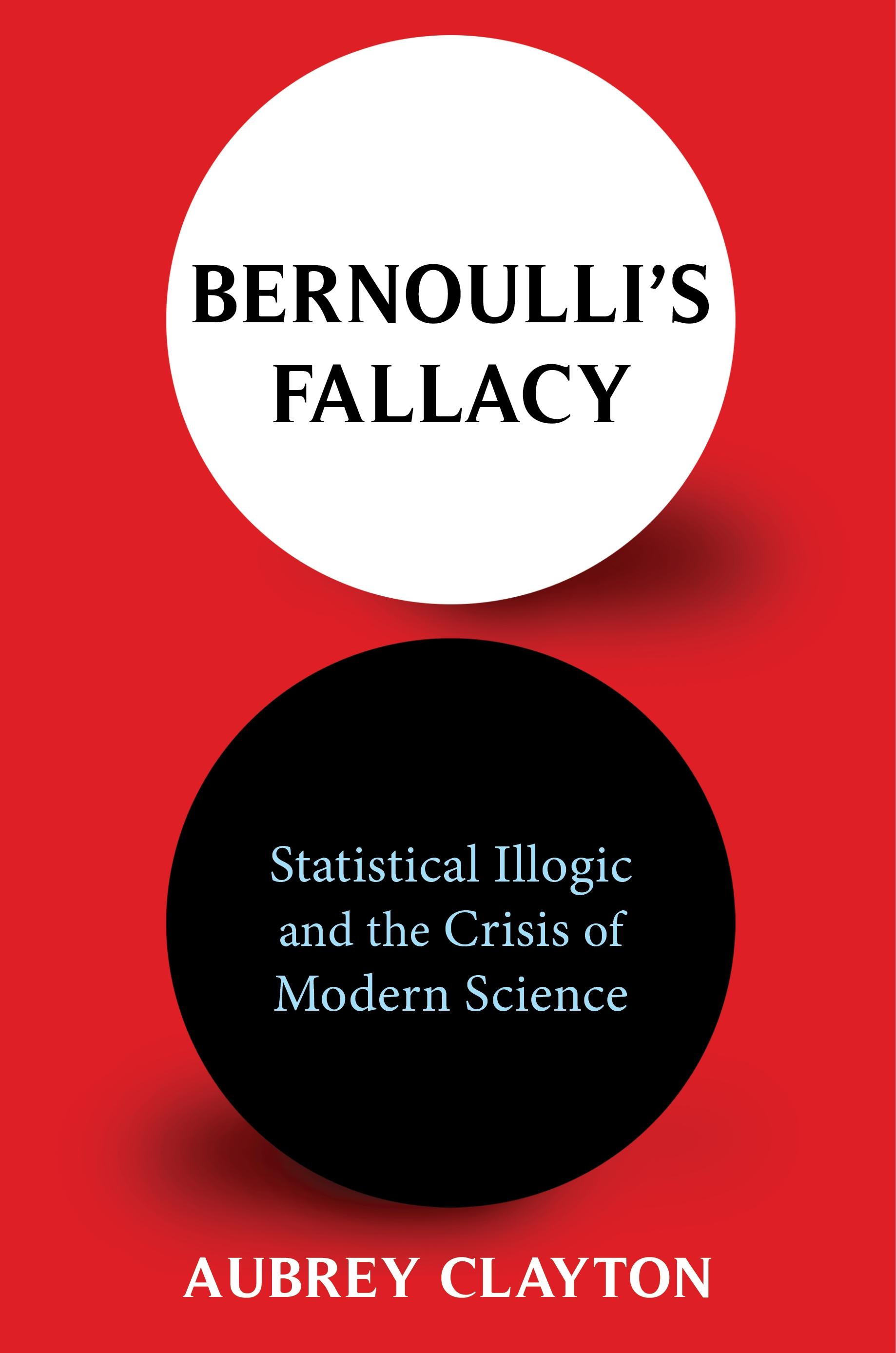
There is a logical flaw in the statistical methods used across experimental science. This fault is not a minor academic quibble: it underlies a reproducibility crisis now threatening entire disciplines. In an increasingly statistics-reliant society, this same deeply rooted error shapes decisions in medicine, law, and public policy with profound consequences. The foundation of the problem is a misunderstanding of probability and its role in making inferences from observations.
Aubrey Clayton traces the history of how statistics went astray, beginning with the groundbreaking work of the seventeenth-century mathematician Jacob Bernoulli and winding through gambling, astronomy, and genetics. Clayton recounts the feuds among rival schools of statistics, exploring the surprisingly human problems that gave rise to the discipline and the all-too-human shortcomings that derailed it. He highlights how influential nineteenth- and twentieth-century figures developed a statistical methodology they claimed was purely objective in order to silence critics of their political agendas, including eugenics.
Clayton provides a clear account of the mathematics and logic of probability, conveying complex concepts accessibly for readers interested in the statistical methods that frame our understanding of the world. He contends that we need to take a Bayesian approach—that is, to incorporate prior knowledge when reasoning with incomplete information—in order to resolve the crisis. Ranging across math, philosophy, and culture, Bernoulli’s Fallacy explains why something has gone wrong with how we use data—and how to fix it.
Pay easily by card, Klarna, Apple Pay or Google Pay. Not happy? You always have a 14-day money-back guarantee. Read more in our terms. If you have any questions, email us at hello@memmo.org.
Memmo makes studying easier – wherever you are in the world. We bring your course books and smart study tools together in one place: summaries, quizzes, podcasts and flashcards. Plus Ted, your study buddy who answers anything you wonder. Over 50,000 students already study here – built to help you learn faster and stress less.