
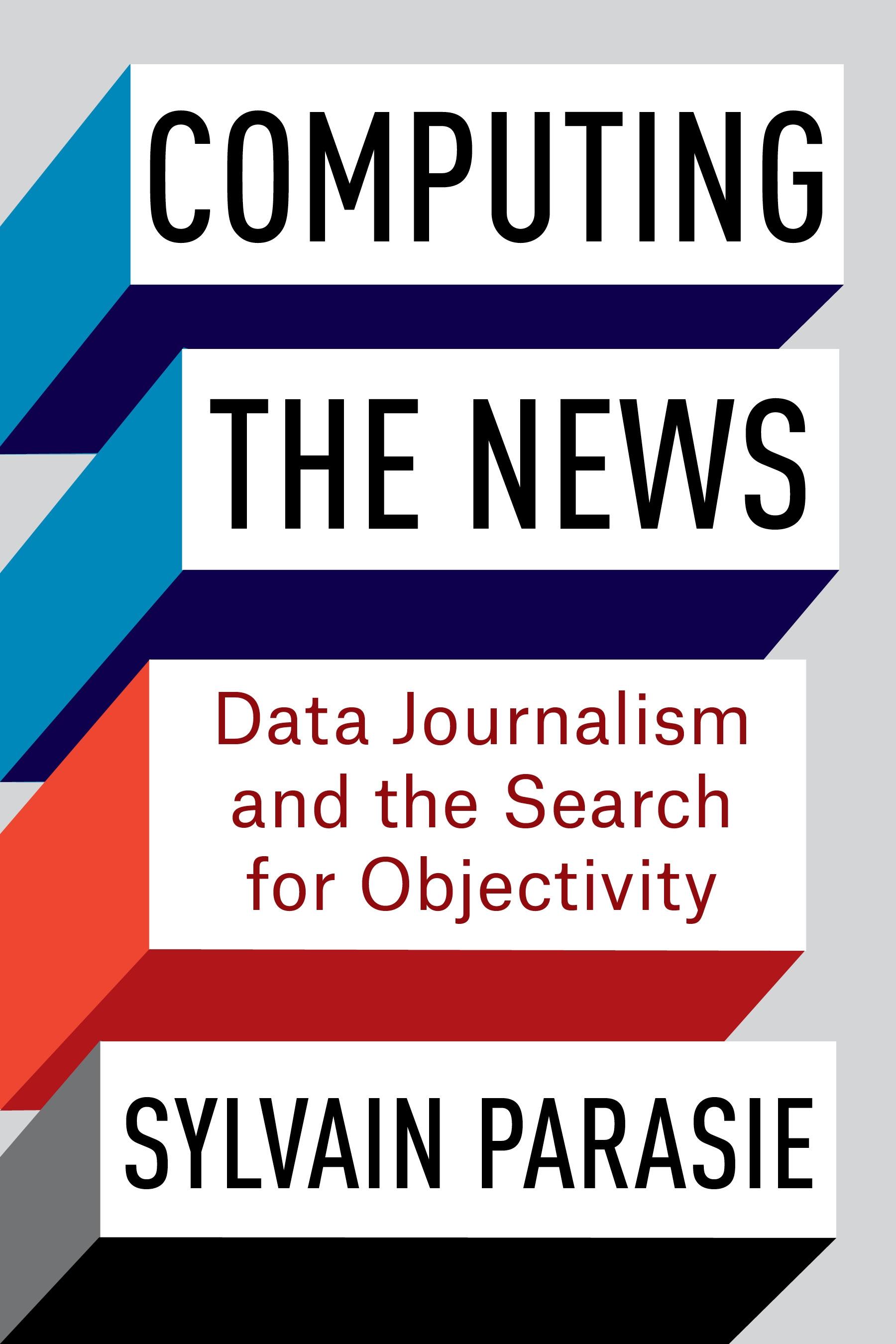
Faced with a full-blown crisis, a growing number of journalists are engaging in seemingly unjournalistic practices such as creating and maintaining databases, handling algorithms, or designing online applications. “Data journalists” claim that these approaches help the profession demonstrate greater objectivity and fulfill its democratic mission. In their view, computational methods enable journalists to better inform their readers, more closely monitor those in power, and offer deeper analysis.
In Computing the News, Sylvain Parasie examines how data journalists and news organizations have navigated the tensions between traditional journalistic values and new technologies. He traces the history of journalistic hopes for computing technology and contextualizes the surge of data journalism in the twenty-first century. By importing computational techniques and ways of knowing new to journalism, news organizations have come to depend on a broader array of human and nonhuman actors. Parasie draws on extensive fieldwork in the United States and France, including interviews with journalists and data scientists as well as a behind-the-scenes look at several acclaimed projects in both countries. Ultimately, he argues, fulfilling the promise of data journalism requires the renewal of journalistic standards and ethics. Offering an in-depth analysis of how computing has become part of the daily practices of journalists, this book proposes ways for journalism to evolve in order to serve democratic societies.
Pay easily by card, Klarna, Apple Pay or Google Pay. Not happy? You always have a 14-day money-back guarantee. Read more in our terms. If you have any questions, email us at hello@memmo.org.
Memmo makes studying easier – wherever you are in the world. We bring your course books and smart study tools together in one place: summaries, quizzes, podcasts and flashcards. Plus Ted, your study buddy who answers anything you wonder. Over 75,000 students already study here – built to help you learn faster and stress less.