
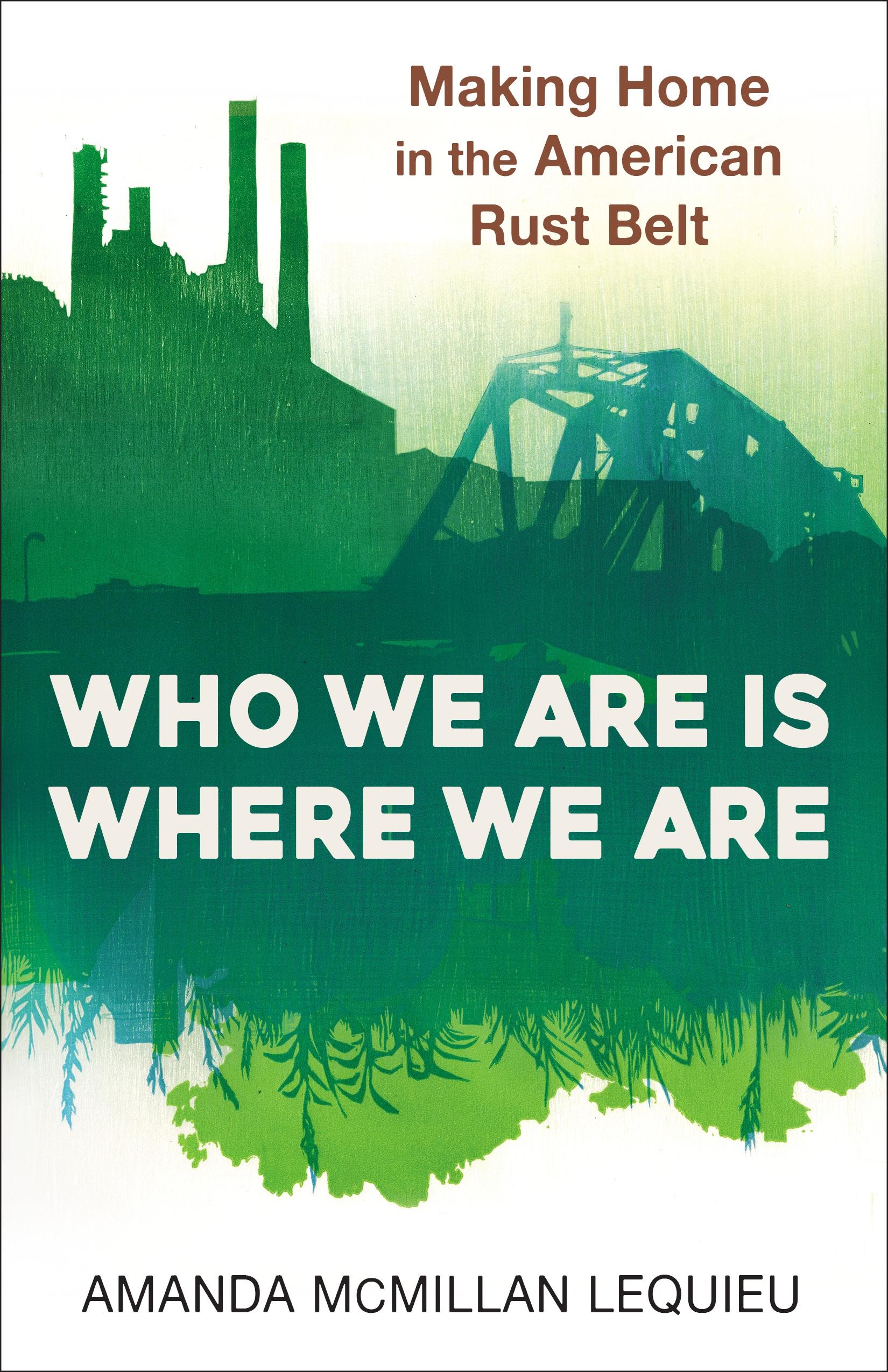
Half a century ago, deindustrialization gutted blue-collar jobs in the American Midwest. But today, these places are not ghost towns. People still call these communities home, even as they struggle with unemployment, poverty, and other social and economic crises. Why do people remain in declining areas through difficult circumstances? What do their choices tell us about rootedness in a time of flux?
Through the cases of the former steel manufacturing hub of southeast Chicago and a shuttered mining community in Iron County, Wisconsin, Amanda McMillan Lequieu traces the power and shifting meanings of the notion of home for people who live in troubled places. Building from on-the-ground observations of community life, archival research, and interviews with long-term residents, she shows how inhabitants of deindustrialized communities balance material constraints with deeply felt identities. McMillan Lequieu maps how the concept of home has been constructed and the ways it has been reshaped as these communities have changed. She considers how long-term residents navigate the tensions around belonging and making ends meet long after the departure of their community’s founding industry.
Who We Are Is Where We Are links the past and the present, rural and urban, to shed new light on life in postindustrial communities. Beyond a story of Midwestern deindustrialization, this timely book provides broader insight into the capacious idea of home—how and where it is made, threatened, and renegotiated in a world fraught with change.
Pay easily by card, Klarna, Apple Pay or Google Pay. Not happy? You always have a 14-day money-back guarantee. Read more in our terms. If you have any questions, email us at hello@memmo.org.
Memmo makes studying easier – wherever you are in the world. We bring your course books and smart study tools together in one place: summaries, quizzes, podcasts and flashcards. Plus Ted, your study buddy who answers anything you wonder. Over 50,000 students already study here – built to help you learn faster and stress less.