
Winner, 2024 Robert E. Park Book Award, Section on Community and Urban Sociology, American Sociological Association
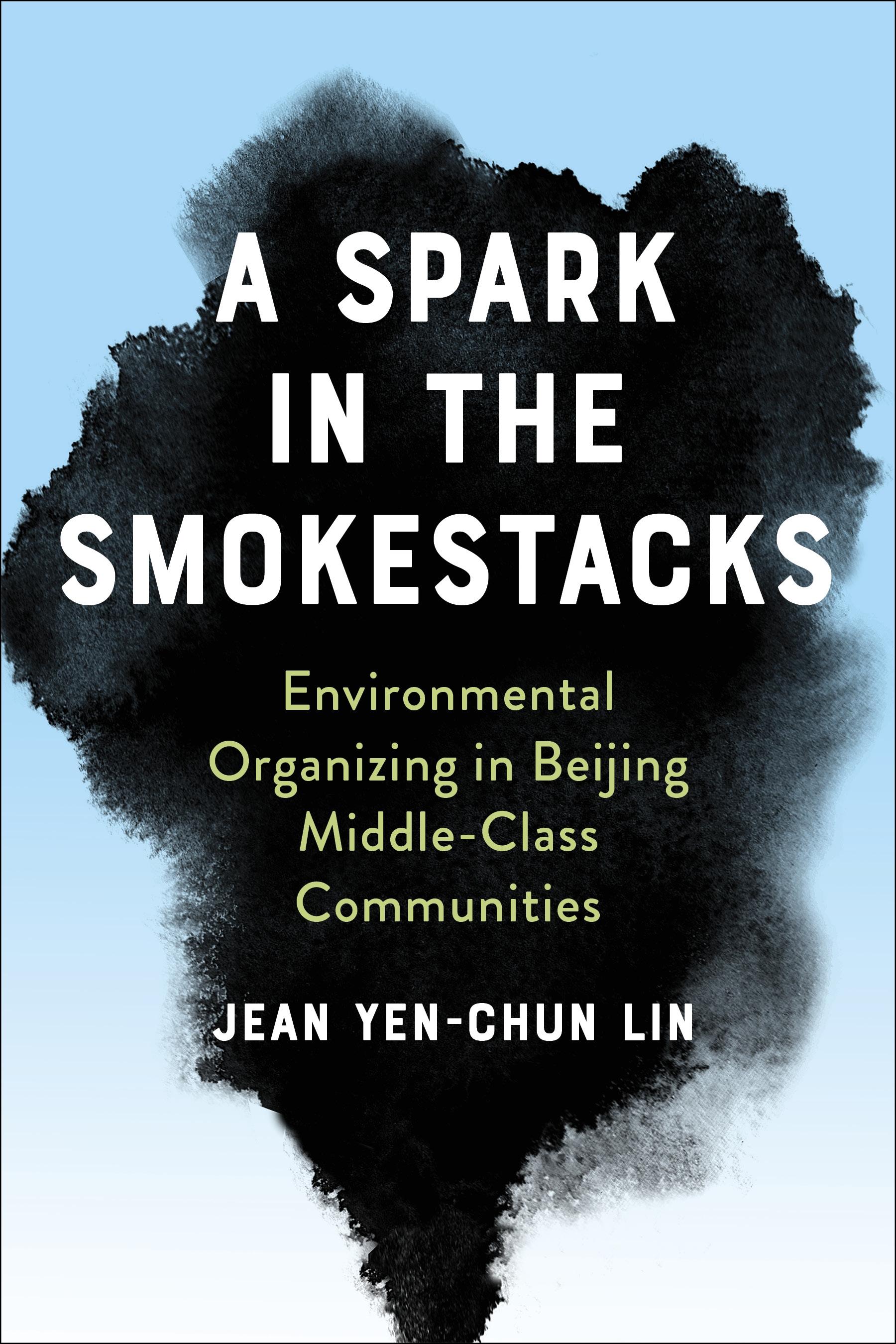
Environmental organizing in Beijing emerged in an unlikely place in the 2000s: new gated residential communities. After rapid population growth and housing construction led to a ballooning trash problem and overflowing landfills, many first-time homeowners found their new neighborhoods facing an unappetizing prospect—waste incinerator projects slated for their backyards.
Delving into the online and offline conversations of communities affected by the proposed incinerators, A Spark in the Smokestacks demonstrates how a rising middle class acquires the capacity for organizing in an authoritarian context. Jean Yen-chun Lin examines how urban residents create civic life through everyday associational activities—learning to defend property rights, fostering participation, and mobilizing to address housing-related grievances. She shows that homeowners cultivated petitioning skills, informational networks, and community leadership, which they would later deploy against incinerator projects. To interact with government agencies, they developed citizen science–based tactics, a middle-class alternative to disruptive protests. Homeowners drew on their professional connections, expertise, and fundraising capabilities to produce reports that boosted their legitimacy in city-level dialogue. Although only one of the three incinerator projects Lin follows was ultimately canceled, some communities established durable organizations that went on to tackle other environmental problems.
Drawing on interviews, participant observation, and ethnography, A Spark in the Smokestacks casts urban Chinese communities as “schools of democracy,” in which residents learn civic skills and build capacity for collective organizing. Through compelling case studies of local activism, this book sheds new light on the formation of civil society and social movements more broadly.
Pay easily by card, Klarna, Apple Pay or Google Pay. Not happy? You always have a 14-day money-back guarantee. Read more in our terms. If you have any questions, email us at hello@memmo.org.
Memmo makes studying easier – wherever you are in the world. We bring your course books and smart study tools together in one place: summaries, quizzes, podcasts and flashcards. Plus Ted, your study buddy who answers anything you wonder. Over 50,000 students already study here – built to help you learn faster and stress less.