
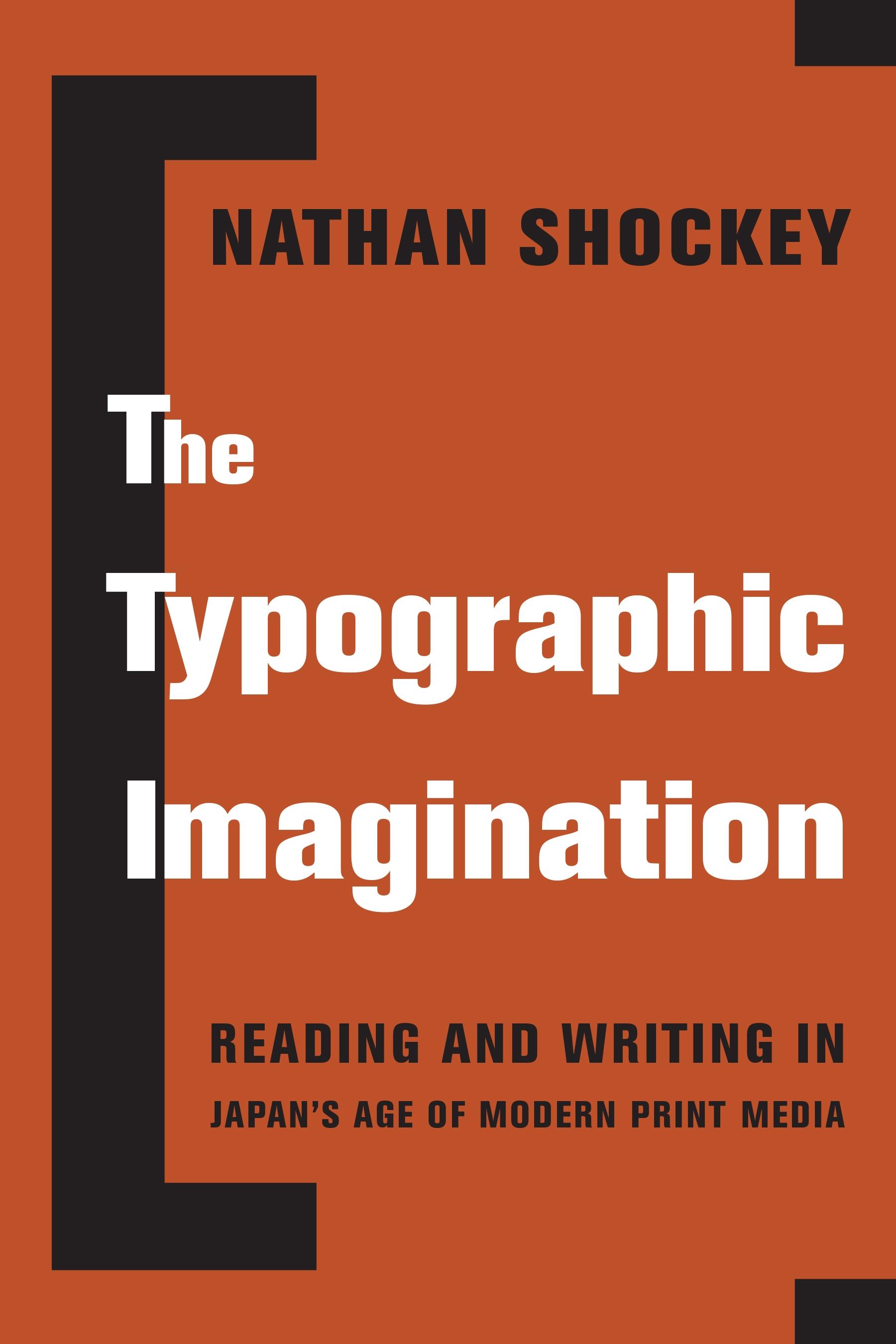
In the early twentieth century, Japan was awash with typographic text and mass-produced print. Over the short span of a few decades, affordable books and magazines became a part of everyday life, and a new generation of writers and thinkers considered how their world could be reconstructed through the circulation of printed language as a mass-market commodity. The Typographic Imagination explores how this commercial print revolution transformed Japan’s media ecology and traces the possibilities and pitfalls of type as a force for radical social change.
Nathan Shockey examines the emergence of new forms of reading, writing, and thinking in Japan from the last years of the nineteenth century through the first decades of the twentieth. Charting the relationships among prose, politics, and print capitalism, he considers the meanings and functions of print as a staple commodity and as a ubiquitous and material medium for discourse and thought. Drawing on extensive archival research, The Typographic Imagination brings into conversation a wide array of materials, including bookseller trade circulars, language reform debates, works of experimental fiction, photo gazetteers, socialist periodicals, Esperanto primers, declassified censorship documents, and printing press strike bulletins. Combining the rigorous close analysis of Japanese literary studies with transdisciplinary methodologies from media studies, book history, and intellectual history, The Typographic Imagination presents a multivalent vision of the rise of mass print media and the transformations of modern Japanese literature, language, and culture.
Pay easily by card, Klarna, Apple Pay or Google Pay. Not happy? You always have a 14-day money-back guarantee. Read more in our terms. If you have any questions, email us at hello@memmo.org.
Memmo makes studying easier – wherever you are in the world. We bring your course books and smart study tools together in one place: summaries, quizzes, podcasts and flashcards. Plus Ted, your study buddy who answers anything you wonder. Over 50,000 students already study here – built to help you learn faster and stress less.