
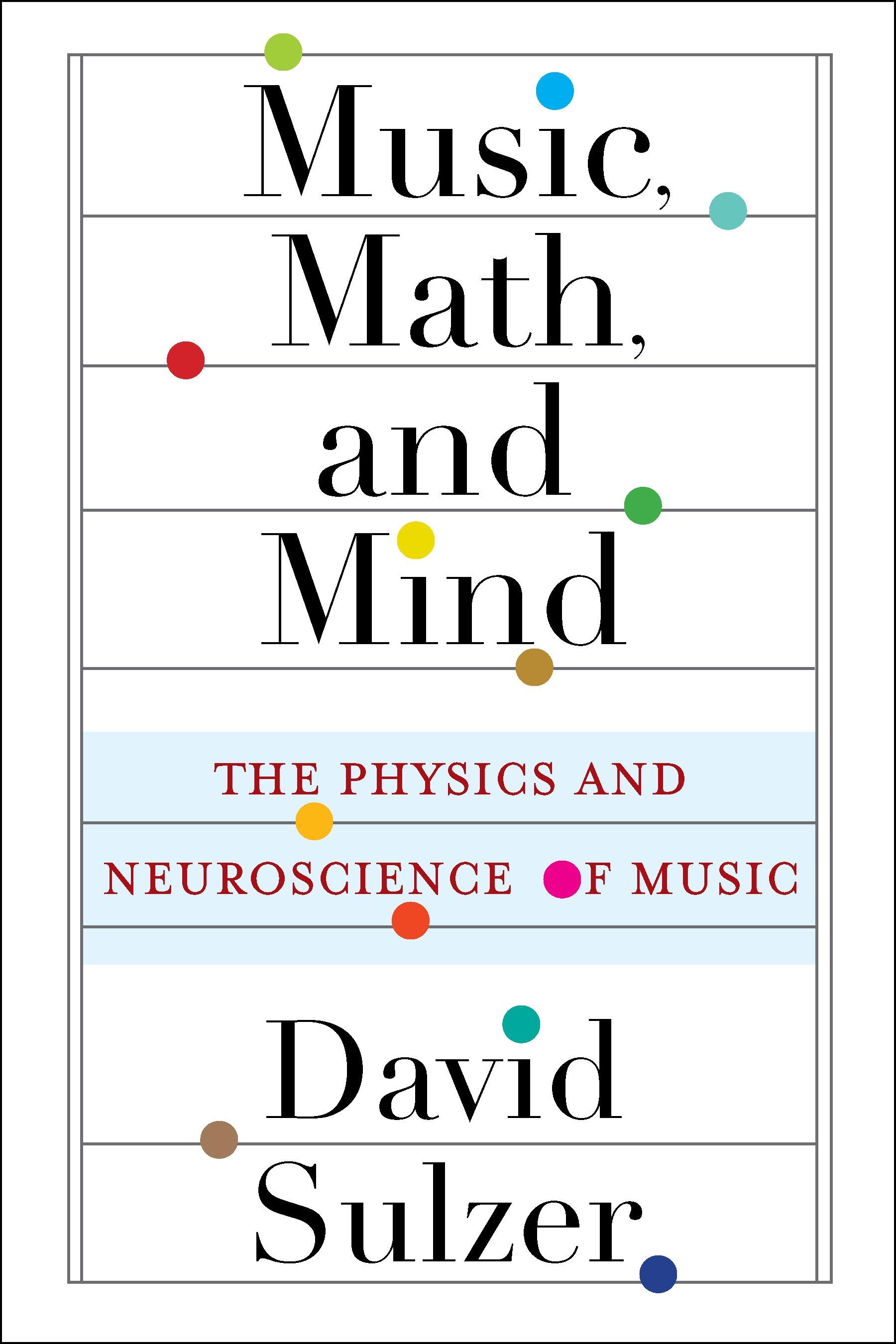
Why does a clarinet play at lower pitches than a flute? What does it mean for sounds to be in or out of tune? How are emotions carried by music? Do other animals perceive sound like we do? How might a musician use math to come up with new ideas?
This book offers a lively exploration of the mathematics, physics, and neuroscience that underlie music in a way that readers without scientific background can follow. David Sulzer, also known in the musical world as Dave Soldier, explains why the perception of music encompasses the physics of sound, the functions of the ear and deep-brain auditory pathways, and the physiology of emotion. He delves into topics such as the math by which musical scales, rhythms, tuning, and harmonies are derived, from the days of Pythagoras to technological manipulation of sound waves. Sulzer ranges from styles from around the world to canonical composers to hip-hop, the history of experimental music, and animal sound by songbirds, cetaceans, bats, and insects. He makes accessible a vast range of material, helping readers discover the universal principles behind the music they find meaningful.
Written for musicians and music lovers with any level of science and math proficiency, including none, Music, Math, and Mind demystifies how music works while testifying to its beauty and wonder.
Pay easily by card, Klarna, Apple Pay or Google Pay. Not happy? You always have a 14-day money-back guarantee. Read more in our terms. If you have any questions, email us at hello@memmo.org.
Memmo makes studying easier – wherever you are in the world. We bring your course books and smart study tools together in one place: summaries, quizzes, podcasts and flashcards. Plus Ted, your study buddy who answers anything you wonder. Over 50,000 students already study here – built to help you learn faster and stress less.