
Honorable Mention, 2024 Outstanding Published Book Award, Altruism, Morality, and Social Solidarity Section, American Sociological Association
Honorable Mention, 2024 Allan Sharlin Memorial Book Award, Social Science History Association
Today, “corruption” generally refers to pursuing personal interests at the expense of one’s responsibilities, the law, or the common good. It calls to mind some official violating their public duty for private gain, suggesting seamy bureaucracies taking payoffs, kickbacks, and bribes. Yet at other times, notions of corruption were rooted in a more expansive view of the causes of people’s behavior and the appropriate ways to regulate conduct. In this understanding, to be “corrupt” meant losing a delicate balance among competing appetites under specific circumstances and in the eyes of peers. Why did a narrower definition of corruption become dominant?
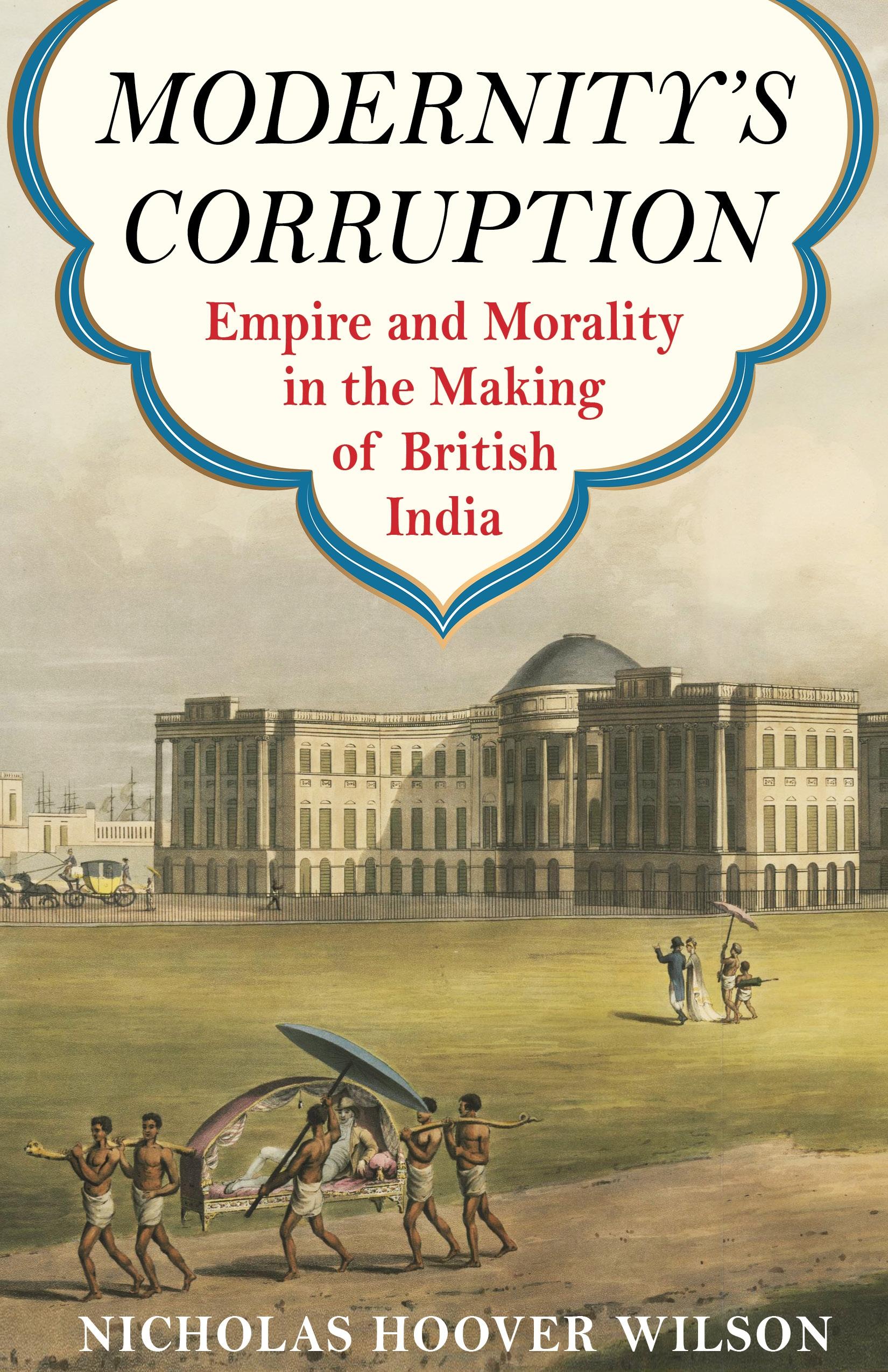
Nicholas Hoover Wilson develops a new account of the changing category of corruption by examining the English East India Company and its transformation from a largely commercial enterprise to a militarized offshoot of British empire in the eighteenth and nineteenth centuries. He argues that the modern idea of corruption arose as an unintended consequence of conflicts among company officials and the changing audiences to which they justified themselves in Britain. This new understanding unified an imperial elite at risk of fragmenting into irreconcilable moral worlds and, in the process, helped redefine the boundaries of state, society, and economy. Modernity’s Corruption is at once a novel historical sociology of imperial administration and its contradictions, a fresh argument about the nature of corruption and its political and organizational effects, and a reinvigoration of classic arguments about the nature and consequences of global modernity.
Pay easily by card, Klarna, Apple Pay or Google Pay. Not happy? You always have a 14-day money-back guarantee. Read more in our terms. If you have any questions, email us at hello@memmo.org.
Memmo makes studying easier – wherever you are in the world. We bring your course books and smart study tools together in one place: summaries, quizzes, podcasts and flashcards. Plus Ted, your study buddy who answers anything you wonder. Over 50,000 students already study here – built to help you learn faster and stress less.