
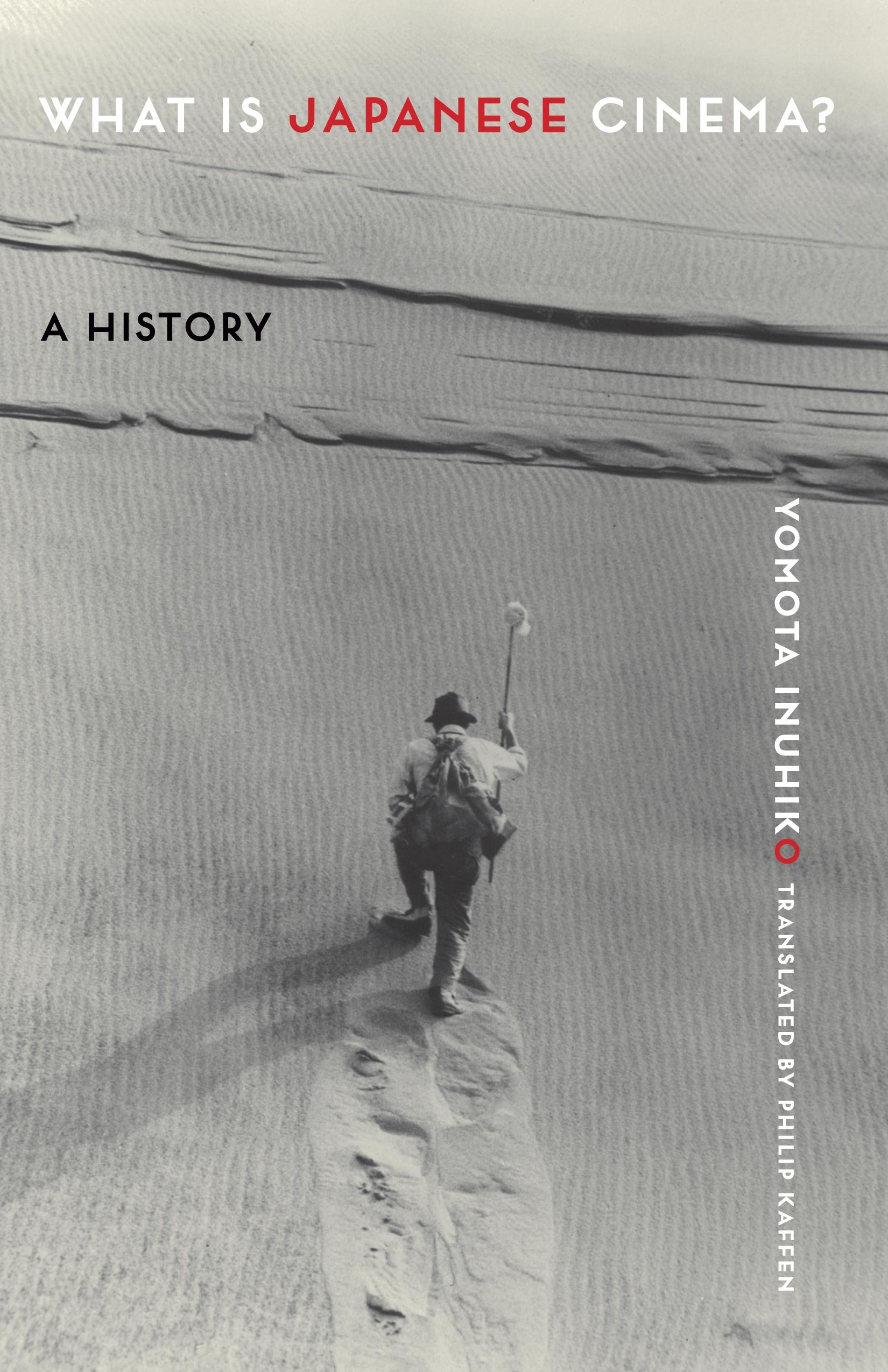
What might Godzilla and Kurosawa have in common? What, if anything, links Ozu’s sparse portraits of domestic life and the colorful worlds of anime? In What Is Japanese Cinema? Yomota Inuhiko provides a concise and lively history of Japanese film that shows how cinema tells the story of Japan’s modern age.
Discussing popular works alongside auteurist masterpieces, Yomota considers films in light of both Japanese cultural particularities and cinema as a worldwide art form. He covers the history of Japanese film from the silent era to the rise of J-Horror in its historical, technological, and global contexts. Yomota shows how Japanese film has been shaped by traditonal art forms such as kabuki theater as well as foreign influences spanning Hollywood and Italian neorealism. Along the way, he considers the first golden age of Japanese film; colonial filmmaking in Korea, Manchuria, and Taiwan; the impact of World War II and the U.S. occupation; the Japanese film industry’s rise to international prominence during the 1950s and 1960s; and the challenges and technological shifts of recent decades. Alongside a larger thematic discussion of what defines and characterizes Japanese film, Yomota provides insightful readings of canonical directors including Kurosawa, Ozu, Suzuki, and Miyazaki as well as genre movies, documentaries, indie film, and pornography. An incisive and opinionated history, What Is Japanese Cinema? is essential reading for admirers and students of Japan’s contributions to the world of film.
Pay easily by card, Klarna, Apple Pay or Google Pay. Not happy? You always have a 14-day money-back guarantee. Read more in our terms. If you have any questions, email us at hello@memmo.org.
Memmo makes studying easier – wherever you are in the world. We bring your course books and smart study tools together in one place: summaries, quizzes, podcasts and flashcards. Plus Ted, your study buddy who answers anything you wonder. Over 50,000 students already study here – built to help you learn faster and stress less.