
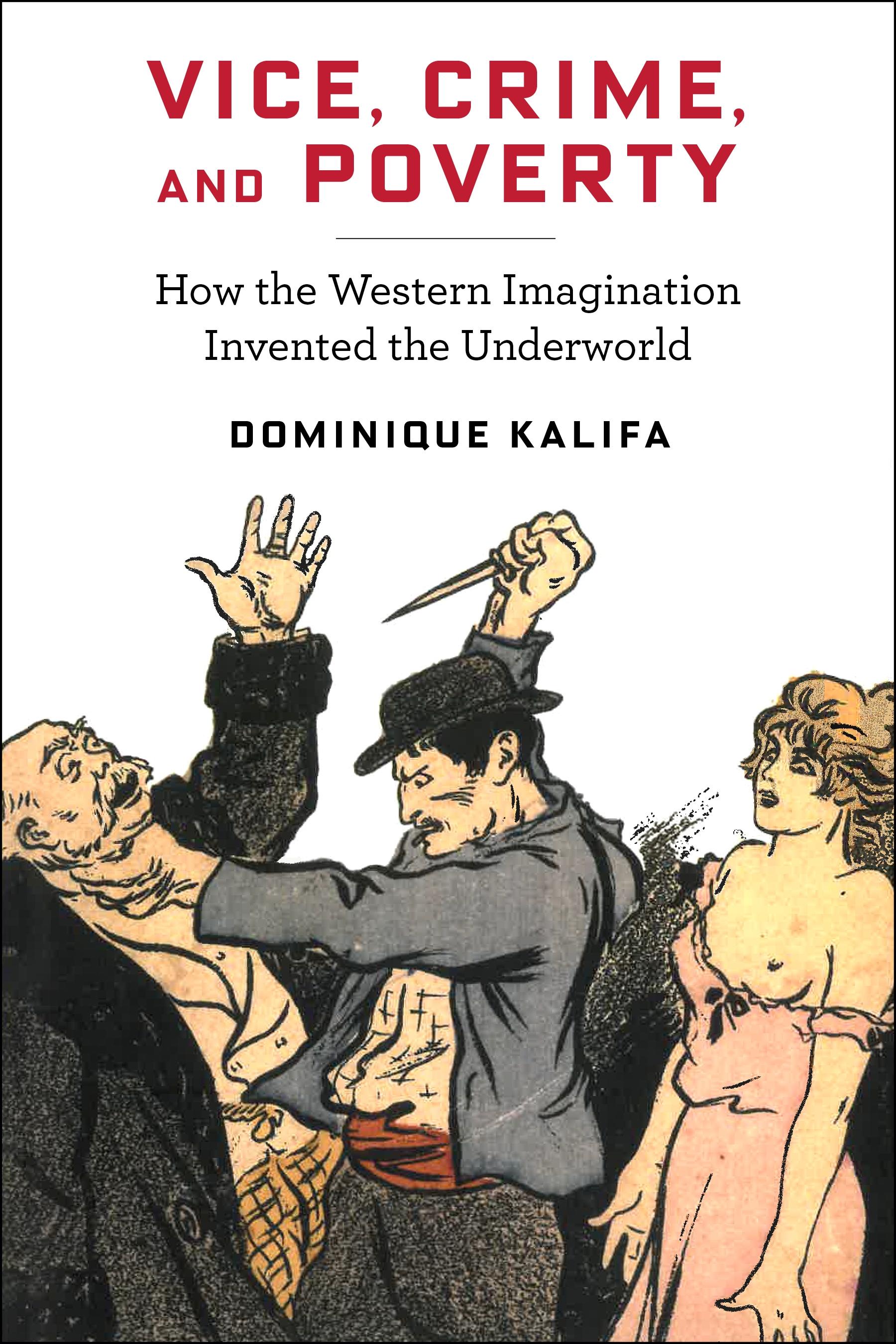
Beggars, outcasts, urchins, waifs, prostitutes, criminals, convicts, madmen, fallen women, lunatics, degenerates—part reality, part fantasy, these are the grotesque faces that populate the underworld, the dark inverse of our everyday world. Lurking in the mirror that we hold up to our society, they are our counterparts and our doubles, repelling us and yet offering the tantalizing promise of escape. Although these images testify to undeniable social realities, the sordid lower depths make up a symbolic and social imaginary that reflects our fears and anxieties—as well as our desires.
In Vice, Crime, and Poverty, Dominique Kalifa traces the untold history of the concept of the underworld and its representations in popular culture. He examines how the myth of the lower depths came into being in nineteenth-century Europe, as biblical figures and Christian traditions were adapted for a world turned upside-down by the era of industrialization, democratization, and mass culture. From the Parisian demimonde to Victorian squalor, from the slums of New York to the sewers of Buenos Aires, Kalifa deciphers the making of an image that has cast an enduring spell on its audience. While the social conditions that created that underworld have changed, Vice, Crime, and Poverty shows that, from social-scientific ideas of the underclass to contemporary cinema and steampunk culture, its shadows continue to haunt us.
Pay easily by card, Klarna, Apple Pay or Google Pay. Not happy? You always have a 14-day money-back guarantee. Read more in our terms. If you have any questions, email us at hello@memmo.org.
Memmo makes studying easier – wherever you are in the world. We bring your course books and smart study tools together in one place: summaries, quizzes, podcasts and flashcards. Plus Ted, your study buddy who answers anything you wonder. Over 50,000 students already study here – built to help you learn faster and stress less.